![Group photo taken during the opening training session at Bishop Residence in Curia [Photo: Emmanuel Mandella]](https://rurugene.org/wp-content/uploads/2025/05/WhatsApp-Image-2025-05-30-at-23.02.201.jpeg)
By Emmanuel Mandella
In a bold step toward nurturing peace and reconciliation in Western Equatoria State, over 87 youth from across ten counties gathered in Yambio for a powerful one-day capacity-building workshop focused on peace building, reconciliation, and unity.
The event, held at the residence of Bishop Eduardo Hiiboro Kussala, was organized by the Catholic Organization for Development and Peace (CODEP) with support from Caritas South Sudan as part of their Interactive Peace building Project.
Youth participants came from Yambio, Maridi, Ibba, Mundri, Tombura, Ezo, Nzara, and other counties, uniting under a common purpose to strengthen their roles as agents of peace in their communities.
![Group photo taken during the opening training session at Bishop Residence in Curia [Photo: Emmanuel Mandella]](https://rurugene.org/wp-content/uploads/2025/05/WhatsApp-Image-2025-05-30-at-23.02.201-1024x449.jpeg)
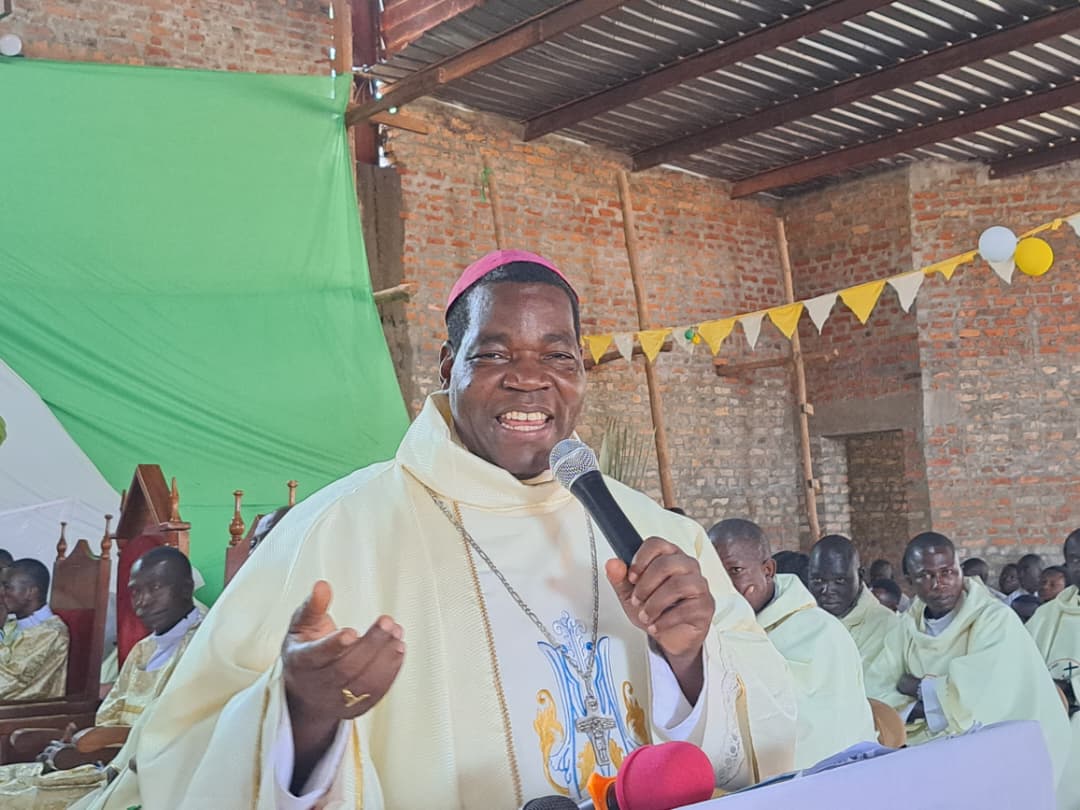
In his opening remarks, Bishop Hiiboro emphasized the urgency of youth leadership in peace building, reminding participants that the future starts not tomorrow, but today:
“This workshop is not just an event it is a necessity for our families, our counties, our state, and our nation. You, the youth, are the true custodians of today and tomorrow. If you fail now, don’t tell yourself you’ll try later. The time is now,” Bishop Hiiboro said.
“This world is constantly changing. Some people benefit from conflict. That’s why peace is difficult, and sometimes even unattractive. But I urge you: don’t give up, don’t run away, and don’t give in. Be the watchdogs of peace wherever you are not weapons used against each other.”
The Bishop further urged youth to build bridges of friendship across communities and tribes in Western Equatoria and South Sudan at large, noting that unity among young people is critical to a stable future.
In his Final Word to the young people across the nation Bishop Hiiboro stated that.
“To the youth of Western Equatoria and South Sudan: your strength is not in fighting each other, but in uniting for a common cause. Embrace friendship, reject division, and protect peace it belongs to you, and only you can safeguard it.”
Meanwhile, Tambua William Simon, Justice and Peace Manager at CODEP, explained that this training is part of a larger initiative that includes a second youth workshop, radio talk shows, and an upcoming football tournament all designed to foster dialogue and reconciliation.
“Our goal is to help youth reflect on the causes of division and how to build a common ground for peace and through activities like these, we’re sowing the seeds of peaceful coexistence across Western Equatoria,” Tambua said.
However, Ms. Mania Grace Christopher, a youth leader from Maridi County, said the training provided a transformative space for youth to recognize their power.
“Many say youth are the leaders of tomorrow. I say our leadership begins today. If we are properly guided and equipped, we can transform our communities. We must reject manipulation, stand above political interests, and champion peace.”
She added that young people must resist being used in violence or criminal activities, and instead act as messengers of transformation through discipline and knowledge.
Tr. Bage Jonathan, Chairperson of the Yambio County Youth Association, echoed the need for continued collaboration beyond the workshop which he believes will help in boosting the understanding of young people to come together for a common purpose which is peace.
“This initiative gives us a platform to engage across county lines and build lasting peace. We are returning to our counties not just as participants, but as ambassadors of peace. What begins here in Yambio must ripple across the state.”
This workshop marks a milestone in empowering young people in Western Equatoria State as it is not only offering a rare opportunity for youth from multiple counties to exchange ideas but also builds critical skills in negotiation, unity, and civic engagement.
The program is expected to strengthen youth leadership, promote ethical responsibility, and combat tribalism and political exploitation, especially as the country moves closer to democratic processes.