By Emmanuel Mandella
In a strategic move to boost economic resilience and reduce dependency within the Church, the Catholic Diocese of Tombura-Yambio (CDTY) has trained more than 100 members of its devotional groups on financial sustainability.

A total of 103 representatives drawn from the Holy Saints’ Central Deanery and the Holy Cross Mid-Central Deanery in Nzara took part in a half-day training held at the shrine of St. Mary Mother of God Parish in Yambio on Tuesday 27th May.
The training was initiated by His Lordship Barani Eduardo Hiiboro Kussala to empower the faithful with knowledge and tools for self-reliance through small-scale business initiatives.

According to Church officials, the aim is to strengthen the financial backbone of local parishes and the Diocese at large by equipping Christians with skills to build income-generating activities that can support both their livelihoods and Church operations.
The Vicar General Rev. Fr. Bagbiowia, who opened the session, described the initiative as a turning point for the Diocese. “This training is about building the future of our Church, the Diocese will only grow if Christians take ownership of its mission including its economic growth,” he said.
Miss Kitibe Lucy, representing the participants, welcomed the training with gratitude, describing it as the first step in uplifting the Church community, especially the most vulnerable members.
“We thank Bishop Hiiboro for this rare opportunity. For the first time, every devotional group was represented. This will help us return to our groups with ideas and hope,” she said.
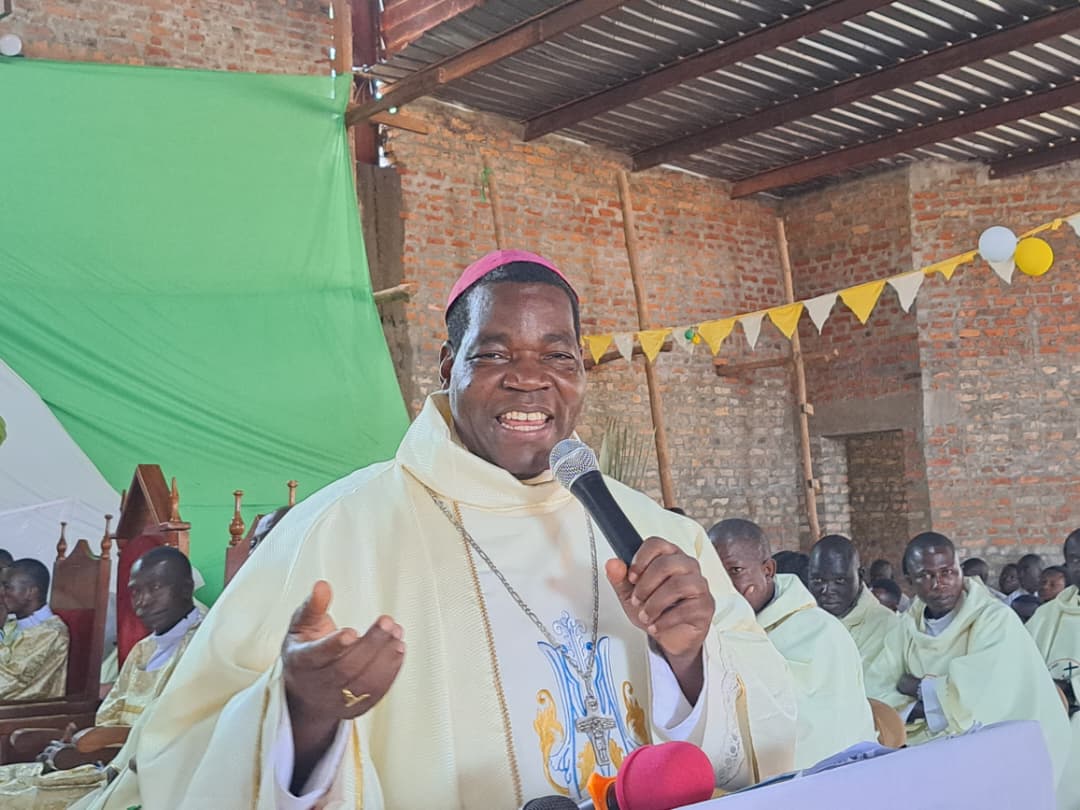
In his closing remarks, Bishop Eduardo Hiiboro Kussala rooted the initiative in scripture, citing Jesus’ teachings in the Gospel of Matthew on the use of individual talents and creativity to sustain life.

“The Gospel teaches us that we are stewards of what we’ve been given. Our ability to create, sustain, and support one another financially is part of our spiritual duty,” he told the participants
He further announced that the same group will be reconvened in two weeks for a second phase of training and pledged to roll out the program across the entire Diocese.