One-Day Workshop on Peacebuilding & Peaceful Electoral Environment — 4 December 2025, Curia CDTY
By Sr. laurencila Akinyi, FSSA
YAMBIO — At a one-day workshop convened on 4 December 2025 under the banner of Diocesan Justice & Peace Commission (DJPC) — the Western Equatoria “Peace Mouthpiece” — the faithful, community leaders, youth delegates and civil society gathered to chart a path of reconciliation, unity and peaceful civic engagement across Western Equatoria State.

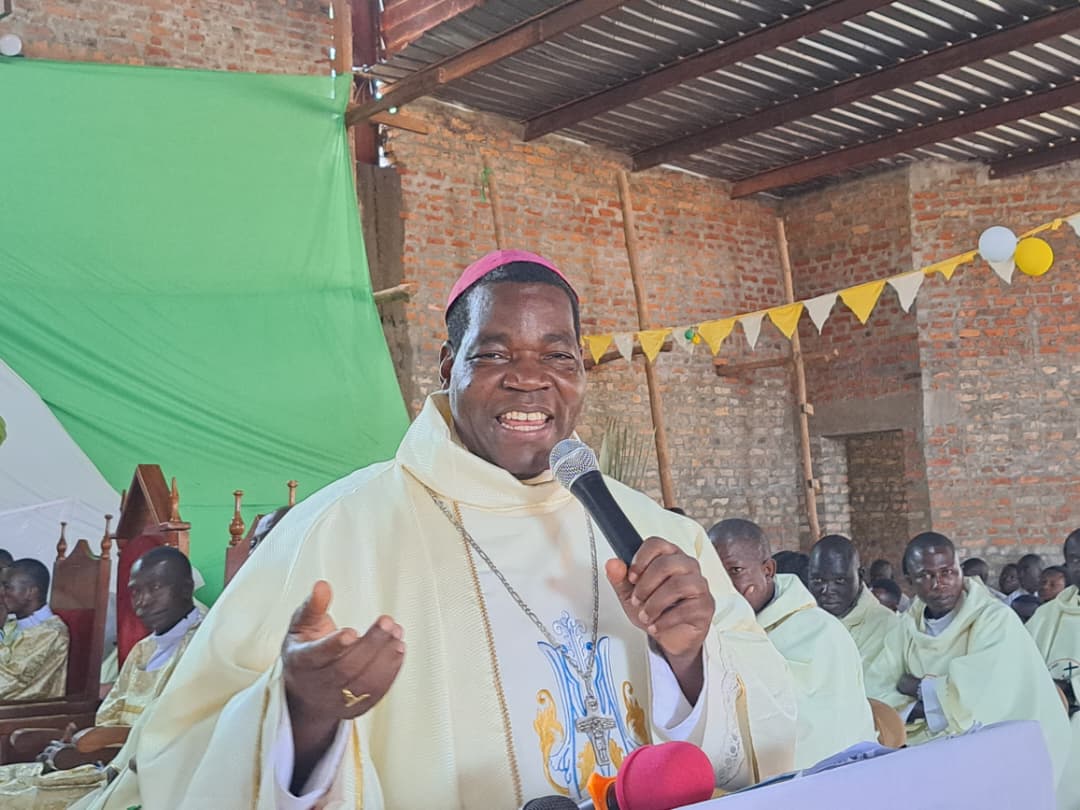
The workshop was addressed by Barani Eduardo Hiiboro Kussala, Bishop of the Catholic Diocese of Tombura-Yambio, who delivered a powerful pastoral outreach message calling on all sectors of society to embrace healing, dialogue and collective responsibility in building a peaceful future.
A Time to Remember — And to Rise Together
Bishop Hiiboro opened by acknowledging the wounds of the past. He spoke of villages still trembling from conflict, widows bearing silent grief, youth carrying the burden of shattered dreams, and elders fearful for the future of their children. Yet, he also pointed to signs of hope — communities choosing dialogue over violence, youth choosing sports over revenge, women leading reconstruction, elders choosing wisdom over anger, and the Church standing as a bridge where division once stood.

He declared:
“Peace is our inheritance; reconciliation is our path; unity is our future.”
He emphasized that peace will not come from one group alone — but from all people, working together, hand in hand, village by village, heart by heart.
Key Pillars for Lasting Peace and Development

The Bishop outlined fourteen guiding principles to shape the diocese’s peacebuilding and community-development efforts — rooted in faith, social justice, and shared responsibility:
- Inclusive Dialogue — where every voice, whether youth or elder, woman or man, is heard; dialogue circles and traditional reconciliation can heal old wounds.
- Youth Engagement — transforming youth from fighters into future-makers through sports, peace clubs, livelihood projects and cooperative ventures.
- Trauma Healing — through counseling, community healing programs, and restoring dignity and hope among victims of conflict.
- Early Warning & Early Response — a proactive system to detect rising tensions and prevent violence before it erupts. The Bishop formally announced the creation of a new Western Equatoria Early Warning Youth Council (EWC), a network of trained young peace-monitors who will work with chiefs, parish leaders and county authorities.
- Role of Traditional, Faith and Community Leadership — elders, chiefs, clergy, catechists and women leaders urged to restore moral foundations and social cohesion.
- Women as Peace-Mothers — women recognized as central agents of reconciliation and community rebuilding.
- Civic Education & Culture Change — promoting awareness, critical thinking, media/communication, and values of justice, dignity and human rights.
- Economic Empowerment & Livelihoods — investing in agriculture, vocational training, youth cooperatives and business initiatives. Economic stability, the Bishop said, underpins peace.
- Reintegration of Returnees and Ex-combatants — welcoming them back through cleansing rites, reconciliation ceremonies and community acceptance.
- Collaboration with Government and Security Institutions — working closely with state authorities to safeguard civilians and uphold justice.
- Peace Spirituality — grounding peace in faith: through prayer, sacraments, forgiveness and love, as guided by the Gospel.

He described four foundational “pillars of peace” that must stand together:
- The Heart — healing trauma and restoring dignity
- The Mind — education, awareness, and critical thinking
- The Community — dialogue, inclusion, and social cohesion
- Structures — good governance, livelihoods, and institutional support
When these pillars stand together, he said, “peace becomes unshakeable.”

A New Initiative of Hope: Celebrating Youth Peacebuilders
As part of the message, the Bishop announced a new initiative: the Western Equatoria Youth Peace Prize, to be launched at the end of the year. The award will honour young people who have demonstrated courage, unity, reconciliation, community service, nonviolence and commitment to peace. Through celebration of positive role-models, the diocese aims to encourage more youths to commit to peacebuilding and social transformation.
A Final Word of Hope

In closing, Bishop Hiiboro invoked the teachings of faith and an African proverb: “When spiders unite, they can tie up a lion.” He called on chiefs, women, youth, clergy, government and every person of goodwill to unite — so that together, they may overcome fear, division, ignorance and violence.
“Western Equatoria can rise. Western Equatoria can heal. Western Equatoria can lead. Western Equatoria can shine as a light for South Sudan,” he concluded.

With this pastoral outreach, the Diocese of Tombura-Yambio reaffirms its commitment to lead communities toward healing, unity, justice and lasting peace.