By Sr. Laurencila Akinyi, FSSA.
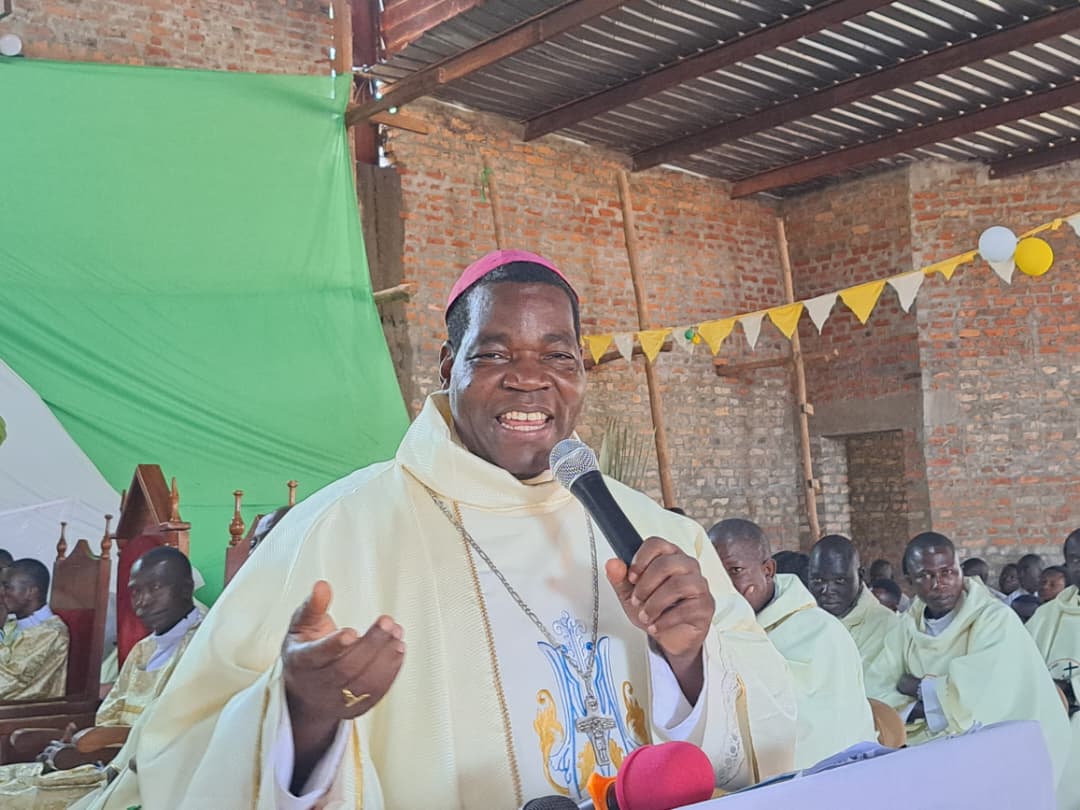
Bishop Barani Eduardo Hiiboro Kussala of the Catholic Diocese of Tombura-Yambio, who also serves on the Interparty Dialogue mediation team, has called on South Sudan’s political leaders and citizens to place the common good above partisan interests as the country approaches its forthcoming elections. The remarks were given in an exclusive interview with Rurugene, the diocesan online newsletter.
Describing the national mood as “one of hope mixed with anxiety,” the Bishop said citizens want to exercise their democratic rights but need confidence that the process will be peaceful and credible. “An election should bring citizens closer together, not create new divisions,” he said.
Listen Before Asking for Votes
Reflecting on the hopes and fears of ordinary people, Bishop Hiiboro described the basic expectations of citizens: peace, reliable education, accessible healthcare, employment, justice, and opportunities for their children. He named fears of renewed conflict, insecurity, exclusion, corruption, and economic hardship.
His message to aspiring leaders was direct: “Listen to the people before asking for their votes, and remember their needs after receiving their mandate. Leadership is not a privilege to enjoy; it is a responsibility to serve.”
Safeguards for Credible Elections
Asked about concerns raised by the United Nations Commission on Human Rights in South Sudan, the Bishop said such concerns deserve serious consideration rather than defensive dismissal or uncritical acceptance. Credible elections, he said, require security, civic freedoms, impartial electoral administration, voter education, transparent procedures, and trusted mechanisms for resolving disputes.
He expressed confidence that dialogue among political actors can help address these concerns, adding that the goal is “practical commitments” rather than exchanges of positions.
Warning Against Renewed Violence
Bishop Hiiboro identified the greatest danger of a disputed election as deepened mistrust and the possible return of violence. “Political victory must never mean that one group owns the country, and electoral defeat must never mean that a citizen loses their place in it,” he said. “No political office is worth the life of a single South Sudanese citizen.”
Reflecting on Independence and the 2013 Conflict
Recalling independence in 2011 as a moment of joy and thanksgiving, the Bishop said it carried a promise of peace, reconciliation, education, and dignity that the country has struggled to fulfill. On the outbreak of war in December 2013, he pointed to political rivalries, weak institutional safeguards, unresolved grievances, and the manipulation of ethnic identities.
“We knew how to struggle for a country; we had yet to learn fully how to govern it together,” he reflected.
Progress and Setbacks in the Peace Process
The Bishop acknowledged the 2018 Revitalized Peace Agreement as a framework for dialogue, power-sharing, security arrangements, and institutional reform. He named implementation delays, insecurity, and mistrust as obstacles, stressing that “peace must be experienced by ordinary people, not merely discussed at political meetings.”
Qualities for the Next President
Bishop Hiiboro said South Sudan needs a president who is a unifier, a servant leader, and a custodian of the common good, one who respects constitutional governance and prioritizes economic recovery, agriculture, education, healthcare, and youth employment. He encouraged citizens to assess all candidates against the same standards of record, integrity, and commitment to peace, adding that his role on the mediation team is to encourage peaceful competition rather than endorse any candidate.
He outlined four priorities for implementing the peace agreement: rebuilding trust through inclusive dialogue, accelerating security arrangements, advancing constitutional and electoral reforms, and connecting peace to people’s daily needs.
A “School for Democracy”
Describing an ideal election as a “school for democracy,” the Bishop said it should be free, fair, inclusive, transparent, and peaceful. Winners should show humility, losers should have access to lawful remedies, and political leaders, media, religious institutions, and civil society all share responsibility for responsible participation.
“I want this election to teach our children that leadership is service, opposition is legitimate, and political competition does not require hatred,” he said.
A Message of Hope and Responsibility
To political leaders, Bishop Hiiboro said history will remember the wisdom and restraint they showed. To citizens, he urged peaceful participation and seeking reliable information. To young people, he called for preparation through education, integrity, enterprise, and service. To the international community, he asked for continued accompaniment that allows South Sudanese to own their country’s future.
Closing with Psalm 34:14, “Seek peace and pursue it,” the Bishop concluded: “South Sudan is bigger than any one leader, stronger than any one political party, and more precious than any contest for power. Let us protect it together.”