By Baraka John
YAMBIO, WESTERN EQUATORIA — Groups of agro-dealers, market suppliers and business intermediaries in Yambio have kicked off a comprehensive two-day orientation on essential business skills aimed at preparing them to launch and grow small-scale enterprises, improve livelihoods, and contribute to economic recovery in their communities.

The event brings together beneficiaries of a one-year loan project spearheaded by the Sustainable Initiative for the Future Kinasidu Africa (SIFA) in collaboration with the Catholic Organization for Development and Peace (CODEP). Attendees include individuals and organized groups of agro-dealers who successfully applied for the loan scheme, which is designed to expand access to credit and stimulate grassroots entrepreneurship.

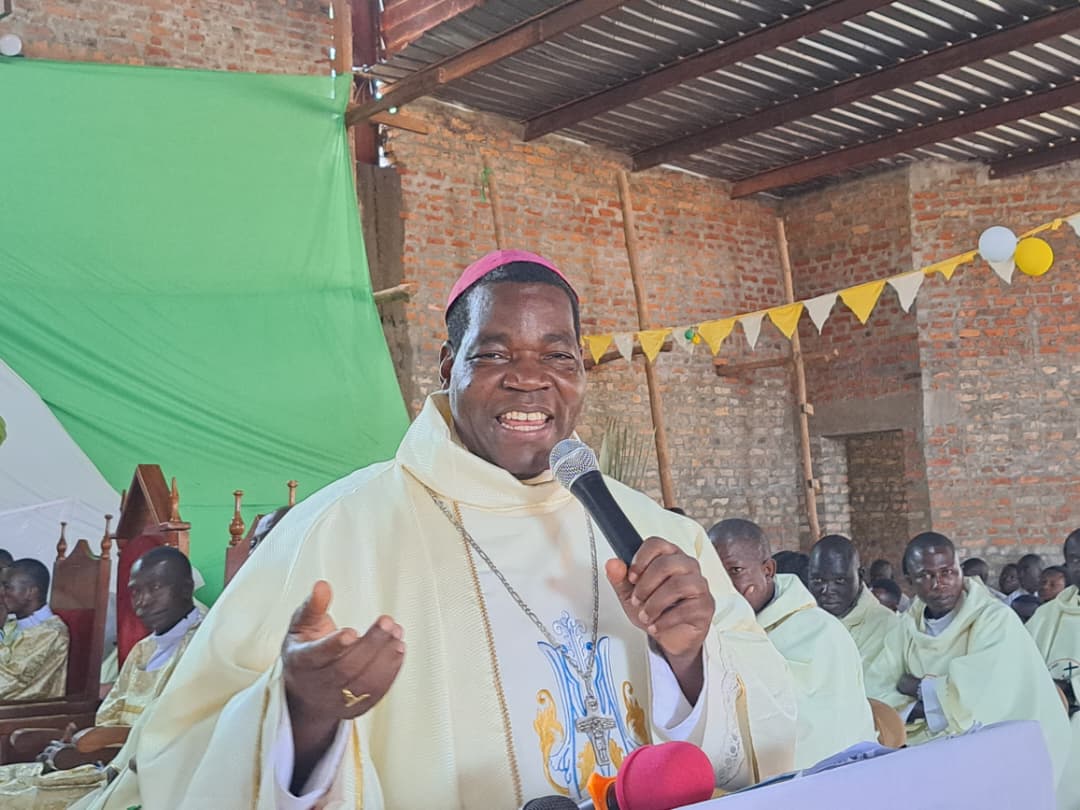
The orientation, taking place at the Catholic Diocese Curia in Yambio, was officially launched Tuesday morning by Rt. Rev. Bishop Eduardo Hiiboro Kussala, who urged participants to put the training and funds to responsible and productive use. The Bishop encouraged beneficiaries to seize the opportunity to transform their business ideas into sustainable ventures that can uplift families and communities across Western Equatoria.

“The access to finance is a vital step, but what matters most is how you use it with discipline, commitment and good management,” Bishop Hiiboro told the gathering. He emphasized that success in business demands transparency, ethical practices, and dedication alongside financial support — a message resonating with many given the challenging economic context in South Sudan.

The orientation covers several key topics essential for business success, including basic financial management, savings culture, record-keeping, entrepreneurship strategies, and responsible loan utilization. Participants will also explore how to build customer relationships, diversify product lines, and handle operational challenges — skills that are expected to strengthen small enterprises and boost profitability.

The two-day event is tailored to equip beneficiaries with practical knowledge and tools they can immediately apply to their business ideas, whether in agricultural inputs, market trade, or related services. Facilitators are drawn from SIFA, CODEP, and partner trainers experienced in micro-enterprise development.

SIFA and CODEP initiated the loan project in response to widespread economic hardships, limited access to credit, and a need to support livelihoods through entrepreneurship. In contexts like South Sudan, where economic recovery is a major priority amid ongoing development challenges, such loan schemes and training schemes play a critical role in empowering micro-business owners and stimulating local markets. National and regional efforts — such as cash transfer programs and inclusive finance initiatives aimed at boosting small business growth — show that strengthening entrepreneurial capacity is essential to sustainable development.
Beneficiaries at the orientation expressed enthusiasm about applying the new skills and knowledge to grow their businesses. Many noted that prior to receiving the training, a lack of basic business education had limited their ability to manage finances or plan effectively for growth.
“I came with ideas but limited skills to implement them,” said one participant. “Now I know how to plan my finances, keep records, and make my business sustainable.”
The loan-backed initiative will run for one year, with ongoing support and monitoring by both SIFA and CODEP. Organizers said they expect the project to not only help individual entrepreneurs but also contribute to economic resilience across communities in Western Equatoria by enhancing skills, fostering a culture of savings, and promoting responsible use of financial resources.
As the orientation continues through its second day, trainers are hopeful that participants will complete the sessions with enhanced confidence and the ability to turn their entrepreneurial aspirations into realities that help strengthen household incomes and local economies in this pivotal region of South Sudan.