By. Sr. Laurencila Akinyi, FSSA
“Behold, I am making all things new” (Rev 21:5)
Tombura–Yambio, Western Equatoria State – Republic of South Sudan
As South Sudan enters the New Year 2026 amid lingering uncertainty and fragile hope, the Catholic Diocese of Tombura–Yambio has issued a deeply reflective and prophetic New Year Pastoral Message, calling the nation to renewal, responsibility, and reconciliation.

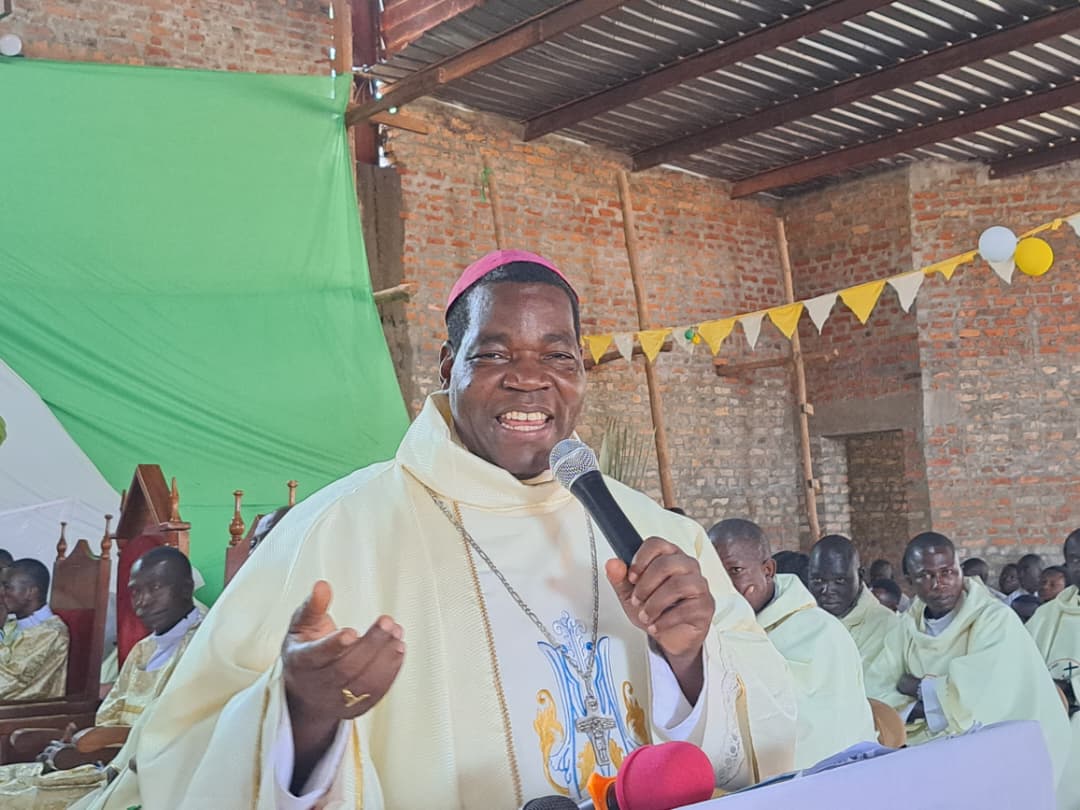
In a message dated 1st January 2026, Most Rev. Dr. Eduardo Hiiboro Kussala, Bishop of the Catholic Diocese of Tombura–Yambio, addressed religious leaders, political authorities, traditional leaders, the youth, women and men, children, the elderly, minorities, the marginalized, and the international community. Anchored in the biblical assurance, “Behold, I am making all things new” (Revelation 21:5), the message confronts the painful realities of the past year while offering a vision of hope and moral rebuilding for the year ahead.
A Shepherd Speaking from Among His People
Opening his pastoral reflection, Bishop Kussala emphasized that his message was not written from a place of distance or privilege, but from lived experience among the people of South Sudan.
“I write not from a distance, but from among you,” the Bishop stated, describing himself as a pastor who has walked the dusty roads of the land, listened to the cries of mothers, witnessed the frustrations of the youth, observed the silence of hunger, and shared in the prayers of the elderly.
He acknowledged that fear has marked the lives of many citizens, yet insisted that faith continues to endure despite suffering. The Bishop framed the message as both a spiritual reflection and a moral call to action at a critical moment in the nation’s history.
2025: A Year of Heavy Burdens and Open Wounds
Reflecting on the year 2025, Bishop Kussala described it as one of the most challenging periods for South Sudan since independence. According to the pastoral message, the nation endured persistent insecurity, economic hardship, political uncertainty, displacement of communities, and deep social fragmentation.

“Many asked: Where is God? Where is hope?” the Bishop observed, before recalling the biblical promise from Jeremiah 29:11 that God’s plans are for welfare and hope, not destruction.
In a section titled “Naming the Wounds Truthfully,” the Bishop insisted that a prophetic Church must speak honestly about the suffering of the people. He listed major challenges faced by the nation, including ongoing violence, political tension, rising cost of living, hunger, youth unemployment, corruption, misuse of power, and environmental degradation.
“These are not statistics,” the Bishop emphasized, “they are wounds in the body of our nation.” He further warned that violence, injustice, corruption, and neglect of the poor are not merely social failures but grave moral sins that cry out to heaven.
Yet even amid despair, the Bishop reminded the faithful that God remains close to the brokenhearted, citing Psalm 34:18 as a source of consolation.
2026 Declared a Year of Grace and Kairós
Turning toward the future, Bishop Kussala proclaimed 2026 as a Year of Grace, Blessing, and Kairós—a decisive moment of God’s favor demanding conversion, responsibility, and action.
Rather than a year of excuses, he called 2026 a year for healing trauma, reconciling divided communities, rebuilding families, restoring trust, confronting hunger, reducing poverty through dignified labor, and reviving moral values in both public and private life.
Drawing from Isaiah 40:31, the Bishop stressed that renewal begins when people choose hope over despair, peace over violence, and truth over lies. According to the message, national healing will only be possible when citizens collectively commit themselves to life-affirming choices.
2026 Elections: A Moral Test for the Nation
A central focus of the pastoral message is the 2026 general elections, which Bishop Kussala described as a defining moment for the soul and future of South Sudan.
“This is not merely politics,” he warned, “it is about the future of our children and the moral direction of our nation.”
The Bishop underscored voting as a moral duty and a peaceful instrument of change. He cautioned that refusing to participate due to fear, manipulation, or apathy amounts to surrendering the nation’s future.
He issued clear appeals to different stakeholders:
- Citizens were urged to register, participate actively, and vote peacefully.
- Political leaders were called to reject violence, tribalism, corruption, and misinformation.
- Security forces were reminded that their role is to protect life, not intimidate citizens.
- Electoral institutions were urged to uphold truth, justice, and transparency.
Quoting Deuteronomy 16:20, “Justice, and only justice, you shall pursue,” the Bishop encouraged voters to choose leaders who respect human dignity, serve the common good, and fear God.
A Word to Every Segment of Society
The pastoral message also delivered targeted guidance to various groups within society. Religious and traditional leaders were urged to act as shepherds rather than spectators, promoting reconciliation and refusing to legitimize injustice.
Political and civil authorities were reminded that power is a form of service, and that authority detached from service inevitably becomes oppression.
To the youth, the Bishop offered encouragement and challenge, rejecting the label of a “lost generation” and calling young people to reject violence and despair in favor of constructive engagement.
Women and mothers were acknowledged as bearers of the nation’s pain and hope, with a strong affirmation that their dignity and safety are sacred. Children were described as deserving peace, education, food, and love, while the poor, marginalized, and minorities were assured that the Church stands firmly with them.
The international community was also addressed, with a call to accompany South Sudan humbly and respectfully, supporting peace, justice, and sustainable development rather than imposing external agendas.
Finally, the Bishop emphasized care for creation, urging citizens to protect land, rivers, forests, and wildlife as gifts entrusted by God.
An Episcopal Promise of Presence and Solidarity

In closing, Bishop Kussala renewed his episcopal commitment to walk with the people of South Sudan in prayer, advocacy, and presence—both in moments of peace and in times of pain.
Quoting John 16:33, “Take courage; I have overcome the world,” he expressed hope that 2026 will be a turning point where fear loosens its grip, hunger is confronted, peace takes root, and hope rises again across the nation.
The message concluded with a solemn blessing offered in the name of the Father, the Son, and the Holy Spirit, marking the beginning of a new year with faith, resolve, and moral clarity.