By, Sr. Laurencila,FSSA
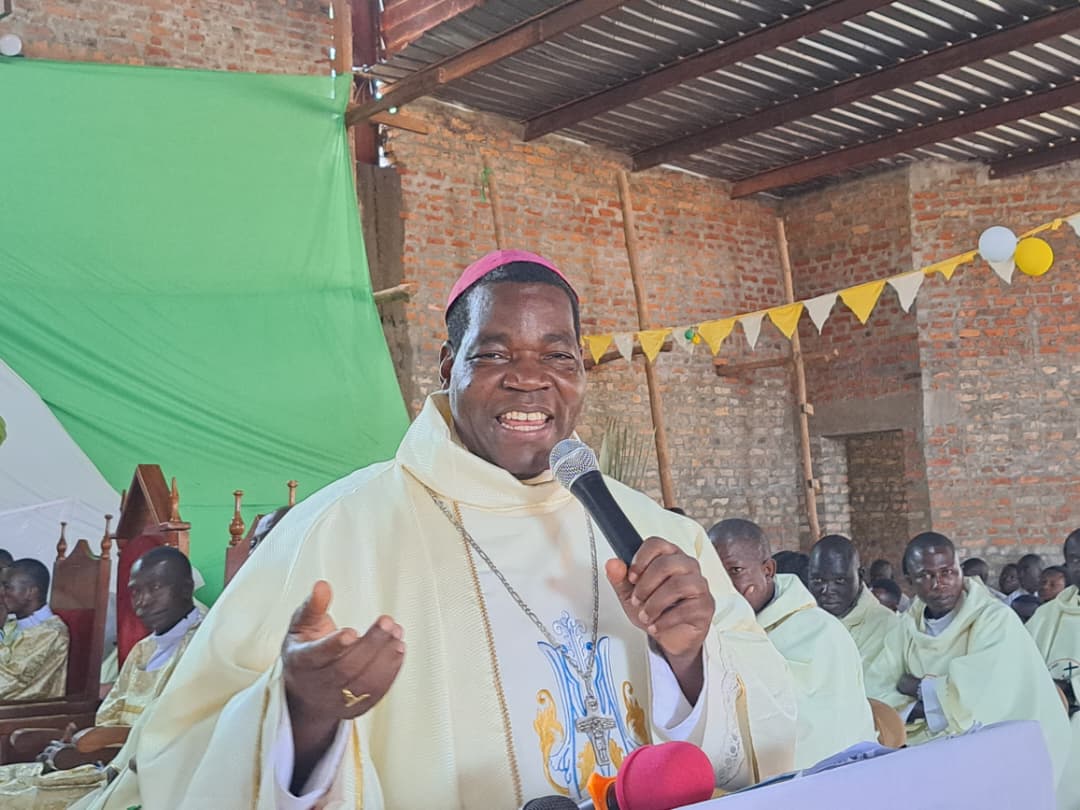
The Bishop of the Catholic Diocese of Tombura-Yambio, Rt. Rev. Barani Eduardo Hiiboro Kussala, has paid tribute to Nzara City as a historic birthplace of South Sudan’s struggle for freedom and a living example of national unity, describing the city as deserving of the proud identity “It All Began Here.”

In a message of gratitude released following his recent pastoral visit to the city, Bishop Hiiboro thanked the people of Nzara and Nakindo Sene Catholic Parish, which he affectionately calls the “Small Vatican,” for their warm and heartfelt reception despite prevailing security concerns in the region. He said the visit, made amid real insecurity fears, was met with one of the most genuine, heartfelt, and homemade receptions he has ever experienced anywhere, noting that the people welcomed him not with fear but with faith, not with anxiety but with love and courage.

The Bishop expressed sincere gratitude for the generous gifts and organic produce shared with him during the visit, describing them not as merely material offerings but as expressions of unity, dignity, resilience, and a people deeply rooted in their land and values. He reaffirmed his long-held conviction that the people of Nzara are historic and great.

A City Where It All Began
Bishop Hiiboro emphasized that Nzara is not just a city but a beginning, a place where all 64 ethnic communities of South Sudan live together in remarkable harmony. He noted that long before unity became a slogan, Nzara practiced it as a way of life, truly representing what he called the United States of South Sudan.

The Bishop recalled Nzara’s industrial legacy under the famous 1923 national project, then known as the Azande Scheme, when the city ranked first as an industrial town in the Southern Region. During that era, Nzara produced cotton and textile clothing, sugar, oils and soap, and abundant fruit trees and agricultural produce. Bishop Hiiboro said this history proved long ago that discipline, productivity, and development are possible in South Sudan.

Politically, the Bishop described Nzara as occupying a sacred place in the conscience of the nation. It was here, he explained, that the first southern resistance strike against domination and injustice began, marked by the sound of bullets fired in defiance. Exactly one month later, the Torit Military Mutiny took place, igniting the Anyanya liberation struggle, which later evolved into the SPLM liberation movement and ultimately gave birth to the Republic of South Sudan.

Bishop Hiiboro declared that Nzara did not merely witness history but shaped it. He invited the people to proudly embrace the identity “Nzara City – It All Began Here” from this day forward.
Nakindo Sene: Mother Parish and Seedbed of Faith

In the life of the Church, Bishop Hiiboro described Nakindo Sene Catholic Parish as a true Mother Parish. From this single parish have emerged six fully established parishes and one quasi-parish, demonstrating what he called evangelization that bears fruit and faith that multiplies, qualities that justify calling Nzara the Small Vatican.

The Bishop revealed that the Catholic Diocese of Tombura-Yambio invests over two million US dollars annually in pastoral, educational, health, agricultural, and social development projects in Nzara City. He explained that this substantial investment is not made by accident but because Nzara is historic, strategic, and full of promise.

Among the key diocesan and church-supported institutions in Nzara are St. Theresa Mission Hospital, a referral hospital; Comboni College Nzara; Comboni Pre-Primary and Primary School; St. Josephine Bakhita Orphanage, founded by Mother Bianca Bii Musungu; the Diocesan Pastoral Affairs and Mission Center; Pope Francis Wellness, Peace, and Healing Center; St. John Paul II Propedeutic Diocesan Seminary; Greenland Rice Market located in Sukure for rice production and processing; five other Catholic primary schools; the Diocesan Marian Grotto; and many other pastoral and social initiatives.

For these reasons, and with deep affection, Bishop Hiiboro said he rightly nicknames Nzara “The Small Vatican.”
Words of Gratitude and Recognition
The Bishop expressed heartfelt appreciation to Reverend Father Anthony Bangoye, Parish Priest of Nakindo Sene; Reverend Father Darius Rukuari, Curate; and Reverend Father Victor Babie, Episcopal Vicar for the Mid-Central Deanery of the Holy Cross. He thanked all the priests, catechists, and religious sisters serving faithfully among the people.
With special admiration, Bishop Hiiboro acknowledged Head Mother Bianca Bii Musungu, Founder of St. Josephine Bakhita Orphanage, describing her as a woman whose life of sacrifice, compassion, and service rightly earns her the title “our living saint.”
A Call to the People of Nzara

Addressing the sons and daughters of Nzara City, Bishop Hiiboro called on them to pray, for faith has sustained them through generations; to work hard, for dignity is born of labor; to be resilient, for their history is one of courage; to be proud, with humility and responsibility; and to be supportive of the Church, of peace, and of one another.
He reminded them that they carry a legacy that must be protected and advanced, serving as both guardians of history and builders of the future. The Bishop thanked the people once more for the love they showed him, saying they reminded him that even in fragile times, faith, unity, and community can rise above fear.

He concluded with prayers that God bless Nzara City abundantly, that Nakindo Sene, the Small Vatican, continue to give birth to life, and that peace, hope, and development flourish among the people.
The Bishop’s message comes at a time when Nzara City, like much of Western Equatoria State, continues to face security challenges and economic hardship. His pastoral visit and subsequent tribute underscore the Catholic Church’s commitment to standing with communities during difficult times while celebrating their resilience, history, and potential for renewal.