By Emmanuel Mandela
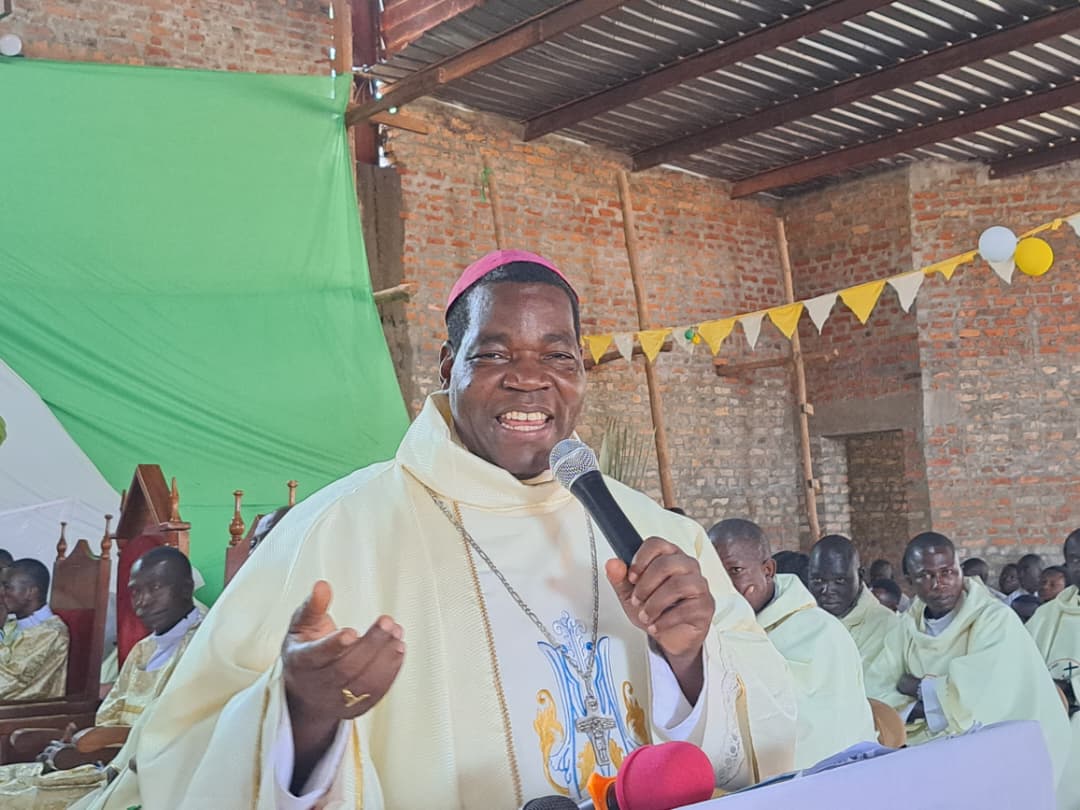
The Catholic Bishop of Tombura-Yambio Diocese, His Lordship Barani Eduardo Hiiboro Kussala, has issued a firm moral warning against the recruitment of children into armed forces, describing the practice as inherently wrong and a direct assault on the future of South Sudan.
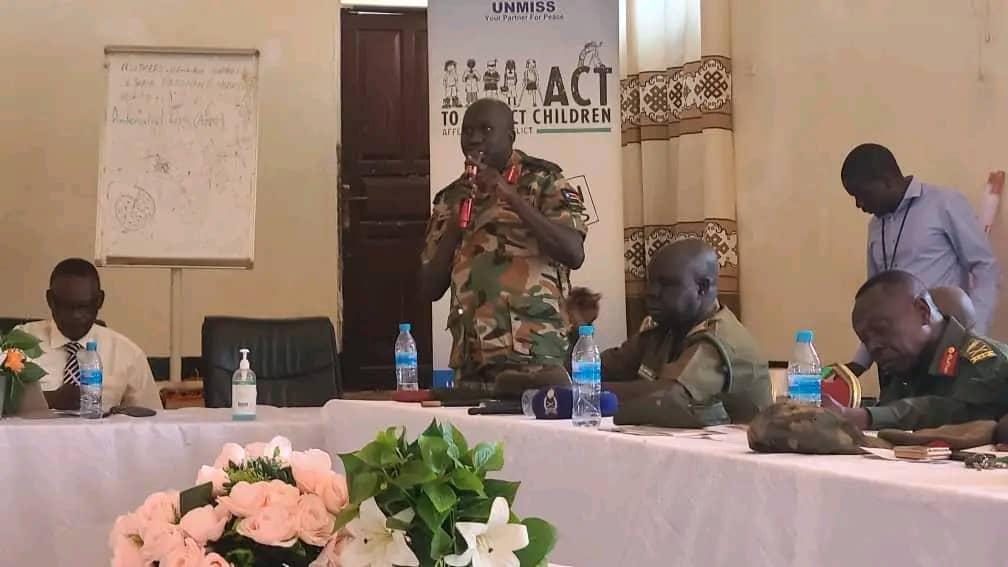
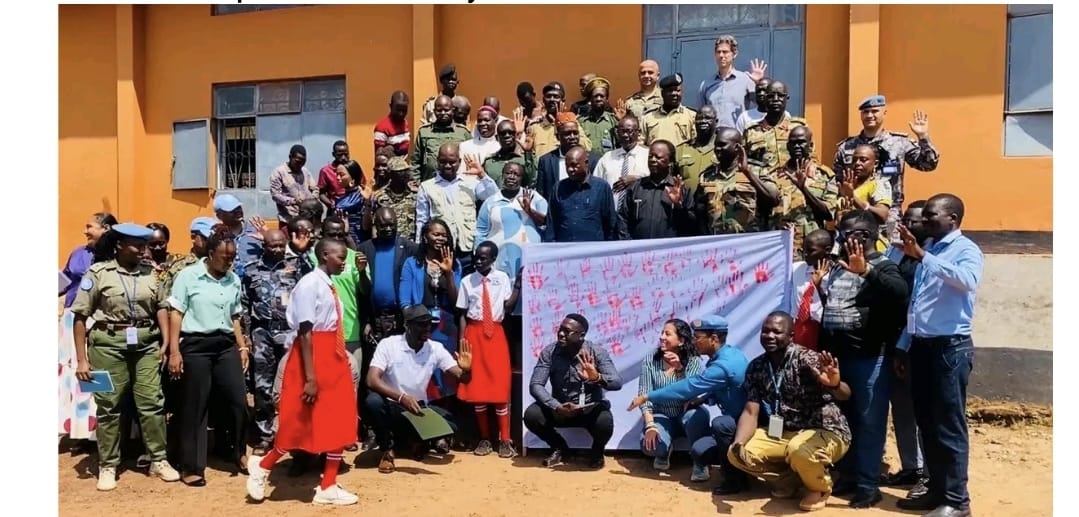
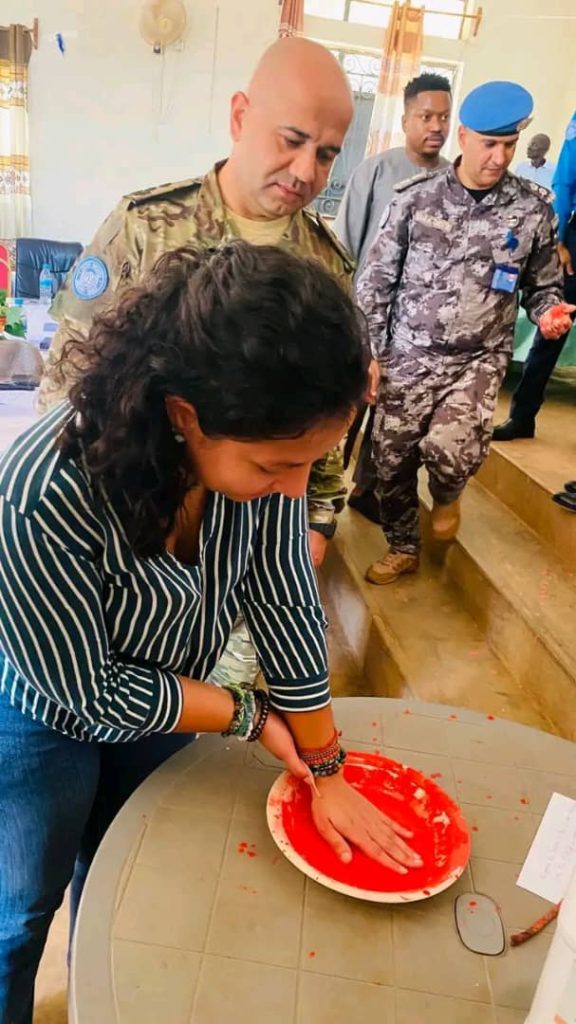
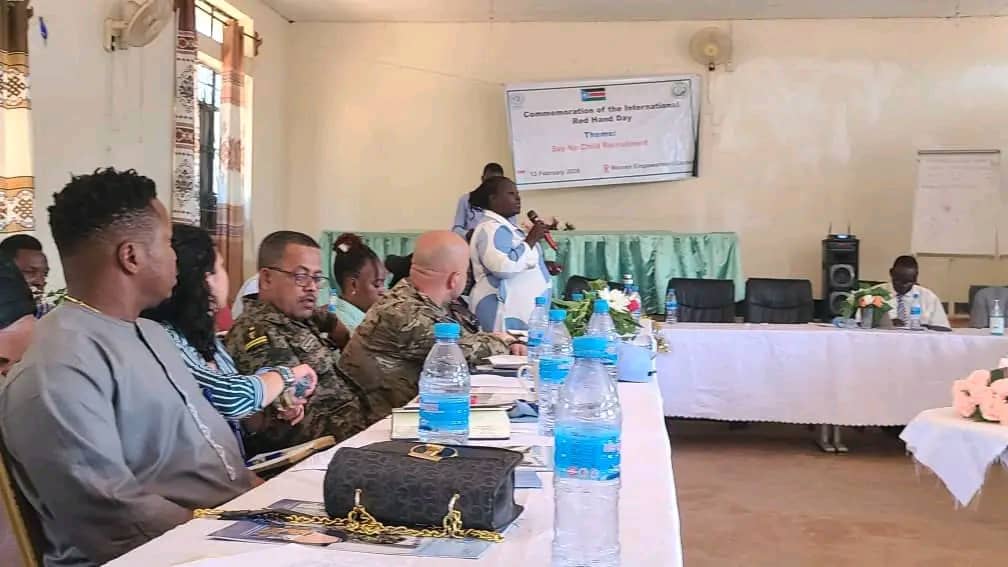
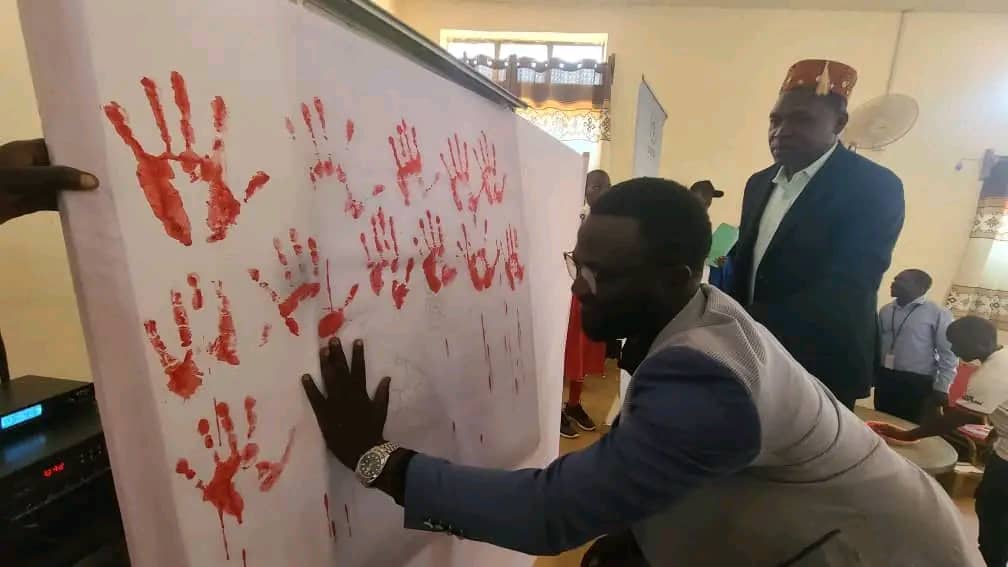
Bishop Hiiboro delivered his remarks during the commemoration of International Red Hand Day at the Women Empowerment Centre in Yambio, using the global platform dedicated to ending the use of child soldiers to condemn the continued exploitation of minors in conflict situations and to call for renewed national commitment to child protection.
The event was attended by the Acting Governor of Western Equatoria State, government officials, members of the military, traditional leaders, civil society organizations, and religious representatives, signaling a rare moment of cross-sector unity around the issue of child protection.
Aligning himself fully with the mission of International Red Hand Day, Bishop Hiiboro said the recruitment of children into armed forces deprives them of their future and undermines the moral foundation of society. He framed child recruitment not only as a violation of international law but as a profound moral failure that threatens the social fabric of the country. He stressed that his conviction is rooted in the dignity of the human person, emphasizing that from the womb to the tomb, human life is sacred and must be protected at every stage.
South Sudan has struggled with child recruitment since the outbreak of conflict in 2013, with thousands of children reportedly drawn into armed groups over the years. While progress has been made through disarmament and reintegration programs, child protection advocates warn that insecurity and localized violence continue to expose children to recruitment risks.
The Bishop stressed that every nation, like every family, desires the best for its children and that no country can thrive while sacrificing its young generation to war. He said a country thrives when it raises healthy, educated, and responsible citizens, adding that when children are taken into armed conflict, the very foundation upon which peace and development must stand is destroyed.
Beyond condemning recruitment, Bishop Hiiboro linked the issue directly to the broader challenge of insecurity in South Sudan. He argued that without peace and effective governance, children will remain vulnerable long before formal recruitment takes place. He warned that war disrupts children’s education, safety, and development even before recruitment occurs, describing peace as the first and most urgent requirement for child protection.
The Bishop emphasized that even the strongest legal frameworks cannot shield children if insecurity persists, warning that without peace and effective authority, even the best laws cannot protect the young. He called on all sectors of society, including government institutions, the military, civil society, and faith-based organizations, to take collective responsibility in safeguarding children. He expressed encouragement at seeing government representatives, traditional leaders, the military, civil society, and the Church gathered together, saying that together meaningful progress can be made.
Bishop Hiiboro cautioned that child protection extends beyond preventing military recruitment, noting that exploitation, neglect, and lack of access to education also undermine children’s development. He stressed that child protection is not the responsibility of one sector alone but a shared duty that demands collective action and sustained commitment from all members of society.
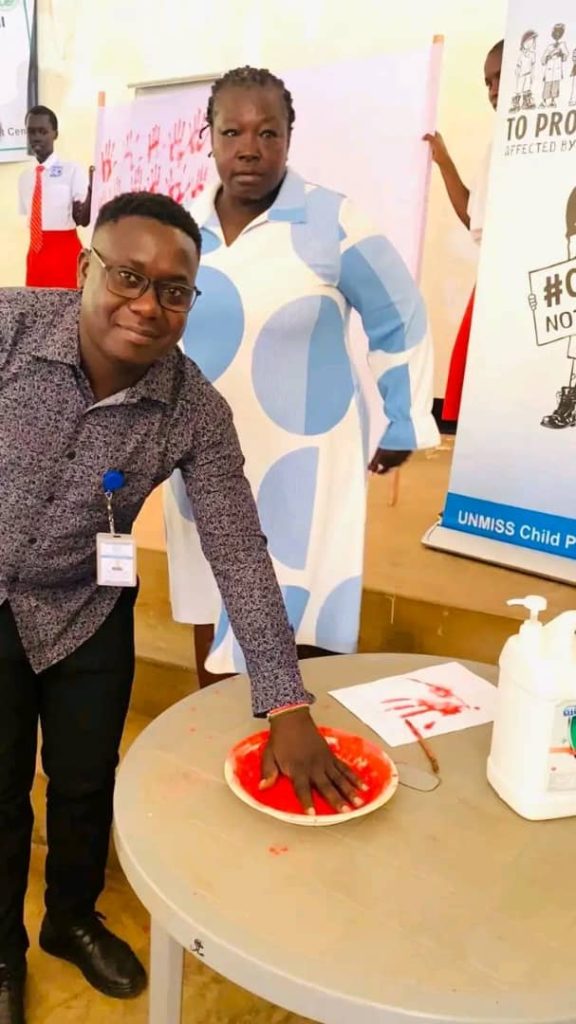
As part of a long-term solution, the Bishop reaffirmed the Catholic Church’s commitment to investing in education from kindergarten to university as a safeguard against child exploitation. He said the Church invests in schools because the future of the country depends on educated and well-formed children who are equipped with the tools they need to build a peaceful and prosperous nation.
He urged participants not to treat Red Hand Day as a symbolic annual observance but as a continuous commitment, reminding those gathered that children are born every day and therefore child protection must be continuous. He called on all present to translate their resolutions into concrete action that will make a tangible difference in the lives of vulnerable children across South Sudan.
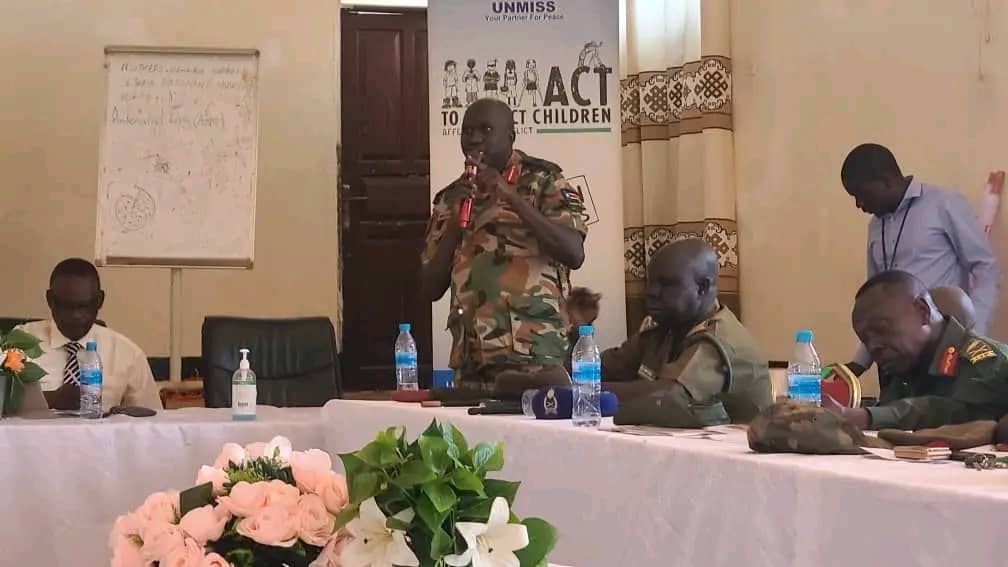
Bishop Hiiboro concluded with a powerful appeal to conscience, urging the nation to protect its children and provide them with the tools they need, specifically books, pens, education, and above all, peace. His message delivered a clear and uncompromising position that the recruitment of children into armed conflict is morally indefensible and nationally destructive.
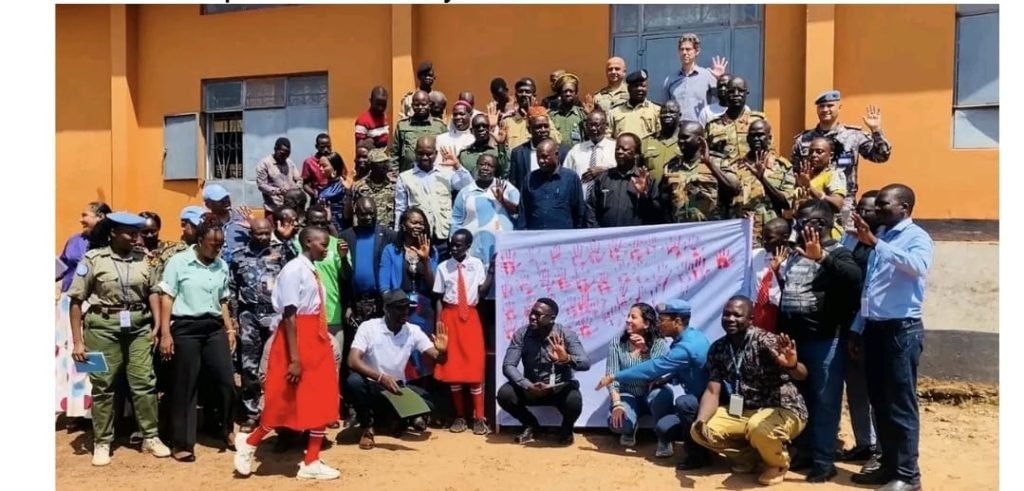
For many in attendance, the Bishop’s remarks were not merely ceremonial but a direct appeal to conscience, aimed at ensuring that South Sudan’s future is shaped not by guns in the hands of children but by classrooms filled with hope. As South Sudan continues its fragile journey toward stability, the commemoration of Red Hand Day in Yambio served as a powerful reminder of the urgent work that remains to be done in protecting the country’s most vulnerable and most precious resource, its children.