By Waure Eddy.
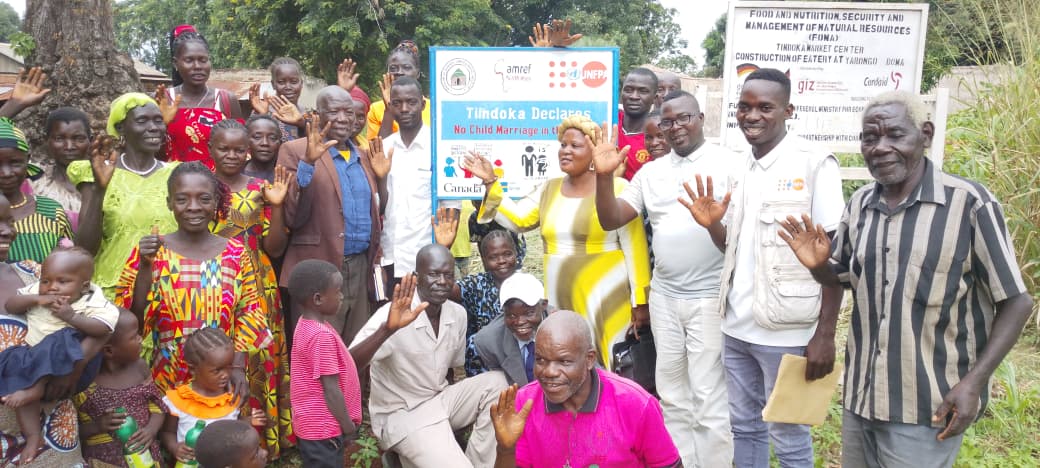
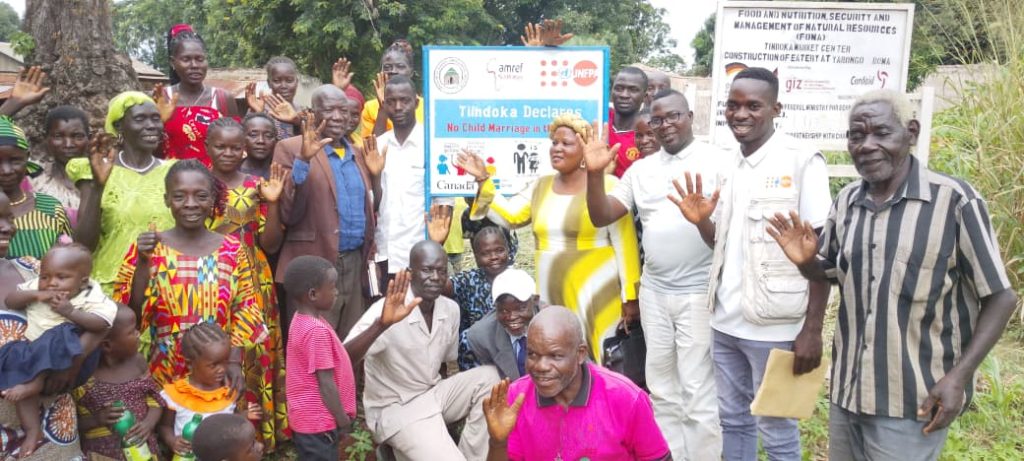
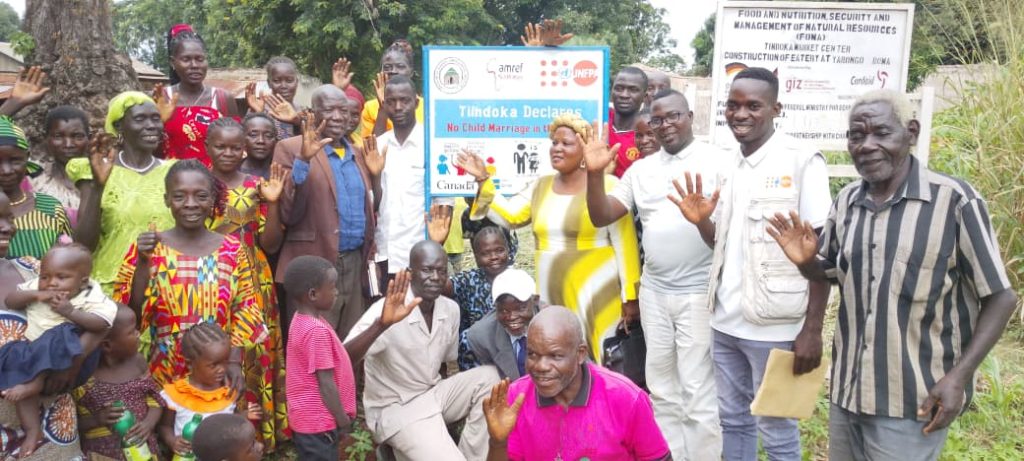
The community of Tindoka has formally declared an end to child marriage and sexual and gender-based violence, marking a historic commitment to protecting children and women following comprehensive training conducted by AMREF Health Africa in collaboration with the State Ministry of Gender, Child and Social Welfare, with support from UNFPA, Canada, Sweden, and Norway.
The formal declaration, made during a ceremony on Wednesday, represents collective commitment by community leaders, the Tindoka Action Group, and residents to eliminate harmful practices that undermine child protection and women’s dignity. The declaration positions Tindoka as a model community within Yambio County and demonstrates that community-led social transformation is possible with adequate training, resources, and partnership support.
Intensive Training and Community Preparation
The declaration emerges from series of intensive trainings conducted by AMREF Health Africa that equipped the Tindoka Action Group with knowledge and skills addressing multiple interconnected issues: sexual and gender-based violence, child marriage, hygiene and sanitation, sexual exploitation, and broader community development activities.
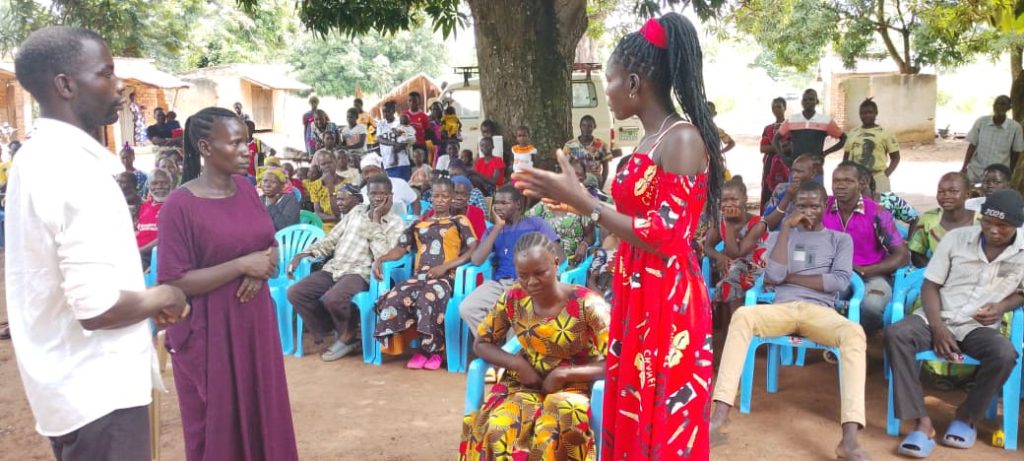
The comprehensive curriculum recognizes that addressing harmful practices requires multifaceted approach that combines protective interventions with positive development initiatives that address root causes including poverty, limited education access, and lack of economic opportunity.
Community Leadership Champions Change
Mr. John Moses Oto, Chairperson of the Tindoka Action Group, applauded AMREF Health Africa for its long-standing commitment to the community and announced the formal declaration with conviction and pride.
“Today, with the training we have acquired, we declare no child marriage and no SGBV in our Boma. We need to be an example to others in Yambio County,” he said, positioning Tindoka as a potential model for neighboring communities.
Mr. Oto emphasized that the declaration carries real consequences and accountability mechanisms. Anyone violating the community’s commitment will face accountability through local processes, reflecting determination to translate words into action through enforcement of community norms.
He further committed to advocating with other areas across Yambio County to make similar declarations, articulating vision of county-wide transformation in social norms around child marriage and SGBV.
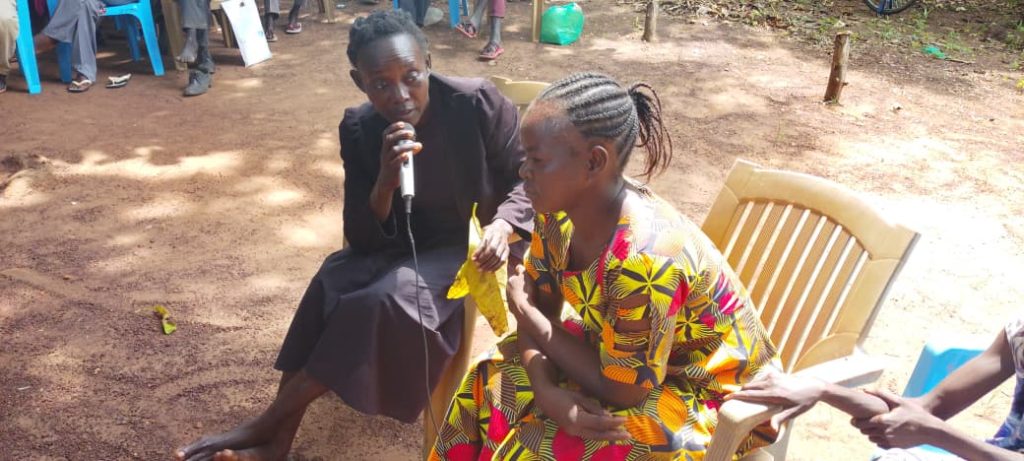
“We will continue to advocate for the rest of the areas across the county to do the same in their localities, because we want to avoid violence among ourselves,” he said, emphasizing that sustainable peace requires widespread commitment to ending violence.
Traditional Leadership’s Moral Authority
Headman Apollo Jacob characterized the declaration ceremony as a turning point for his community, emphasizing the moral and spiritual significance of the community’s commitment.
“This declaration is not just words; it is a commitment from our hearts. As leaders, we will ensure that our children grow up free from harmful practices. Today, Tindoka has shown that change begins at home,” he said, highlighting the critical role of traditional leadership in supporting social transformation.
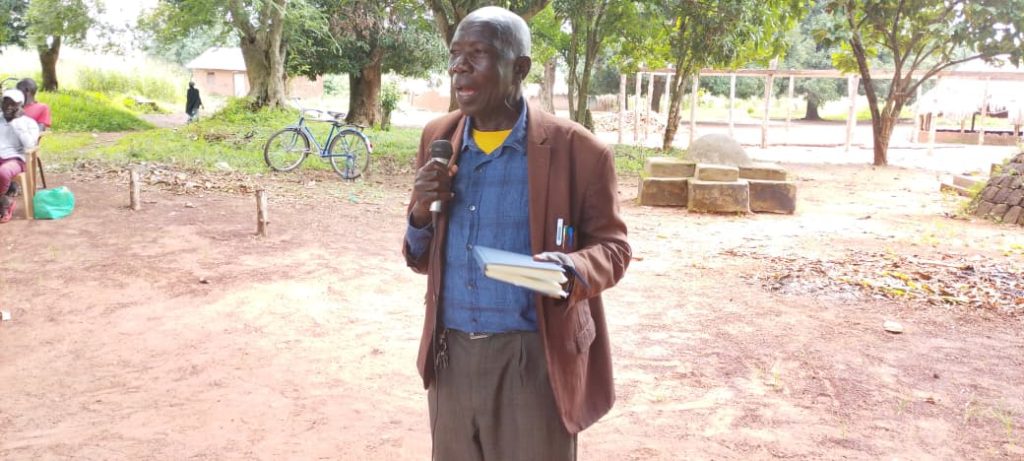
His statement recognizes that effective norm change requires not only individual commitment but also leadership endorsement and enforcement, as elders and chiefs possess authority and influence to support or hinder implementation of declared commitments.
Women’s Voice and Empowerment
Madam Amalia Elisama Abraham, Chairlady of Tindoka, expressed deep gratitude for the AMREF training program while speaking from the perspective of women who have experienced the harms targeted by the declaration.
“We appreciate AMREF and all partners for empowering us. As women, we know the pain caused by child marriage and SGBV. This declaration gives us hope that our daughters will live in dignity and safety,” she remarked, connecting lived experience of harm to hope for transformed future.
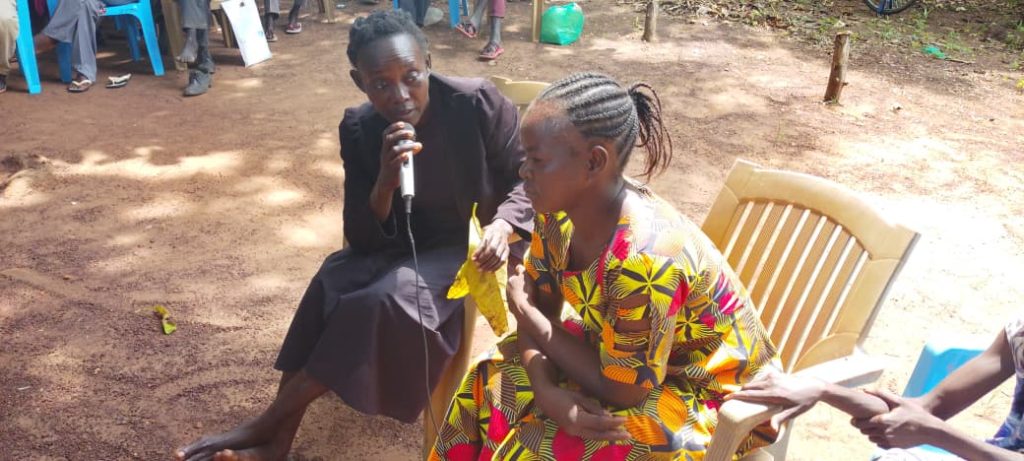
Her statement underscores that efforts to end child marriage and SGBV must center the voices and experiences of those most affected by these practices, recognizing that women possess crucial knowledge about barriers to implementation and opportunities for effective change.
Government Commitment to Implementation and Accountability
John Zebruna, Director General of the State Ministry of Gender, Child and Social Welfare, welcomed Tindoka’s declaration and pledged comprehensive government support for implementation and accountability.
“As Tindoka declares no child marriage and SGBV, the ministry will ensure implementation. We will monitor police custody, the Kingdom, and other departments arresting offenders. If anyone from Tindoka violates this declaration, they will face justice,” he affirmed, committing government institutions to supporting community commitments through formal legal system.
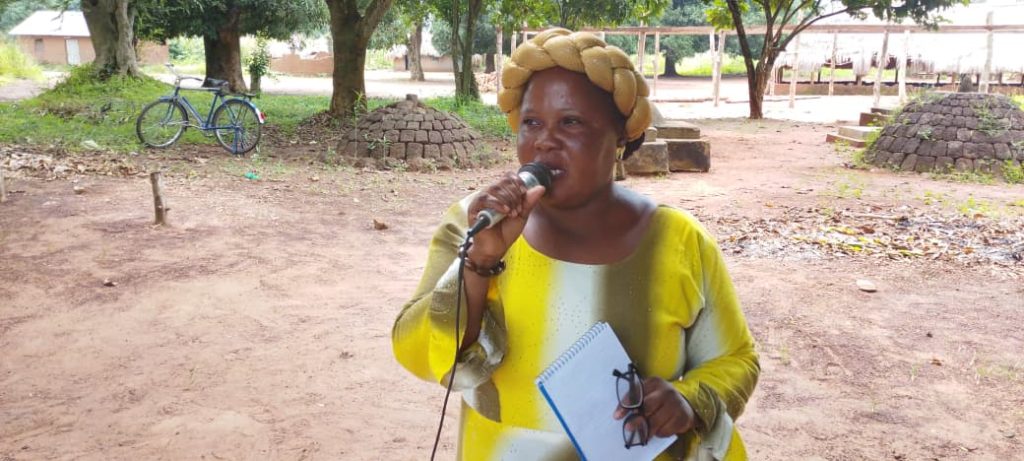
His statement recognizes that community declarations, while symbolically important and powerful, require government support and enforcement capacity to achieve lasting impact. The involvement of police, courts, and government departments ensures that serious violations have consequences beyond community-level accountability mechanisms.
Parliamentary Recognition and Support
Honorable Julie John, Member of Parliament and guest of honor at the declaration ceremony, commended AMREF Health Africa and its partner organizations for consistent support to communities addressing gender-based violence and child protection.
“I urge the people of Tindoka to stick to what they have declared today. This is a bold step that will inspire others. We thank AMREF and partners for always standing with our communities,” she said, affirming parliamentary recognition of community-led efforts and encouraging sustained commitment.
Her participation as guest of honor signaled that the Tindoka declaration has gained attention at county and parliamentary levels, potentially influencing policy discussions and resource allocation for child protection and SGBV prevention across Western Equatoria State.
Formal Documentation and Community Commitment
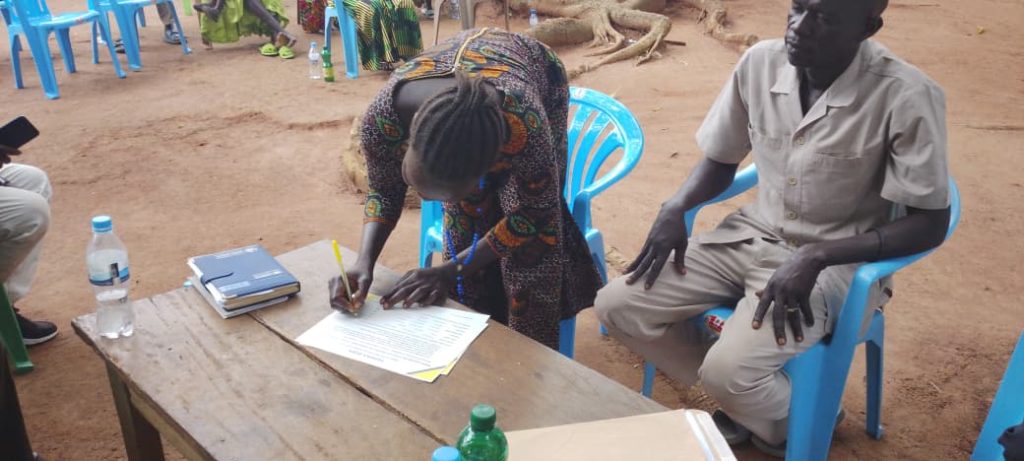
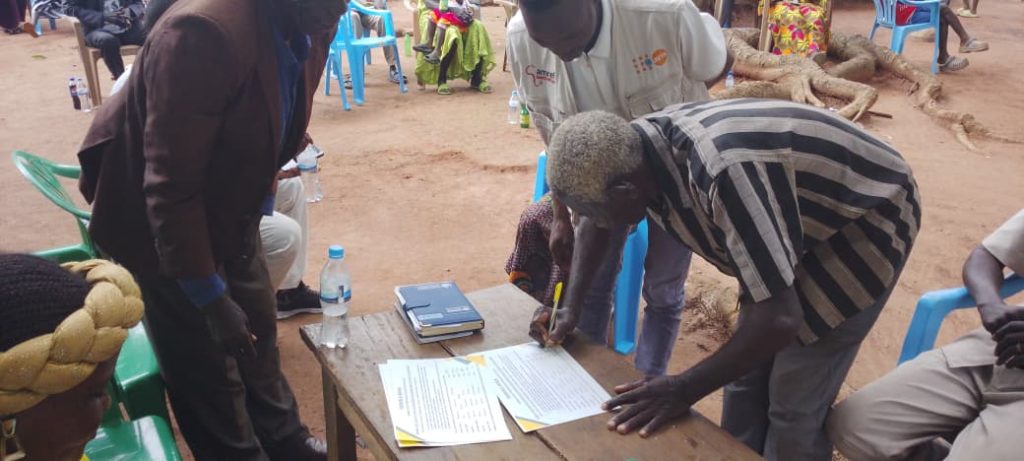
The declaration ceremony concluded with formal signing of declaration documents provided by AMREF Health Africa, with community members pledging to fully implement the commitments made. The signing created an official record of the community’s commitment and provided symbolic affirmation of their determination to end child marriage and SGBV.
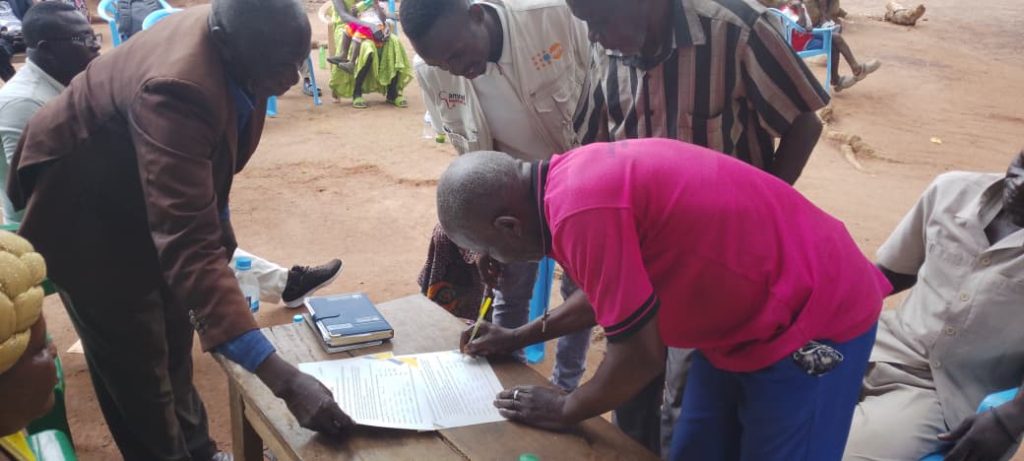
The formal documentation serves multiple purposes: it creates accountability, provides evidence of the community’s commitment to government and partner organizations, and establishes reference point against which progress can be measured. Signed documents also convey to neighboring communities the seriousness and formality of Tindoka’s commitment.
AMREF’s Partnership Approach
AMREF Health Africa’s support to Tindoka reflects its broader commitment to community-led social transformation. By training community action groups and supporting local leadership, AMREF recognizes that lasting change in social norms emerges from within communities rather than being imposed externally.
The organization’s comprehensive approach—combining awareness raising, skills training, documentation, government engagement, and ongoing support—addresses multiple levels necessary for sustainable change.
Context and Significance
Tindoka’s declaration addresses critical protection challenges facing children and women in South Sudan. Child marriage remains widespread in many communities, often justified by poverty, cultural practices, or perceived need for alliance-building. SGBV, including sexual assault and intimate partner violence, represents severe protection concern in nation still recovering from prolonged conflict where violence has been normalized.
Addressing these practices faces multiple challenges: poverty that creates economic incentives for child marriage, cultural practices that legitimize early marriage and gender-based discrimination, limited access to education particularly for girls, weak rule of law, and trauma from conflict that may normalize violence.
Model for Other Communities
Tindoka’s declaration positions the Boma as a model that other communities in Yambio County and across Western Equatoria State can emulate. The involvement of diverse stakeholders—community leaders, women, youth, government officials, and parliamentarians—demonstrates that ending child marriage and SGBV requires multi-level commitment and collaboration.
The ceremony provided visibility and validation for community-led efforts, potentially inspiring other communities to pursue similar declarations and training.
Norms Change Theory and Practice
The Tindoka declaration reflects evidence-based understanding that addressing harmful practices like child marriage requires changing community norms and values. When community leaders, elders, and community members collectively declare that a practice is unacceptable, it creates social pressure that deters individuals from engaging in the practice and supports those who refuse to participate.
Research demonstrates that norm change is most effective when:
- Community leaders endorse the new norm
- Multiple community sectors participate
- The change is perceived as coming from within the community rather than imposed externally
- Accountability mechanisms reinforce the new norm
- Economic alternatives address poverty-driven practices
Tindoka’s approach incorporates these elements, increasing likelihood of sustainable change.
Accountability and Enforcement
The community’s commitment to hold violators accountable reflects recognition that declarations alone are insufficient. Effective accountability might include:
- Community discussion and mediation
- Referral to government authorities for legal prosecution
- Social sanctions and consequences within the community
- Support services for victims and survivors
- Economic support for families to reduce poverty-driven child marriage
The involvement of government officials ensures that formal legal system can support community mechanisms when necessary.
Path Forward
As Tindoka Boma begins implementing its declaration, the community will face ongoing challenges requiring sustained commitment, ongoing training, economic support to address poverty, and continued partnership with government and civil society organizations like AMREF.
Success will be measured by:
- Actual decline in child marriage incidents
- Increased reporting and prosecution of SGBV cases
- Girls continuing school and delaying marriage
- Improved safety and dignity for women and children
- Ripple effects inspiring other communities to pursue similar commitments
Broader Significance
Tindoka’s declaration marks significant milestone in efforts to protect children and end gender-based violence in Western Equatoria State. It demonstrates that community-led change is possible when communities receive training, resources, and support from organizations like AMREF working alongside government and international partners.
The formal declaration creates accountability and provides evidence of community commitment that can be referenced in monitoring progress and securing continued support for implementation.
As additional communities across Yambio County and Western Equatoria State witness Tindoka’s bold action, momentum may build for wider adoption of similar commitments and training programs.
The Tindoka declaration stands as testament to power of community mobilization, leadership commitment, and international partnership in addressing critical protection challenges facing vulnerable populations in post-conflict contexts.