By Sr. Laurencila Akinyi,FSSA.
The Sudan and South Sudan Catholic Bishops’ Conference has issued a joint appeal on the International Day of Peace, September 21, 2026, calling on political leaders, citizens, and faith communities across both nations to invest in peace grounded in justice, dignity, and genuine reconciliation rather than merely the absence of conflict.
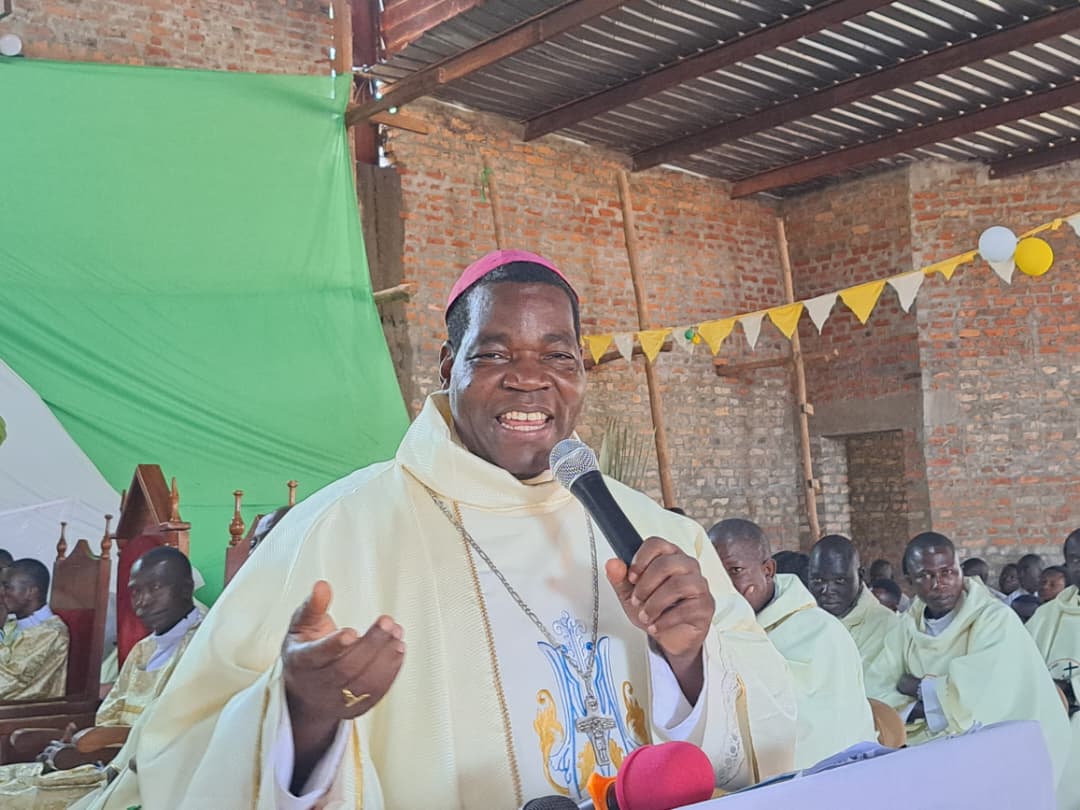
The statement, released by Bishop Barani Eduardo Hiiboro Kussala of the Catholic Diocese of Tombura-Yambio, who chairs the Justice and Peace Commission of the Sudan and South Sudan Catholic Bishops’ Conference, addresses the particular vulnerabilities both nations face as they navigate electoral processes and continued post-conflict recovery.
Speaking from “lived experience of peoples who have endured conflict, displacement, grief and fear, yet continue to hope,” the bishops articulated a comprehensive vision of peace encompassing justice, dignity, security, and reconciliation—extending far beyond mere cessation of violence.
The bishops rejected narrow definitions of peace as simply the absence of armed conflict. “Peace is more than the absence of war. It requires justice, dignity, security, reconciliation and the courage to rebuild trust,” they stated, insisting that authentic peace demands proactive construction of just societies capable of sustaining nonviolence.
This distinction addresses a critical reality in post-conflict contexts: ceasefire agreements that end active warfare without addressing underlying injustices, economic disparities, and historical grievances often prove fragile. The bishops’ insistence on justice and dignity as integral to peace reflects understanding that sustainable peace must address root causes of conflict.
The bishops articulated a theology of historical memory that honors past suffering while refusing to perpetuate violence into the future. “Our peoples have carried wounds for too long. But our wounds belong to our history; peace is the legacy we must leave to our children,” they declared, suggesting that present generation bears responsibility to break cycles of violence and revenge.
This formulation acknowledges genuine suffering—the “wounds” that conflict inflicts—while refusing to accept continued violence as inevitable consequence of historical trauma. By emphasizing that wounds “belong to our history” rather than determining the future, the bishops challenge fatalistic narratives that suggest renewed conflict is inevitable.
The bishops directly addressed political leaders, citizens, and traditional authorities, appealing to them to reject violence as means of resolving differences. “Let our differences never become reasons for violence. Let dialogue replace confrontation, and let public authority serve the common good,” they urged, positioning peaceful dialogue and commitment to common good as essential commitments.
This appeal carries particular urgency as Sudan and South Sudan approach electoral processes. The bishops recognized that elections can generate political tensions and emphasized that “political disagreement must never turn a neighbour into an enemy.” The statement explicitly calls for electoral participation characterized by “dignity and rights respected,” freedom from “fear, intimidation and violence,” and peaceful competition grounded in respect for democratic norms.
The bishops issued direct challenge to South Sudan and Sudanese youth, the demographic most vulnerable to recruitment into renewed violence. “Do not inherit the hatred of yesterday. Build bridges across communities and differences. Choose education, faith, service and reconciliation over violence,” they called to young people.
This message recognizes that breaking cycles of violence requires conscious choice by younger generation to reject narratives of perpetual conflict and pursue alternative paths of education, spiritual growth, and service. By positioning reconciliation as active choice requiring courage and commitment, the bishops frame peacebuilding as demanding challenge rather than passive acceptance of circumstances.
The bishops extended responsibility for peacebuilding to families, churches, mosques, traditional leaders, and media institutions, positioning these social structures as essential participants in creating peace culture. “Let us become builders of peace. Our words and actions can either deepen wounds or help heal them,” they stated, emphasizing that peace is constructed through countless daily choices by individuals and institutions.
This appeal acknowledges that media institutions and traditional leaders wield particular influence over public discourse and community attitudes. By calling media to responsibility for either deepening or healing wounds through reporting choices, and traditional leaders to embody peacebuilding values, the bishops identify key institutions capable of shaping whether societies move toward or away from violence.
The bishops grounded their peace appeal in Gospel foundation, citing Jesus’s beatitude: “Blessed are the peacemakers, for they will be called children of God.” This positioning of peacemaking as primary Christian vocation challenges all believers to prioritize peace advocacy and reconciliation work.
The spiritual grounding of peacebuilding addresses a critical reality in religiously-diverse societies: religious communities and leaders exercise profound influence over public attitudes and behavior. By explicitly connecting peacemaking to Christian identity and divine blessing, the bishops mobilize religious authority in service of nonviolence.
The bishops extended particular spiritual concern for those most vulnerable to conflict’s continuing impacts: “victims of violence, displaced families, refugees, children growing up in fear, and all who carry the wounds of conflict.”
This enumeration acknowledges that conflict’s impacts extend far beyond active combat zones to encompass internally displaced persons, refugees in neighboring countries, and entire generation of children marked by war trauma. The bishops’ prayer for these populations recognizes that peace-building must include healing trauma and addressing ongoing suffering.
While focusing on Sudan and South Sudan, the bishops extended their peace appeal to the broader African continent. “May Sudan find peace. May South Sudan find peace. May Africa find peace,” they prayed, articulating vision of continental reconciliation and nonviolence.
This continental perspective situates Sudan and South Sudan’s peace challenges within broader pattern of conflicts affecting multiple African nations. It suggests that peacebuilding in both nations contributes to broader continental stability and offers models for other conflict-affected societies.
The bishops concluded with formulation emphasizing that peace begins at individual level while requiring collective commitment:
“Peace begins with me.
Peace begins with you.
Peace begins with us.”
This tripartite articulation connects personal transformation (“me”), interpersonal responsibility (“you”), and collective action (“us”), suggesting that authentic peace requires simultaneous work at individual, relational, and communal levels. No level can be neglected—individual virtue without relational transformation and collective commitment remains incomplete; collective action without individual conversion and interpersonal reconciliation lacks foundation.
The bishops concluded with prayer to become “instruments of His peace,” invoking the Peace Prayer attributed to Saint Francis of Assisi. This language positions peacemakers as channels through which divine peace flows into the world, suggesting that human peace-building efforts participate in God’s redemptive work.
The statement arrives as Sudan and South Sudan face interconnected challenges: ongoing conflict in Sudan’s eastern and western regions, political tensions in South Sudan as nation prepares for December 2026 elections, and shared vulnerabilities of displaced populations and refugees affecting both nations.
The bishops’ joint statement from both Sudan and South Sudan Catholic Bishops’ Conferences demonstrates ecclesiastical solidarity across national boundaries and commitment to regional peace. By uniting their voices, bishops of both nations signal that the Church transcends political divisions and maintains commitment to nonviolence regardless of state boundaries.
The timing of the International Day of Peace statement carries particular significance given South Sudan’s approaching elections. The bishops’ explicit calls for peaceful electoral participation, respect for human dignity, and rejection of violence as political means address real concerns that electoral competition could precipitate renewed conflict in a fragile nation.
By issuing this statement before the electoral period, the bishops provide religious and moral foundation for peaceful democratic competition, offering alternative narrative to those promoting violence as legitimate political tool.
The bishops’ statement exemplifies the Church’s prophetic role: speaking truth grounded in Gospel values and directed toward transformation of unjust or violent structures. By calling political leaders, citizens, institutions, and young people to embrace peace, the bishops exercise prophetic witness challenging present systems and imagining alternative futures.
The statement sets agenda for ongoing peace work by Catholic institutions and faithful throughout Sudan and South Sudan. Parishes, dioceses, schools, and Catholic associations will receive the bishops’ message and implement it through education, advocacy, spiritual formation, and community service.
The Justice and Peace Commission, chaired by Bishop Hiiboro, will continue coordinating Catholic peacebuilding efforts across both nations, translating episcopal exhortations into concrete programs and initiatives.
The Sudan and South Sudan Catholic Bishops’ Conference’s International Day of Peace statement affirms the Church’s unwavering commitment to nonviolence, reconciliation, and justice in both nations. By addressing political leaders, young people, families, media, and religious institutions, the bishops mobilize comprehensive response to peace-building challenges.
The statement’s central insight—that wounds belong to history while peace represents the legacy for children—captures a vision of redemptive memory that refuses to perpetuate violence while honoring genuine suffering. It challenges both Sudan and South Sudan to break cycles of conflict and construct futures grounded in dialogue, justice, reconciliation, and dignity.
As citizens of both nations engage with electoral processes and continue post-conflict reconstruction, the bishops’ call to become “instruments of His peace” echoes across the region, inviting individuals, families, communities, and institutions to invest in peace—for everyone, everywhere, every day.
The statement concludes not with demands but with invitation: May God strengthen all who work for justice, reconciliation, and peace, and may both Sudan and South Sudan discover that peace begins with individuals choosing nonviolence, communities committing to reconciliation, and nations building institutions grounded in justice and dignity.