By Sr. Laurencila, FSSA
The Catholic Diocese of Tombura Yambio has officially resumed work in the Curia and diocesan institutions for the year 2026, following the Christmas celebrations, New Year festivities, and recent Priestly and Diaconate Ordinations, with a strong call for renewal, dedication, and service.

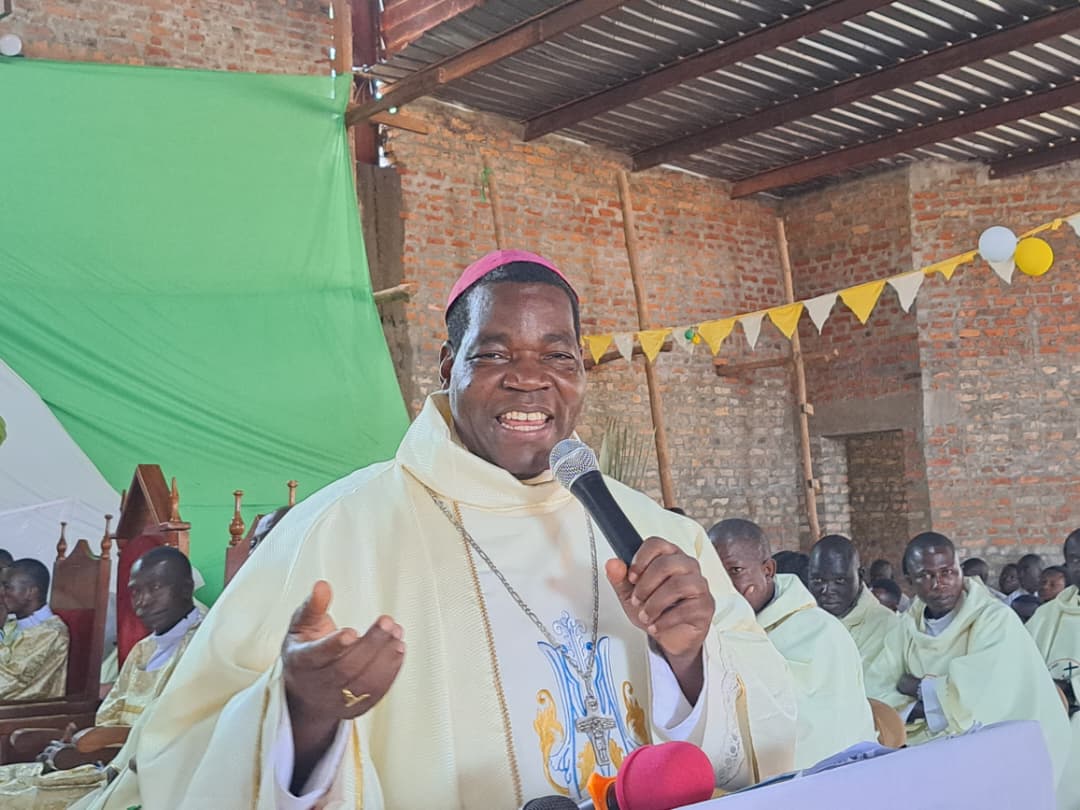
In a homily delivered to Diocesan Staff and Collaborators, Church leadership reminded workers that returning to duty was not merely a return from holiday, but a return shaped by grace. The message emphasized that God continues to call, trust, and send His people to serve, even through daily Administrative and Pastoral responsibilities.
The Bishop described the Diocesan Curia not simply as an office, but as a Sacred space of service. He noted that while the Altar stands as the heart of the Church, the Curia serves as its hands—supporting the mission of Christ and enabling the Church to reach the faithful across parishes and communities.
Work as Participation in God’s Mission
Drawing from the Book of Genesis, the Bishop reflected on God as a worker who creates with care and evaluates His work with delight. He stressed that work is not a punishment, but a participation in God’s creative love, giving dignity and meaning to every task carried out in service of the Church.
He reminded diocesan staff that Christmas celebrates God’s entry into real human life, affirming that daily administrative work—meetings, documents, decisions, and coordination—is not separate from faith but a continuation of the Incarnation when done with honesty, patience, and justice.
A Call for Renewal Beyond Routine
As the Diocese enters the new year, the Bishop cautioned against routine without purpose. He encouraged staff to see 2026 as a year of transformation rather than repetition, urging the Curia to become a place where people leave strengthened, even when their requests cannot always be met.
The recent ordinations of new priests and deacons were highlighted as a reminder of why Church structures exist—to support mission, not delay it. The Bishop emphasized that diocesan administration must serve parishes, clergy, catechists, and especially the poor and vulnerable.

“Administration without charity becomes bureaucracy, and zeal without order becomes chaos,” he noted, calling for balance between compassion and structure.
Promoting a Culture of Excellence
Encouraging practical commitment, the Bishop proposed a simple guiding principle for 2026: doing everyday tasks “one percent better.” He highlighted small but meaningful improvements such as greater honesty, punctuality, care, and accountability as achievable steps toward long-term transformation.
He reminded staff that work itself can be a form of prayer, echoing the Gospel message that God continues to work for the good of His people.
Looking Ahead
As diocesan activities resume fully, the Bishop concluded with a prayer that the Curia and all diocesan institutions may become places of light, truth, and service, guided by humility, integrity, and missionary courage.
The message set a hopeful and purposeful tone for the year ahead, reaffirming the Diocese’s commitment to faithful service, effective administration, and renewed pastoral mission in 2026.