By Baraka John
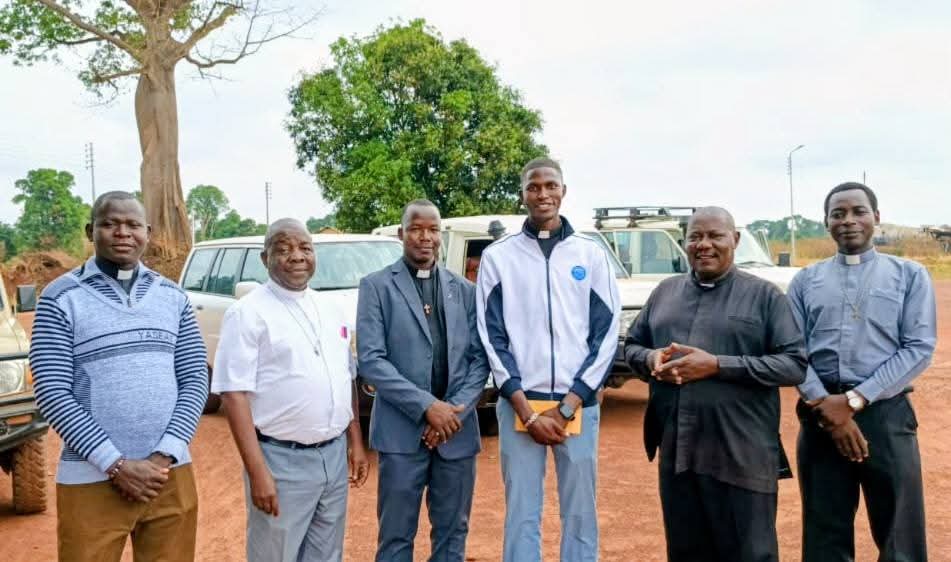
Two clergy from the Catholic Diocese of Tombura-Yambio departed this morning for Malakal, where they will begin a three-year pastoral mission in the Catholic Diocese of Malakal.
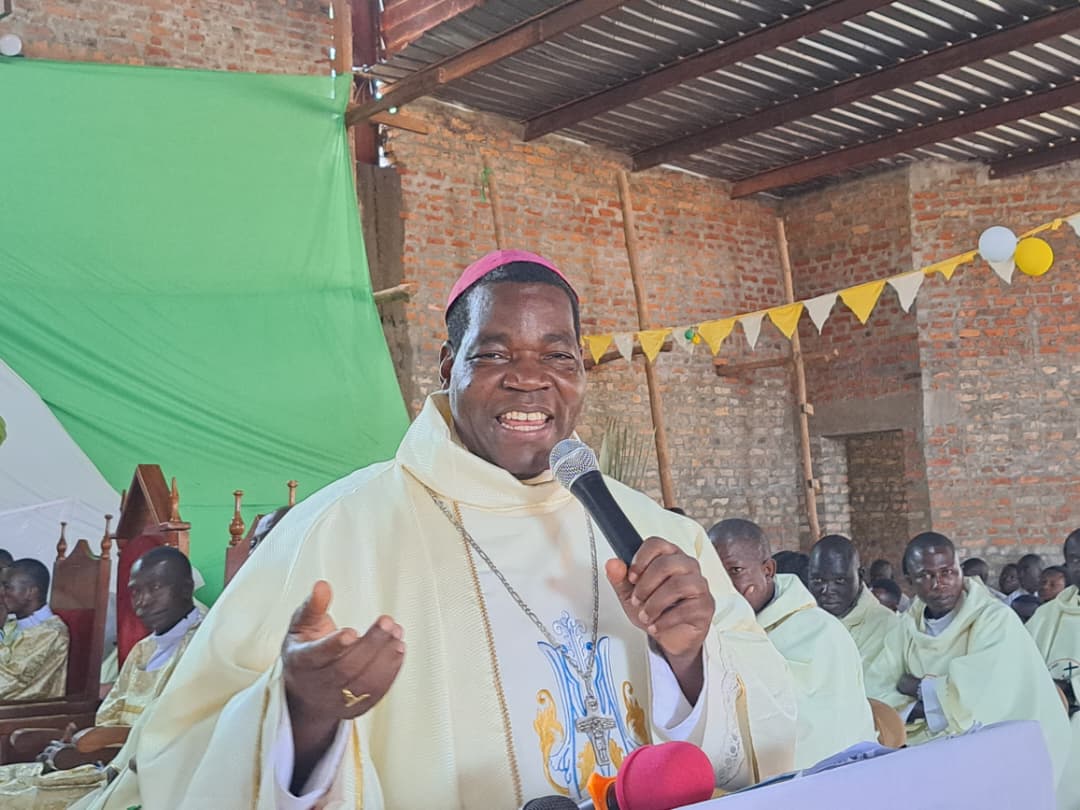
Reverend Wenengbi Ngbapai Moses and Deacon John Bangasu Santo were officially assigned to serve in Malakal following a directive issued by the Most Reverend Barani Eduardo Hiiboro Kussala, Bishop of the Catholic Diocese of Tombura-Yambio. The assignment is part of a broader effort by the diocese to strengthen pastoral ministry and promote cooperation between dioceses across South Sudan.
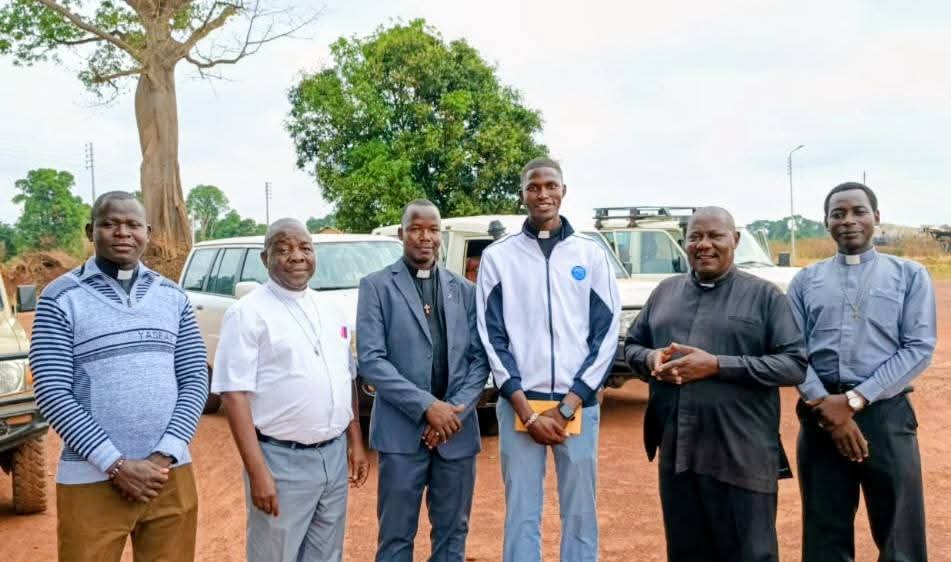
According to a communiqué released on January 4, Reverend Wenengbi, who has been serving under the Ezo Vicariate, and Deacon Bangasu, who was recently ordained, have been selected to take on both spiritual and administrative responsibilities in their new station. The move reflects the ongoing commitment of the Diocese of Tombura-Yambio to support faith communities in different parts of the country, particularly in areas in need of additional clergy.
The two clergy are expected to begin their duties immediately upon arrival in Malakal, marking the start of their three-year mission in a diocese that serves communities in the Upper Nile region of South Sudan.
The Catholic Diocese of Malakal has faced significant challenges in recent years due to conflict and displacement, which have affected both its infrastructure and its ability to provide consistent pastoral care to the faithful. The arrival of clergy from Tombura-Yambio represents a concrete expression of solidarity between dioceses and demonstrates the commitment of the South Sudanese Catholic Church to mutual support and collaboration in serving the people of God.
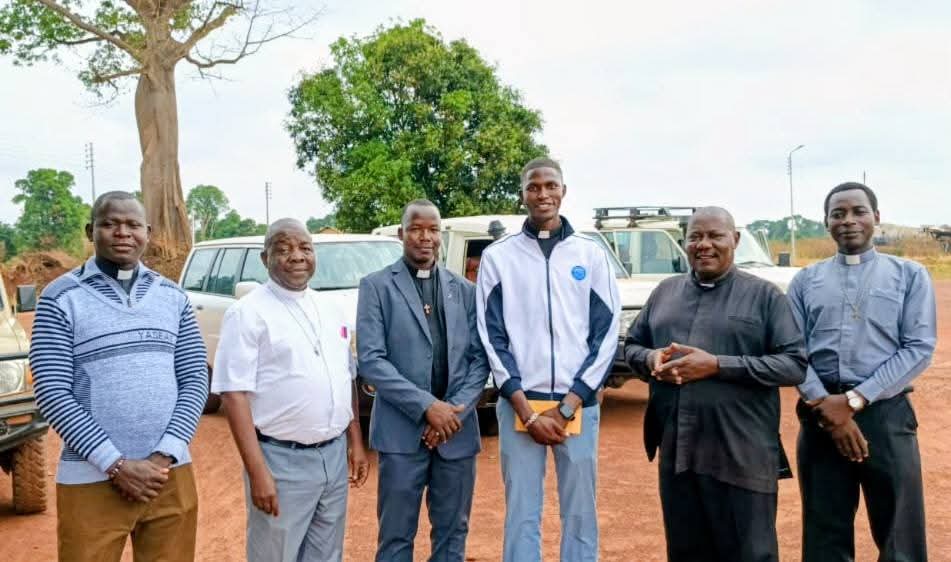
Bishop Hiiboro’s decision to send priests and deacons to serve in other dioceses reflects a vision of the Church that transcends territorial boundaries and recognizes the universal mission of clergy to serve wherever they are needed. This spirit of inter-diocesan cooperation has become increasingly important in South Sudan, where some dioceses face acute shortages of priests while others have been able to maintain stronger clerical presence.
Reverend Wenengbi’s experience serving in the Ezo Vicariate, a region that has faced its own security challenges and pastoral demands, will likely prove valuable in his new assignment in Malakal. Deacon Bangasu, as a recently ordained minister, brings fresh energy and commitment to his first major assignment, which will provide him with formative pastoral experience in a diverse and challenging context.
The departure of the two clergy was marked by prayers and blessings from their home diocese, with members of the clergy and faithful expressing both sadness at their departure and pride in their willingness to serve the broader Church. Many noted that the three-year assignment represents a significant sacrifice for both the clergy themselves and their families, who will be separated for an extended period.
The Catholic Diocese of Tombura-Yambio has developed a reputation for its strong commitment to priestly formation and its willingness to share its clergy with other parts of South Sudan and beyond.This missionary spirit reflects the broader vision of Bishop Hiiboro, who has consistently emphasized that the Church in South Sudan must be not only locally rooted but also universally minded, willing to share resources and personnel to strengthen the entire body of Christ across the nation.
As Reverend Wenengbi and Deacon Bangasu begin their journey to Malakal, they carry with them the prayers and support of the entire Diocese of Tombura-Yambio. Their mission represents a living example of the Catholic Church’s commitment to serving all people, regardless of ethnic, regional, or diocesan boundaries, and contributes to the ongoing work of building a unified and vibrant Church in South Sudan.
The Catholic community in Malakal is expected to warmly receive the two clergy, whose arrival will strengthen the diocese’s capacity to provide sacramental ministry, pastoral care, and spiritual guidance to the faithful in a region still recovering from years of conflict and working to rebuild both its physical infrastructure and its social fabric.