By Sr. Laurencila Akinyi, FSSA.
Cardinals, archbishops, bishops, and leaders of national Caritas organizations from 46 African countries have issued the Abidjan Declaration, affirming the Church’s mission of charity as constitutive of its identity and calling for renewed commitment to serving the poor and vulnerable across the continent.
The declaration emerged from a historic gathering held in Abidjan from March 16-20, 2026, under the theme “20 years of Deus Caritas Est: Caritas as a catalyst for love, Service and Social Transformation in Africa.” The conference brought together 129 delegates including Cardinals, Bishops, Caritas directors, representatives of religious congregations, lay professionals, and partners in the service of charity.
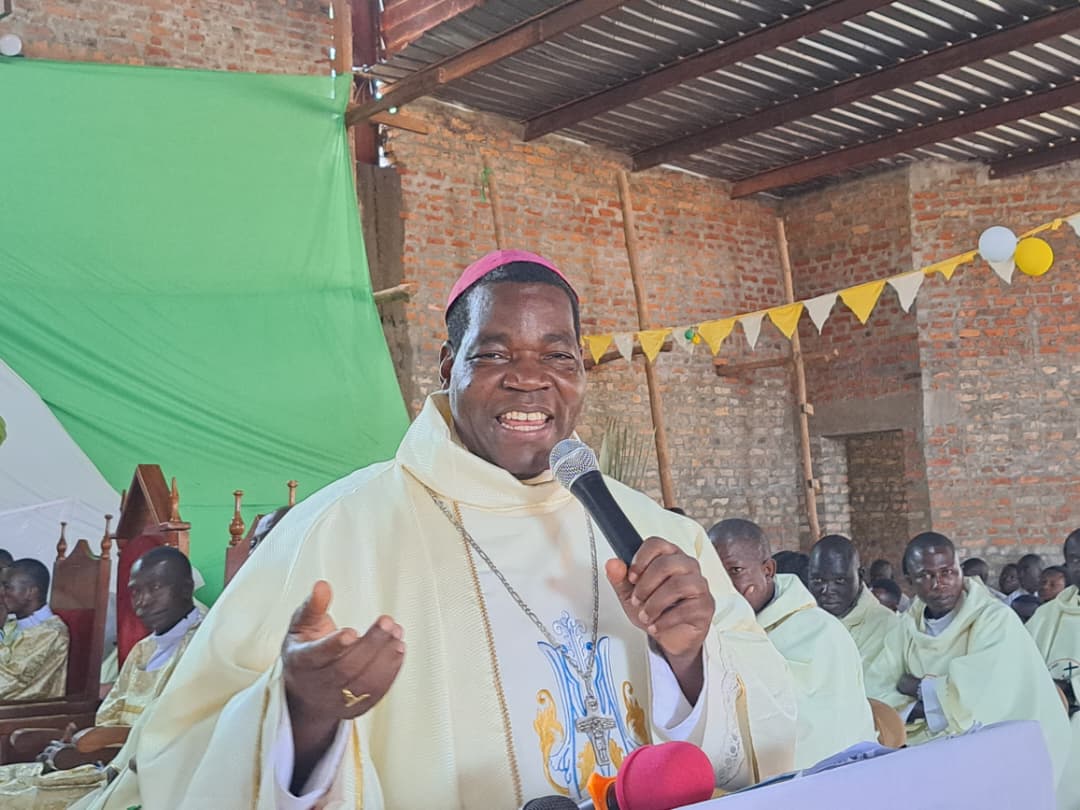
Among the participants was the Most Reverend Barani Eduardo Hiiboro Kussala, Bishop of Tombura-Yambio and President of Caritas South Sudan, representing the Catholic Church’s charitable work in South Sudan alongside other African church leaders.
Theological Foundation and Context
The gathering marked the fourth in a series of continental commemorations of Pope Benedict XVI’s 2005 encyclical Deus Caritas Est, following previous meetings in Mumemo in 2010, Kinshasa in 2012, and Dakar in 2017. Participants studied three magisterial texts that form a unified theological argument: Deus Caritas Est, which established that charity belongs to the very nature of the Church; Intima Ecclesiae Natura from 2012, which drew out structural and canonical implications; and the recent apostolic exhortation Dilexi Te from 2025, which calls the Church to an ever more courageous and self-giving expression of love.
The declaration affirms that Caritas is not an optional commission but is constitutive of the Church’s identity, as foundational as the proclamation of the Gospel and the celebration of the sacraments. The deliberations were animated by Conversation in the Spirit borrowed from the Synodal process, received not as a procedural technique but as an ecclesiological commitment to the belief that the Holy Spirit speaks through all the baptized, beginning with those in the most fragile contexts.
The participants expressed gratitude to Pope Leo XIV for the magisterial light of Dilexi Te and for his paternal solicitude toward Africa. They thanked the Catholic Church in Côte d’Ivoire for its witness of a living and active Caritas and expressed appreciation to the Government of Côte d’Ivoire for hosting the gathering and for their presence, which signaled genuine and sustained state engagement with the Church’s mission of human development.
Honest Assessment of African Reality
The declaration speaks candidly about the challenges facing the continent. While celebrating Africa’s natural wealth, spiritual vitality, and youthful energy, the bishops acknowledged that these coexist with poverty, conflict, and exclusion that are not accidental but structural. They noted that corruption traumatizing populations is often perpetuated by men and women who are themselves Christians in positions of power, and that natural resources are extracted in arrangements that serve neither communities nor their governments.
The declaration highlighted that international humanitarian budgets have been cut by ninety billion dollars per year at precisely the moment when needs are most acute, while the world spends 3.6 trillion dollars annually on defense. In this landscape, the bishops affirmed that Caritas does not act as a mere extinguisher of fires lit by others but is a form of prophetic resistance, keeping the light on in the thick darkness.
Receiving Dilexi Te as the most timely of summons, the declaration quoted Pope Leo XIV’s teaching that the poor are not a sociological category for Christians but the very flesh of Christ, and that it is in bending down to care for the poor that the Church assumes its most elevated posture. The bishops emphasized that love is not measured by intention but by impact.
Twenty-Three Concrete Commitments
The Abidjan Declaration contains twenty-three specific commitments that African Catholic leaders pledged to implement. These include reaffirming the ecclesial identity of Caritas, ensuring all organizations maintain statutes and governance structures that make this identity visible and operative; resisting institutional drift and ideological colonization by protecting Caritas from reduction to project management at the expense of its pastoral, spiritual, and prophetic dimensions; and bishops assuming fully their personal, canonical, and non-delegable responsibility for the service of charity.
The commitments include strengthening governance and institutional accountability, making the poor genuine protagonists with real authority and voice in decisions that affect them, embedding synodal culture within Caritas at every level, and investing in integral formation that holds together professional competence and interior conversion.
Financial autonomy emerged as a critical priority, with leaders committing to build sustainable local mechanisms for resource mobilization through parish solidarity collections, diocesan development structures, liturgical seasons of giving, and South-South cooperation. The bishops stated that a Caritas fully dependent on external funding cannot be free in its priorities or prophetic voice, describing autonomy as not only a financial goal but a theological one.
The declaration commits African Catholic leaders to strengthen their prophetic voice in the face of structural injustice, conducting advocacy on the structural causes of poverty including corruption, the plunder of natural resources, systems that maintain impoverishment as a strategy of power, and the dramatic reduction of international humanitarian funding.
Ensuring the full inclusion and leadership of women and youth was emphasized as requiring a decisive shift from including them as targets of programs to welcoming them as protagonists of leadership and governance. The bishops noted that women carry deep moral credibility and relational capital in communities, making them irreplaceable in peacebuilding and social healing, while youth are not the future of the Church but the Church now.
The declaration also commits to building continental solidarity through direct Caritas-to-Caritas support across Africa, implementing the SECAM-Caritas Africa Collaboration Directive signed in Accra in February 2025, and integrating care for creation into the mission of Caritas, recognizing that the cry of the earth and the cry of the poor are inseparable.
Closing Message
The bishops left Abidjan renewed in faith, fraternal communion, and the conviction that Caritas Africa carries within it everything it needs: the living tradition of the Church, the wisdom of its people, and the inexhaustible love of a God who does not abandon his poor. Quoting Scripture, they declared their commitment to love not in word or speech but in deed and in truth.
The declaration was signed on March 20, 2026, and invoked the intercession of the Virgin Mary, Our Lady of Africa, as the Church journeys through Lent and prepares to celebrate the glory of Easter.
The Abidjan Declaration represents a milestone in the African Catholic Church’s understanding of its charitable mission, moving beyond emergency relief toward structural transformation grounded in the conviction that serving the poor is not an optional activity but the very heart of what it means to be Church. With Bishop Hiiboro and other South Sudanese leaders present at this historic gathering, the declaration’s commitments will have direct implications for how the Catholic Church in South Sudan organizes and strengthens its service to the vulnerable, particularly in contexts of ongoing conflict and humanitarian crisis.