By Baraka John
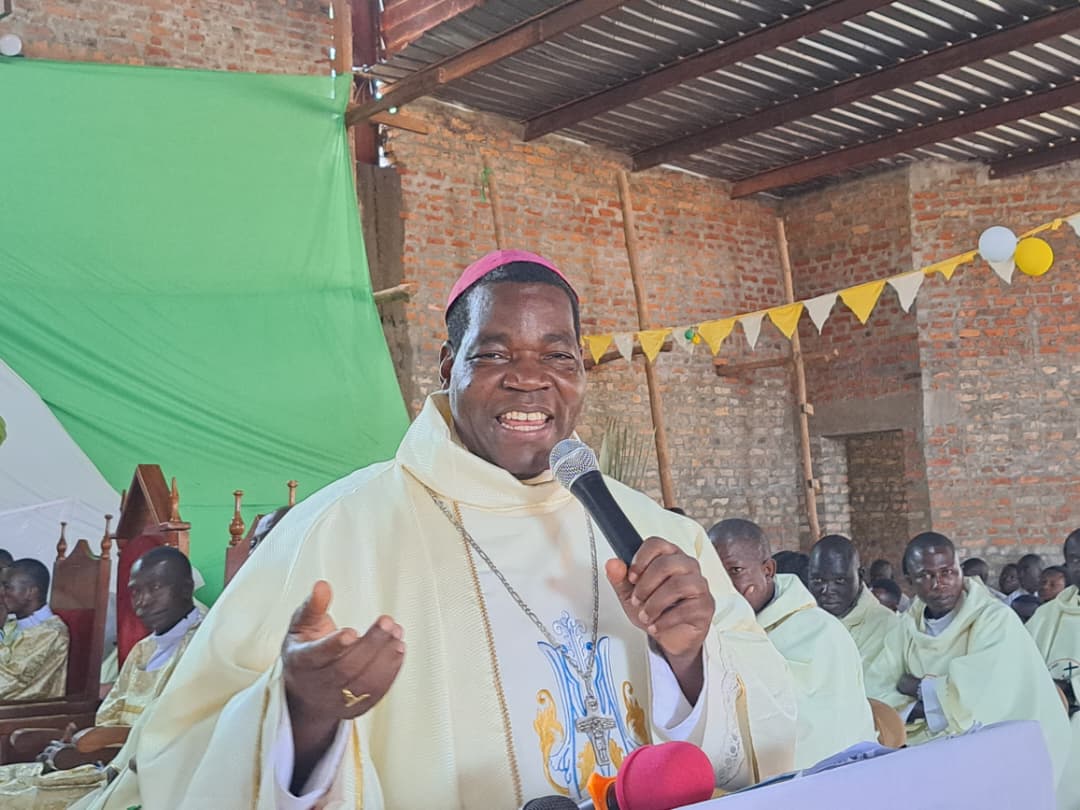
The Bishop of the Catholic Diocese of Tombura-Yambio, the Most Reverend Barani Eduardo Hiiboro Kussala, returned to the diocese on Thursday following a significant trip to Abidjan, Côte d’Ivoire, where he attended a major Caritas Africa conference. He was warmly welcomed upon his arrival by clergy, religious sisters, students, and diocesan staff.
Speaking to the gathered community, Bishop Hiiboro expressed gratitude for a safe journey and shared insights from the conference. He emphasized that the Church’s charitable mission must go beyond simply addressing symptoms and should tackle the root causes of human suffering while promoting integral human development across Africa.
The conference in Abidjan brought together leaders from 46 African countries, including cardinals, archbishops, bishops, and Caritas directors, culminating in the historic Abidjan Declaration. This significant statement reaffirms that charitable service is central to the Church’s identity and calls for renewed commitment to the poor and vulnerable across the continent.
Bishop Hiiboro represented South Sudan alongside other African Church leaders at the gathering, which was themed “20 years of Deus Caritas Est: Caritas as a Catalyst for Love, Service, and Social Transformation in Africa.” The event, which took place from March 16-20, 2026, reflected on recent Church teachings, including the 2025 apostolic exhortation Dilexi Te, which urges a courageous, self-giving love in service of those most in need.
The conference marked the fourth in a series of continental commemorations of Pope Benedict XVI’s 2005 encyclical Deus Caritas Est, following previous gatherings in Mumemo in 2010, Kinshasa in 2012, and Dakar in 2017. The 129 delegates studied three magisterial texts that form a unified theological argument affirming that Caritas is not an optional commission but is constitutive of the Church’s identity, as foundational as the proclamation of the Gospel and the celebration of the sacraments.
The Abidjan Declaration did not shy away from addressing Africa’s challenges. While celebrating the continent’s natural wealth, spiritual vitality, and youthful energy, the bishops acknowledged persistent poverty, conflict, corruption, and structural exclusion. They criticized reductions in international humanitarian funding, noting that budgets have been cut by ninety billion dollars per year at precisely the moment when needs are most urgent, while contrasting this with global military spending of 3.6 trillion dollars annually.
The declaration contains twenty-three concrete commitments that African Catholic leaders pledged to implement, including reaffirming the ecclesial identity of Caritas, resisting institutional drift and ideological colonization, strengthening governance and accountability, making the poor genuine protagonists with real authority in decisions affecting them, and building financial autonomy through local resource mobilization.
Particular emphasis was placed on ensuring the full inclusion and leadership of women and youth, strengthening prophetic voice in the face of structural injustice, building continental solidarity through direct Caritas-to-Caritas support, and integrating care for creation into the mission of Caritas, recognizing that the cry of the earth and the cry of the poor are inseparable.
Bishop Hiiboro’s participation in the conference and his role in shaping the Abidjan Declaration reflects the active engagement of the Catholic Diocese of Tombura-Yambio and South Sudan in broader African and global Church initiatives. As President of Caritas South Sudan, Bishop Hiiboro brings valuable experience from a context of ongoing humanitarian crisis, displacement, and peacebuilding efforts that inform the continent-wide discussion on how the Church can most effectively serve vulnerable populations.
The commitments made in the Abidjan Declaration will have direct implications for how the Catholic Church in South Sudan organizes and strengthens its service to the vulnerable, particularly in contexts of ongoing conflict and humanitarian need. The emphasis on local resource mobilization, prophetic advocacy against structural injustice, and the full participation of the poor in decisions affecting them resonates strongly with the challenges and opportunities facing the South Sudanese Church.
As Bishop Hiiboro resumes his pastoral duties in Tombura-Yambio, the insights and commitments from the Caritas Africa conference are expected to inform the diocese’s ongoing work in education, healthcare, humanitarian assistance, peacebuilding, and integral human development across Western Equatoria State and beyond.