By Joseph Ernesto
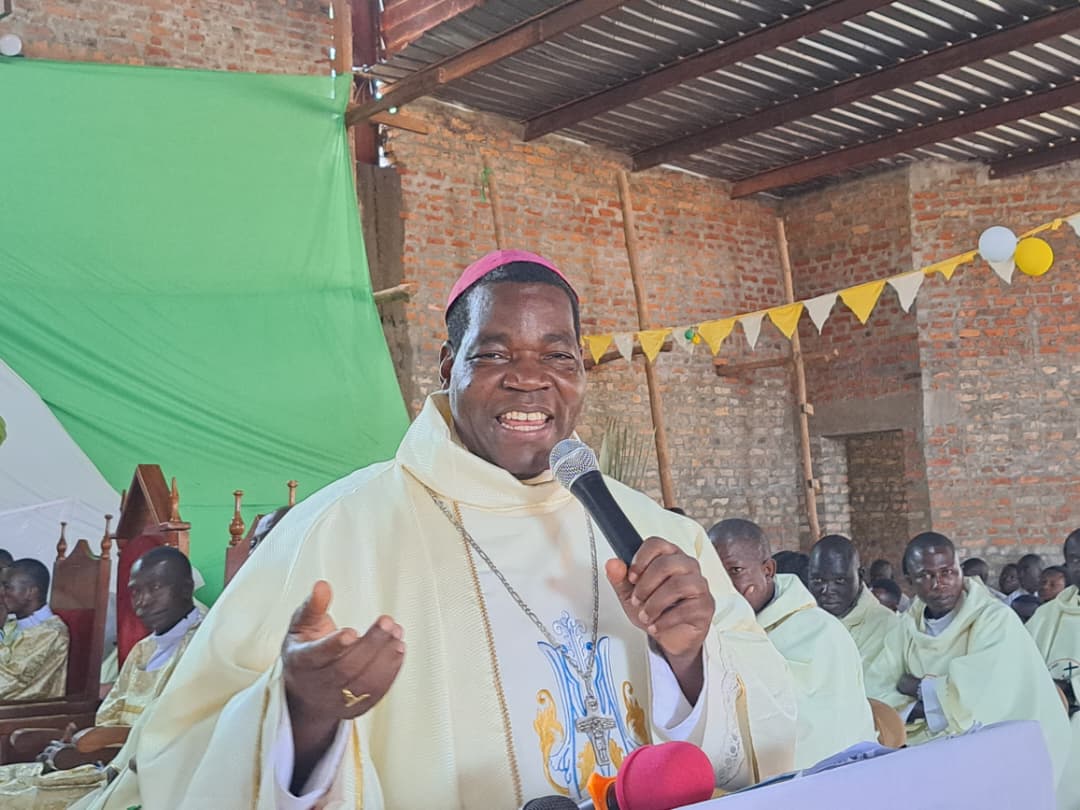
The Bishop of the Catholic Diocese of Tombura-Yambio, the Most Reverend Barani Eduardo Hiiboro Kussala, delivered a powerful homily during the Chrism Mass on Tuesday, March 31, 2026, calling priests to embrace humble service and total self-giving as they renew their commitment to Christ and His people.
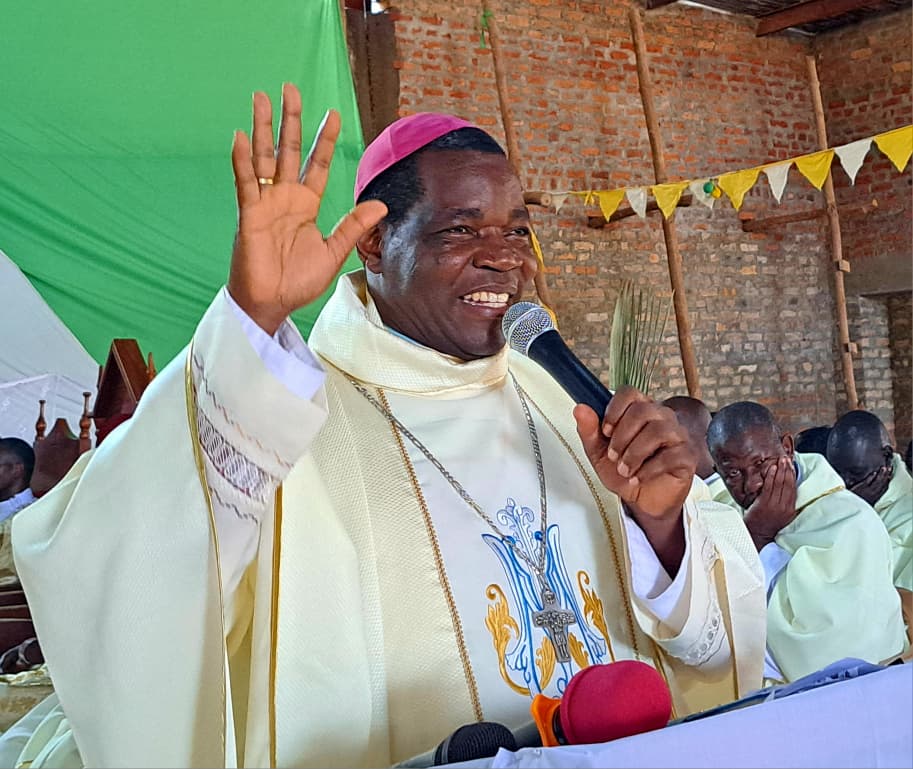
Speaking to priests, deacons, consecrated men and women, and the faithful gathered for the sacred liturgy, Bishop Hiiboro reflected on the profound meaning of priestly ministry through the image of Christ washing the feet of His disciples in the Upper Room. He described priests as “men of the towel and the basin, men who bend so that others may rise,” emphasizing that in this lowering they are lifted, and in this giving they are filled.
The Bishop reminded the clergy that God does not save from a distance but comes near, touches wounds, and serves. He challenged priests to embody this same spirit of closeness and compassionate service, particularly toward the poor, the wounded, and the suffering in their communities.
Anointed for Mission
Drawing from Christ’s proclamation in the synagogue at Nazareth that the Spirit of the Lord had anointed Him to bring good news to the poor, proclaim liberty to captives, and give recovery of sight to the blind, Bishop Hiiboro emphasized that through the sacred oils blessed during the Chrism Mass, priests too are anointed after Christ for the very people He was sent to love.
He urged priests not to pass by those in need, not to grow tired of them, and not to become distant from their suffering. The anointing they receive, he said, is for service to the poor, healing the wounded, bringing freedom where there is bondage, and opening eyes where there is darkness.
The Sacred Consecration
Reflecting on the priest’s role at the altar, Bishop Hiiboro spoke of the awesome responsibility of pronouncing the words of consecration. He said that when priests say “This is my Body” and “This is my Blood,” it is Christ who speaks through them, but these words must also become their lives given and their love poured out.
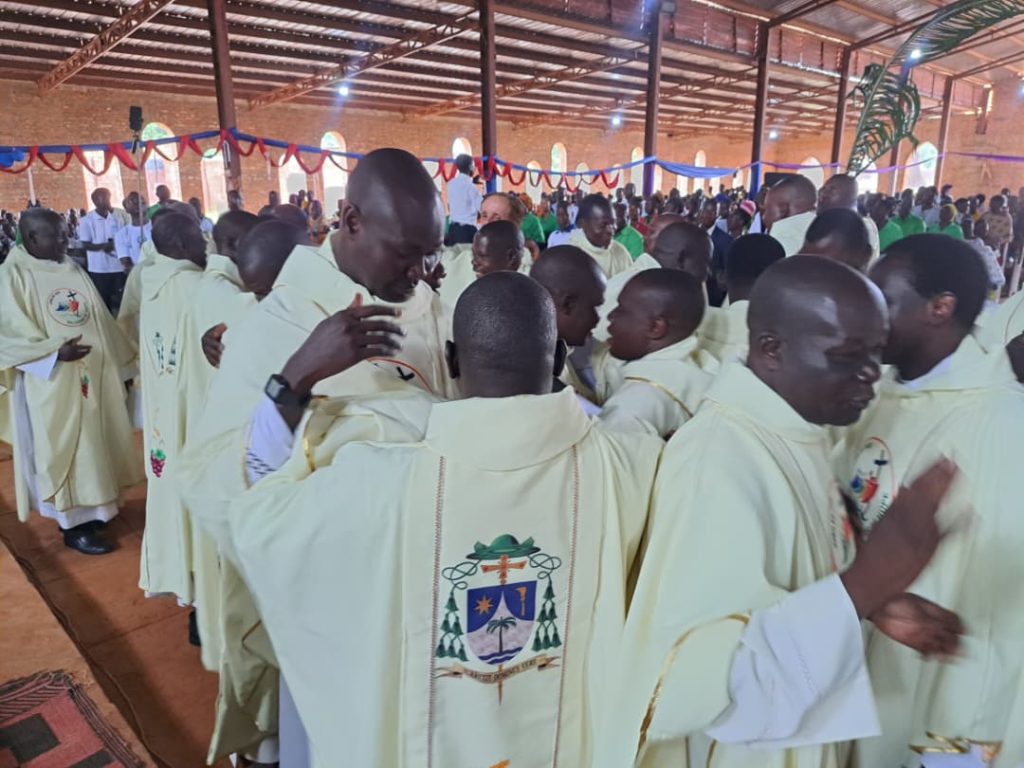
Quoting Saint John Vianney, the Bishop reminded priests that the priesthood is the love of the Heart of Jesus, emphasizing that priests do not only consecrate but are themselves consecrated, do not only offer but are themselves offered. He described the priest as another Christ, a bridge between heaven and earth, and a living sacrifice of love.
Ministry in a Wounded Land
Bishop Hiiboro addressed the specific context of South Sudan and Western Equatoria State, where the cry of the people rises in wounds of violence, poverty, broken families, and silent despair. He said priests are sent into these wounds to walk where pain lives, to stand where hope is fading, and to speak where fear has silenced voices.
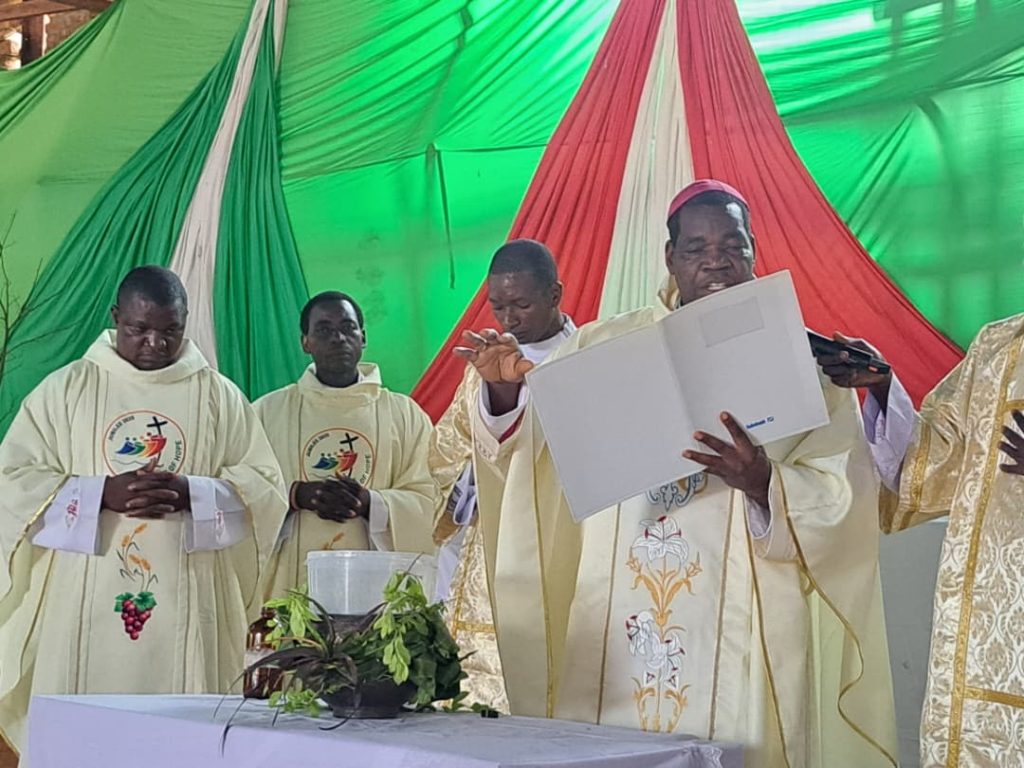
The Bishop called priests to be healers for the wounded, builders of peace, and fathers to the abandoned, reminding them that their ministry is not abstract but deeply rooted in the concrete suffering and needs of the people they serve.
Discipline of Heart and Tongue
In a particularly pastoral section of his homily, Bishop Hiiboro addressed the power of priestly words. He urged priests to be careful how they speak, warning that words spoken in anger can become like curses in the hearts of the people. He called for gentle speech that heals rather than destroys, and for voices that carry blessing rather than bitterness.
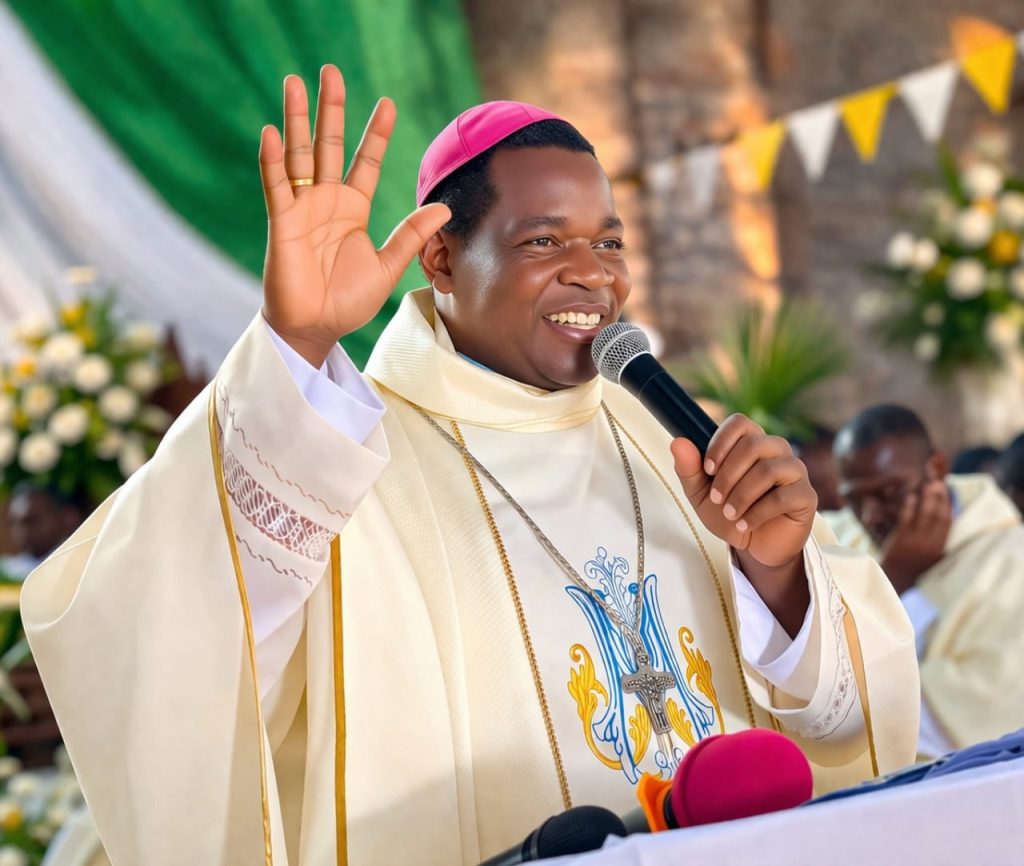
The Bishop emphasized that priests are anointed to speak life, to restore dignity, and to bring peace through their words, reminding them that their anointing extends not only to their hands but also to their speech.
Call to Depth and Formation
Bishop Hiiboro called priests to return in their hearts to the seminary, where they were formed not only to know but to become. He stressed that a priest must be deep, warning that without prayer he becomes empty, without study he becomes shallow, and without preparation he becomes careless.
Emphasizing that priests cannot give what they do not have, the Bishop urged clergy to return to prayer, to study, and to reverence in the liturgy, maintaining the spiritual and intellectual depth necessary for effective ministry.
Renewal of Promises
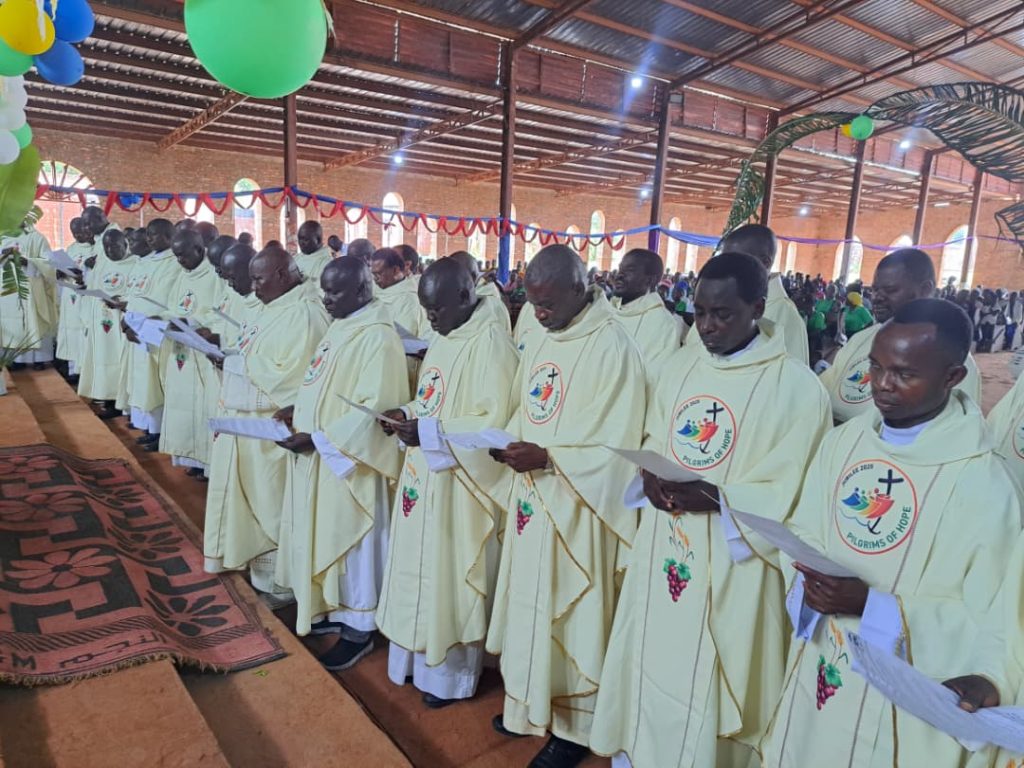
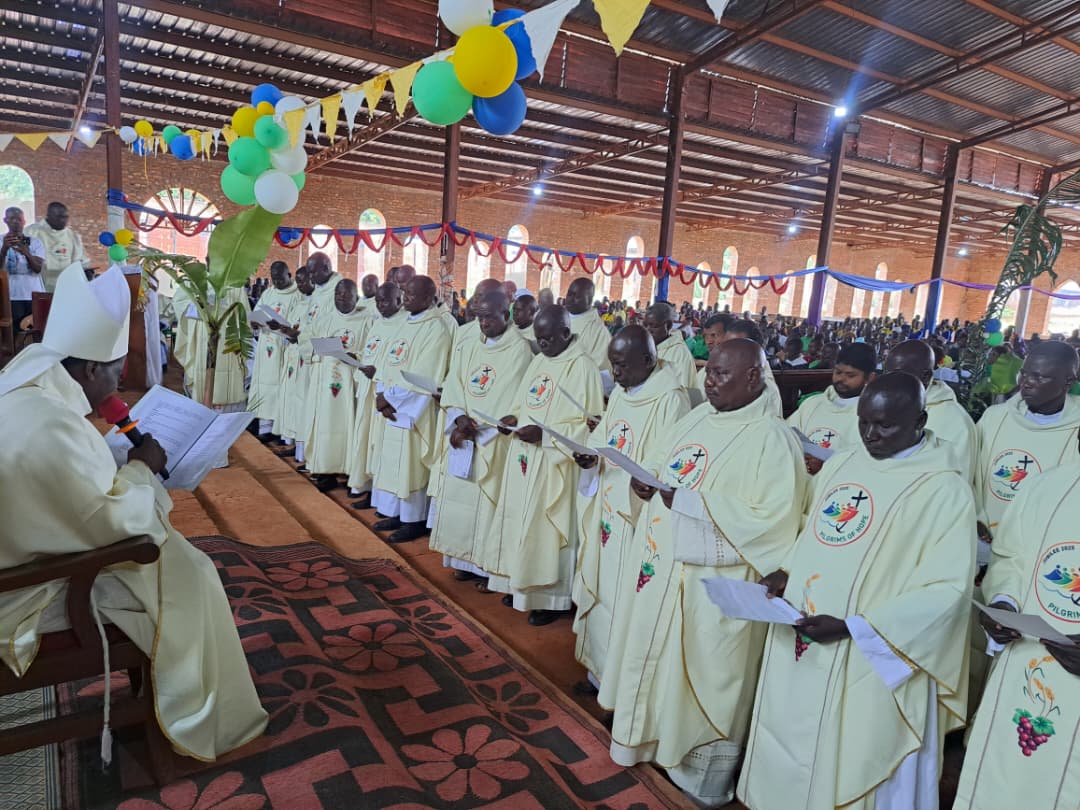
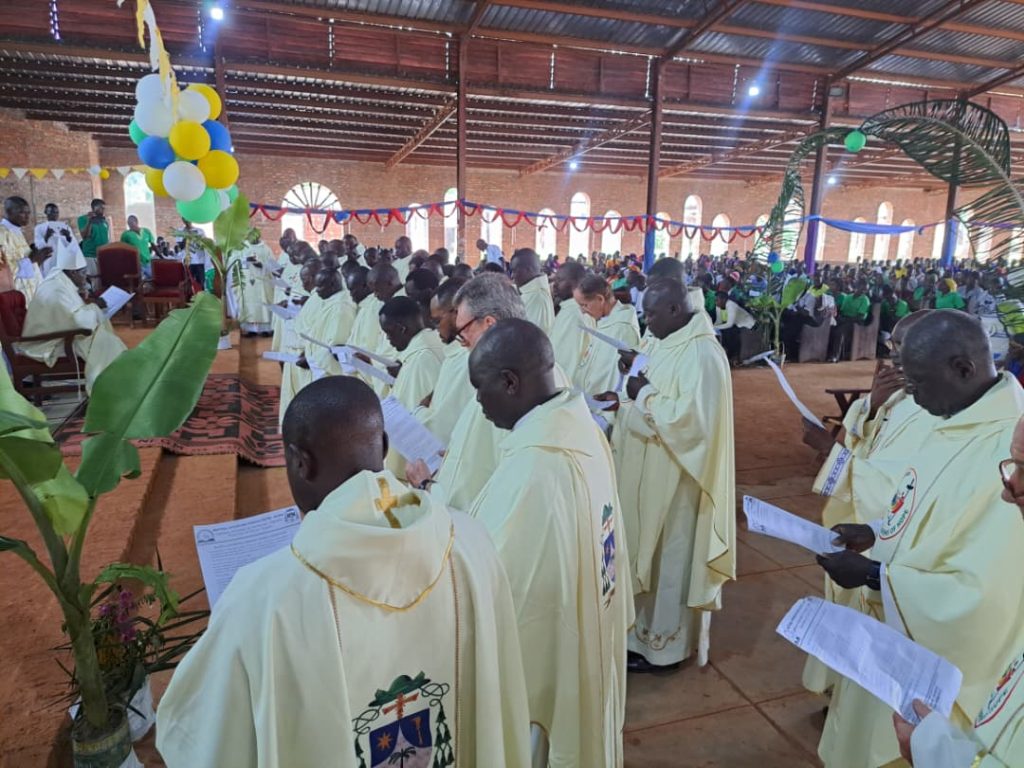
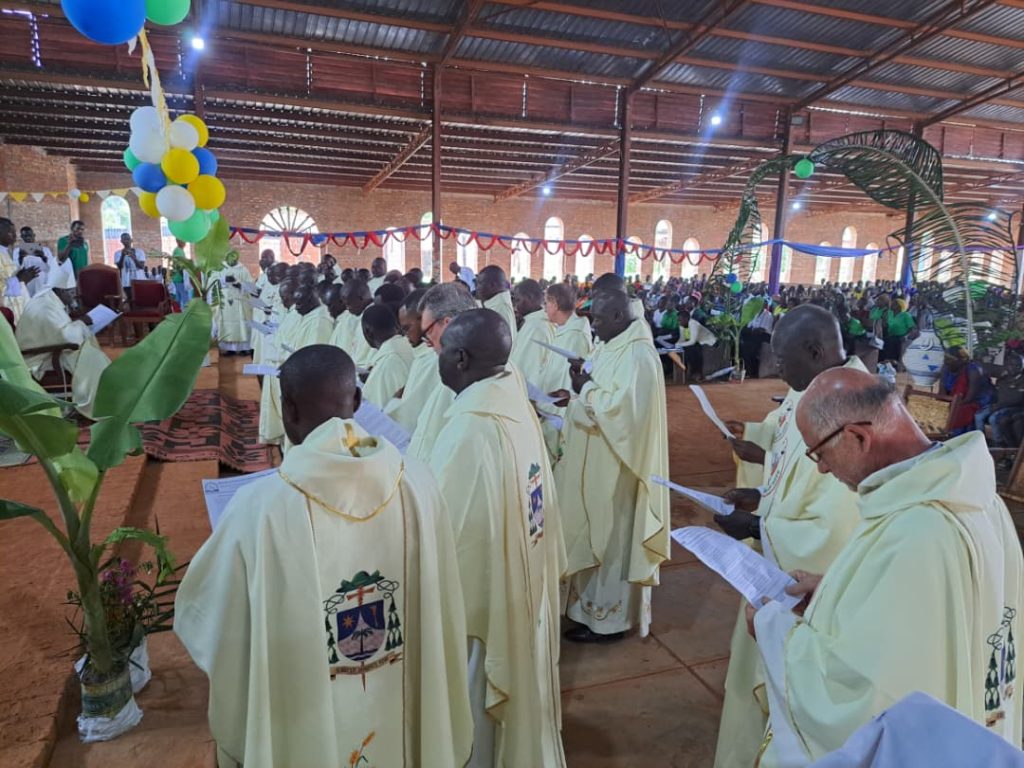
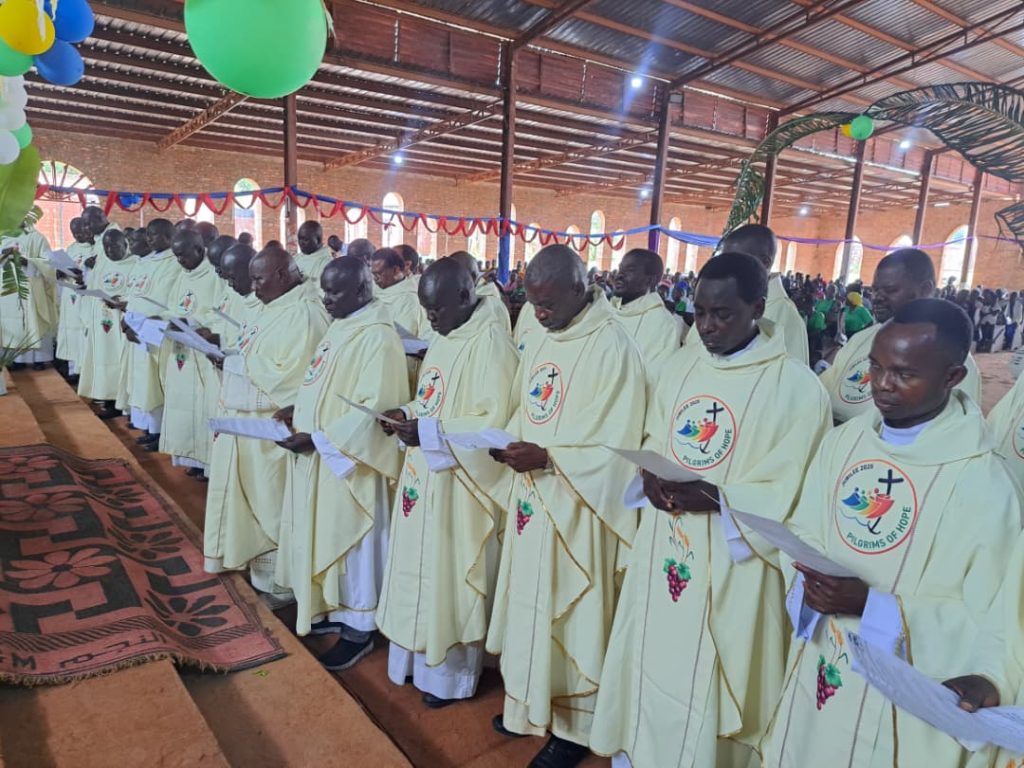
The Bishop framed the renewal of priestly promises not as a formality but as a living fire, a daily choice to embrace Christ, His Church, His people, and the Cross. He described obedience as love that listens, reminding priests that Christ became obedient unto death and that their obedience means trusting beyond understanding, serving beyond preference, and remaining faithful beyond comfort.
Gratitude and Remembrance
With deep gratitude, Bishop Hiiboro thanked all priests and recognized the witness of Father Michael Dr. Katawa as a sign of perseverance and total self-giving, whose life reminds the diocese that the priesthood is lived in fidelity, not comfort.
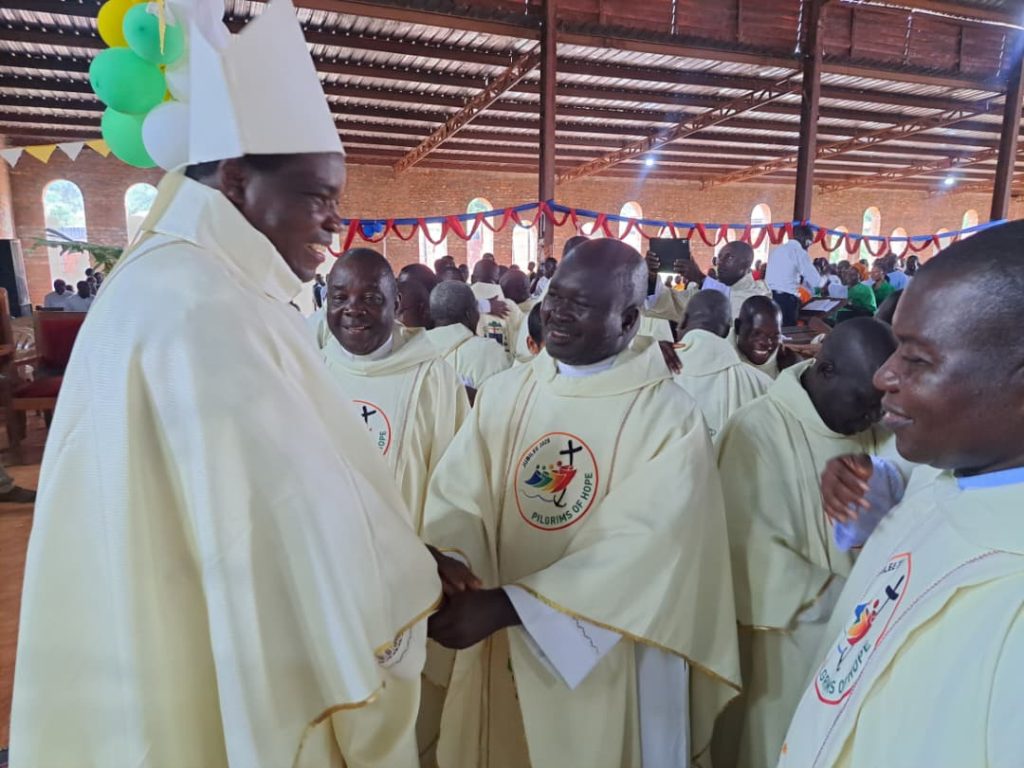
The Bishop also remembered with love priests who have died, offering special mention of the late Reverend Father Luke Yugue. He affirmed that the blood of a priest is never wasted but becomes a seed, quoting Scripture that unless a grain of wheat falls into the earth and dies, it cannot bear much fruit.
Urgent Mission to Serve
Bishop Hiiboro reminded priests that their people are waiting in parishes across the diocese, facing hunger, sickness, poverty, thirst for clean water, and children losing access to education. He called on every parish to become a home of faith, a center of charity, and a wellspring of hope, urging priests not only to preach the Gospel but to make it visible through concrete action.
Appeal to the Faithful
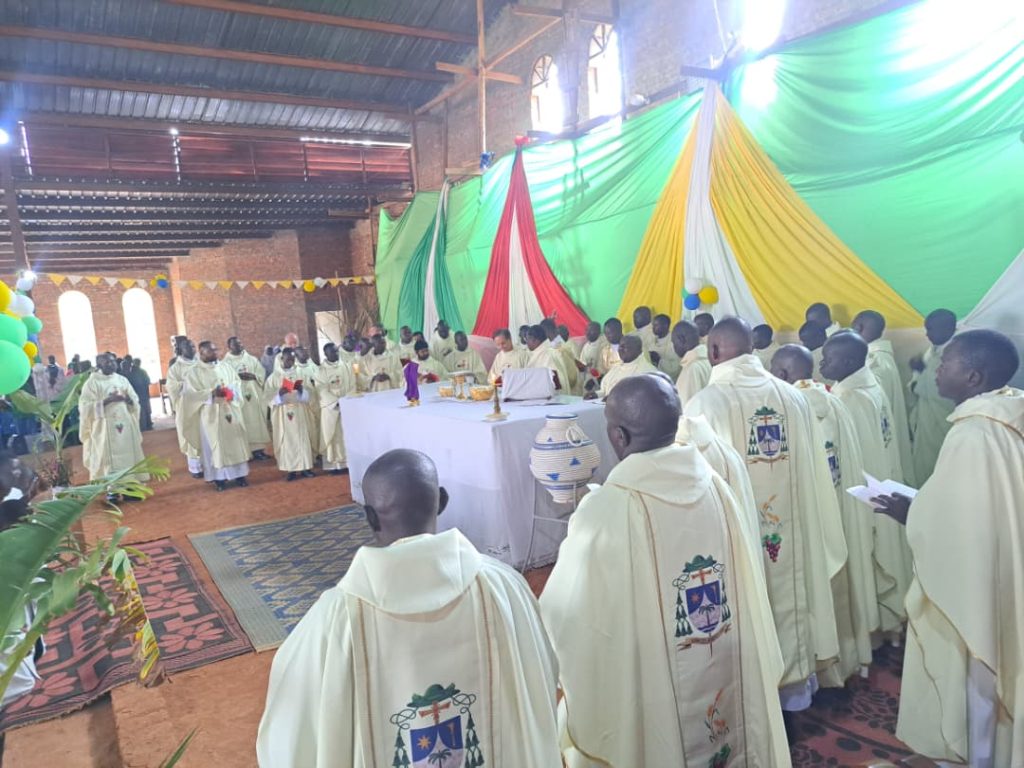
The Bishop also addressed the lay faithful, calling on them to love their priests, pray for them, and support them. He reminded the community that a priest is not a breadwinner but their son, their brother, and their gift to the Church, deserving of prayer, encouragement, and practical support.
The Anointing Made Life
In his conclusion, Bishop Hiiboro emphasized that while the Chrism Mass includes the blessing of holy oils, the greatest anointing is a life given to God, a heart offered, a life poured out, and a love lived fully. He called priests to be men of prayer, men of the Eucharist, and men of the people, so that when they stand at the altar and say “This is my Body” and “This is my Blood,” it will be true in their love, true in their sacrifice, and true in their lives.
The Bishop’s final words called for unity between priests and faithful, working together to build a Church that heals, a Church that reconciles, and a Church that shines with hope. He concluded with prayers for God’s blessing on priests, on the people, and for peace in the land.
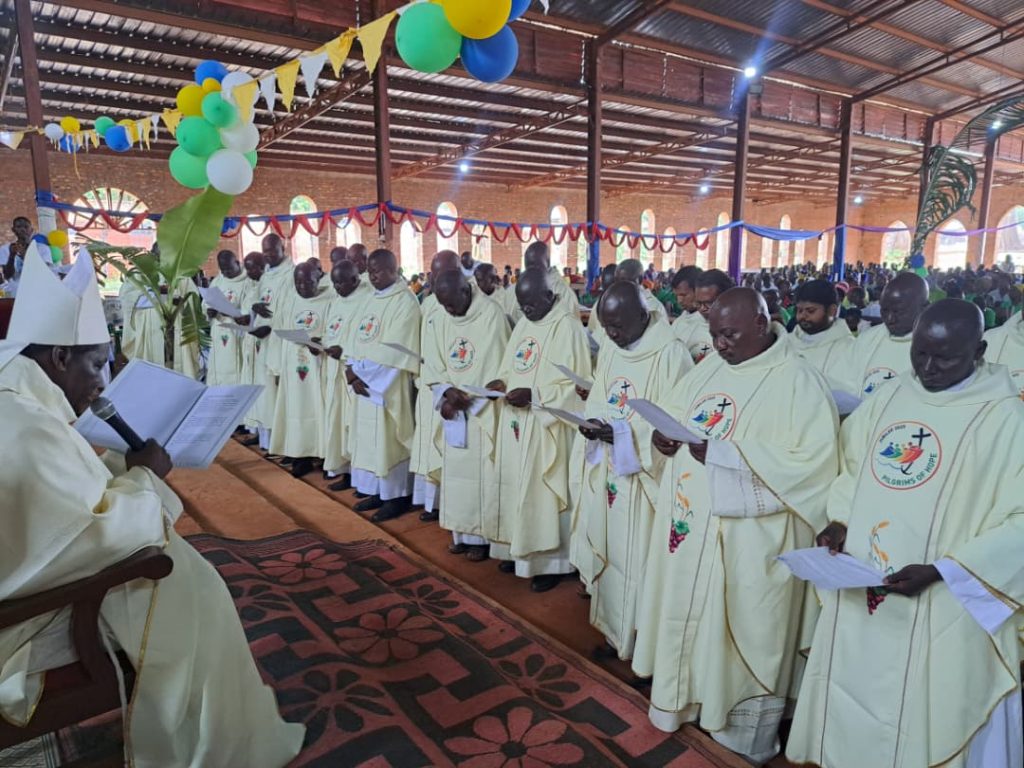
The Chrism Mass, celebrated annually on Holy Week, is one of the most significant liturgies of the year, during which the bishop blesses the oils used throughout the diocese for baptism, confirmation, anointing of the sick, and ordination. It is also the occasion when priests renew their commitment to priestly ministry in the presence of their bishop and the faithful.
Bishop Hiiboro’s homily resonated deeply with the clergy and faithful present, offering both challenge and encouragement as the diocese enters the most sacred days of the liturgical year and continues its mission of service, reconciliation, and hope in Western Equatoria State.