By Sr. Laurencila Akinyi, FSSA.
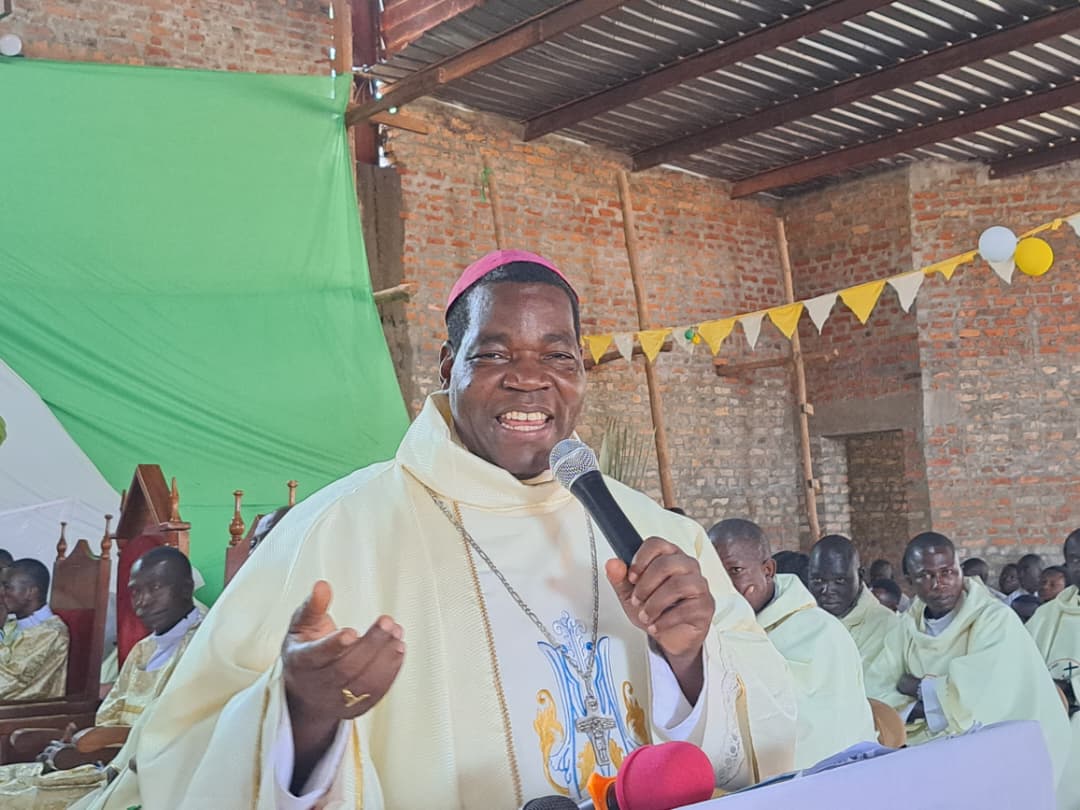
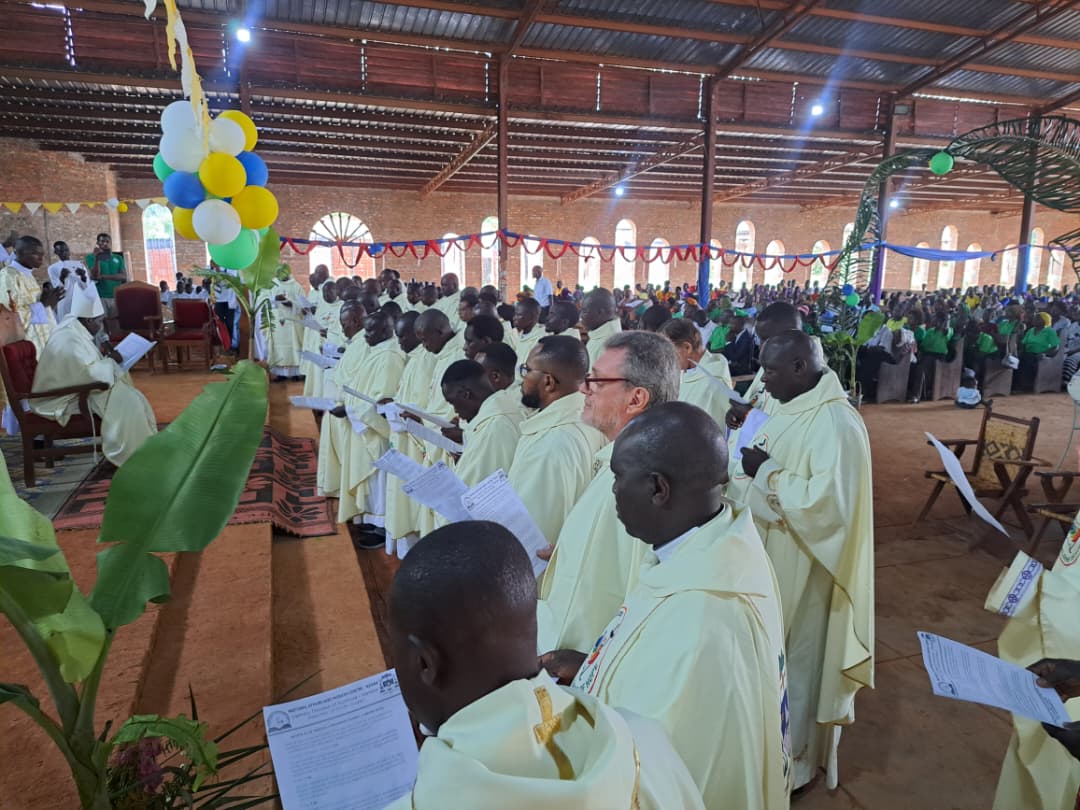
The Bishop of the Catholic Diocese of Tombura-Yambio, the Most Reverend Barani Eduardo Hiiboro Kussala, delivered a profound and challenging homily during the Chrism Mass at St. Mary Mother of God Cathedral on Tuesday, March 31, 2026, calling priests to embrace radical service and total self-giving in imitation of Christ.
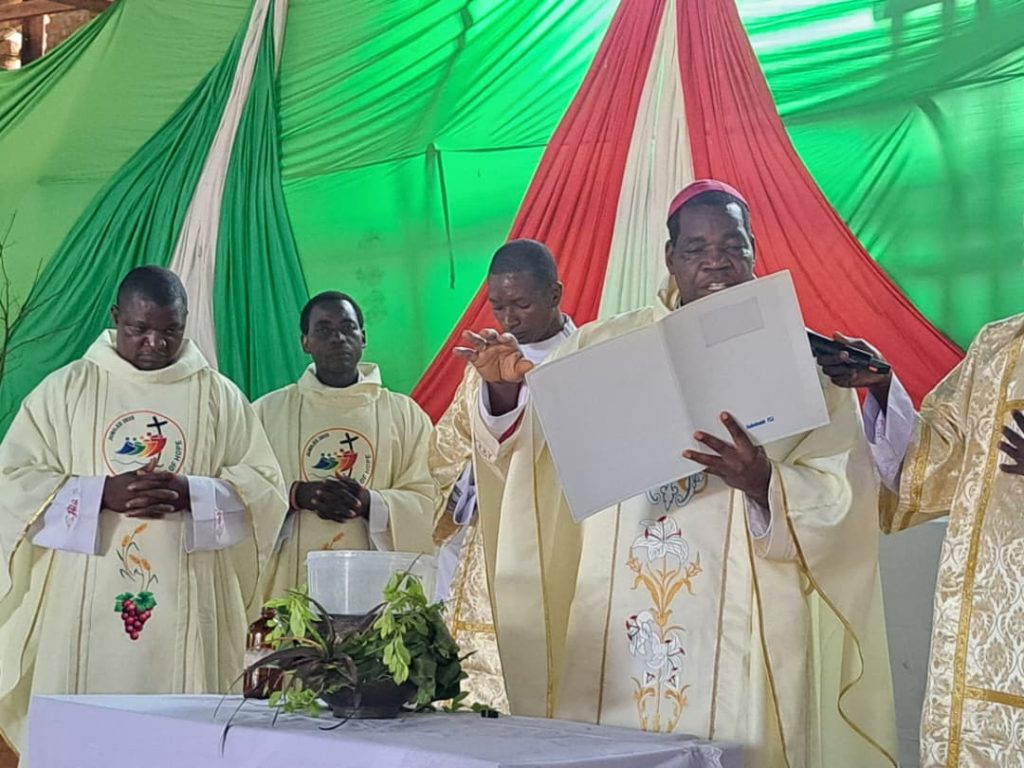
Addressing priests, deacons, consecrated men and women, and the faithful gathered for one of the most significant liturgies of the year, Bishop Hiiboro opened his homily by returning in spirit to the Upper Room, where Christ washed the feet of His disciples. He described how the Master rose quietly from the table, laid aside His garments, took a towel, and knelt before those He came to serve.
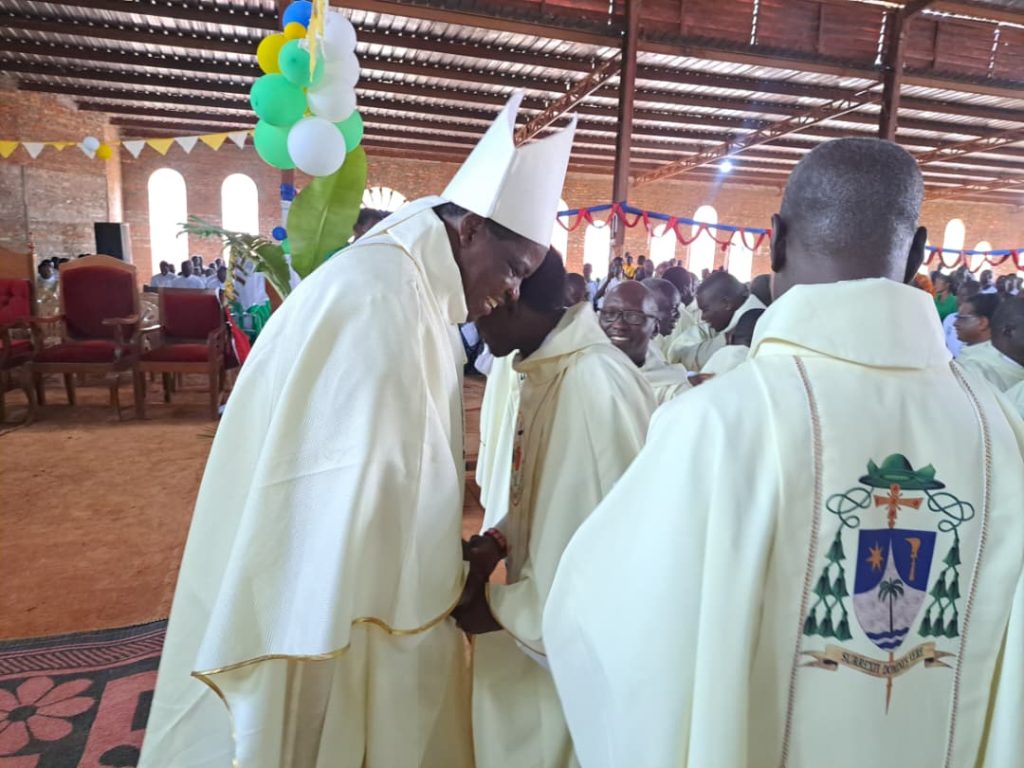
The Bishop emphasized that this was not merely an action but a revelation of the very heart of God, who does not save from a distance but comes near, touches wounds, and serves. Quoting Christ’s words from the Gospel of John, Bishop Hiiboro reminded priests that if their Lord and Teacher has washed their feet, they also ought to wash one another’s feet, adding that they are blessed if they do this.
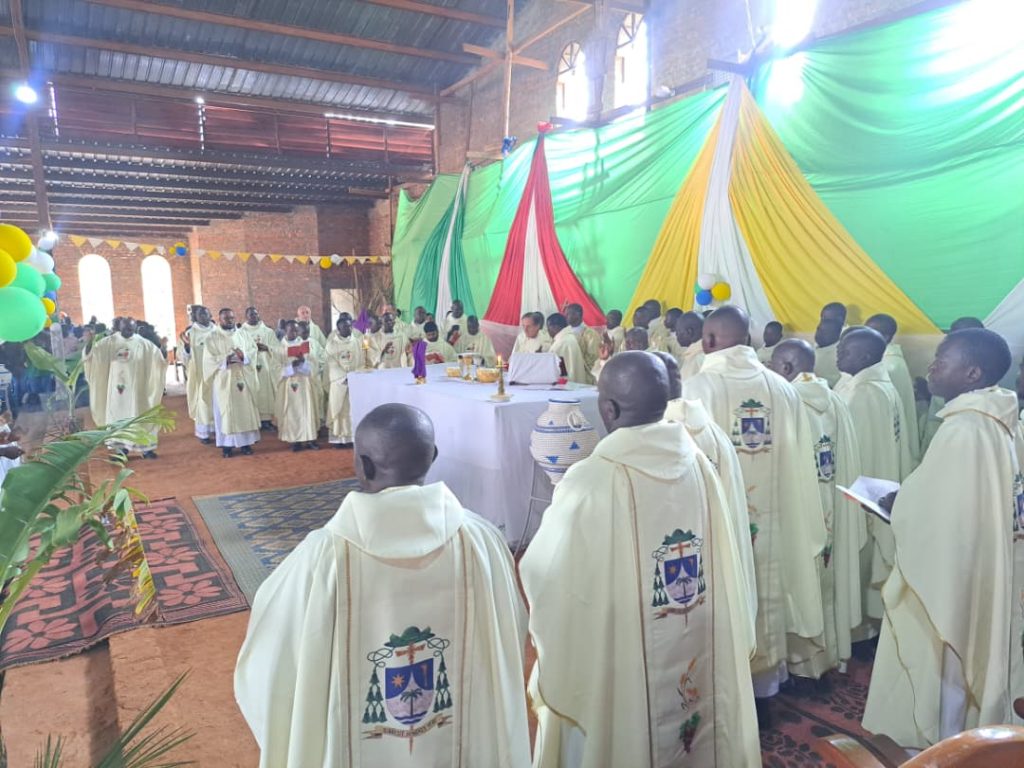
He described priests as “men of the towel and the basin, men who bend so that others may rise,” emphasizing that service is not a loss but grace multiplied. Quoting Pope Francis, the Bishop said that the shepherd must carry the smell of the sheep, calling for intimate closeness between priests and the people they serve.
Anointed for Mission
Drawing from Christ’s proclamation in the synagogue at Nazareth that the Spirit of the Lord had anointed Him to bring good news to the poor, proclaim liberty to captives, and give recovery of sight to the blind, Bishop Hiiboro emphasized that through the sacred oils blessed during the Chrism Mass, priests too are anointed after Christ for this same mission.
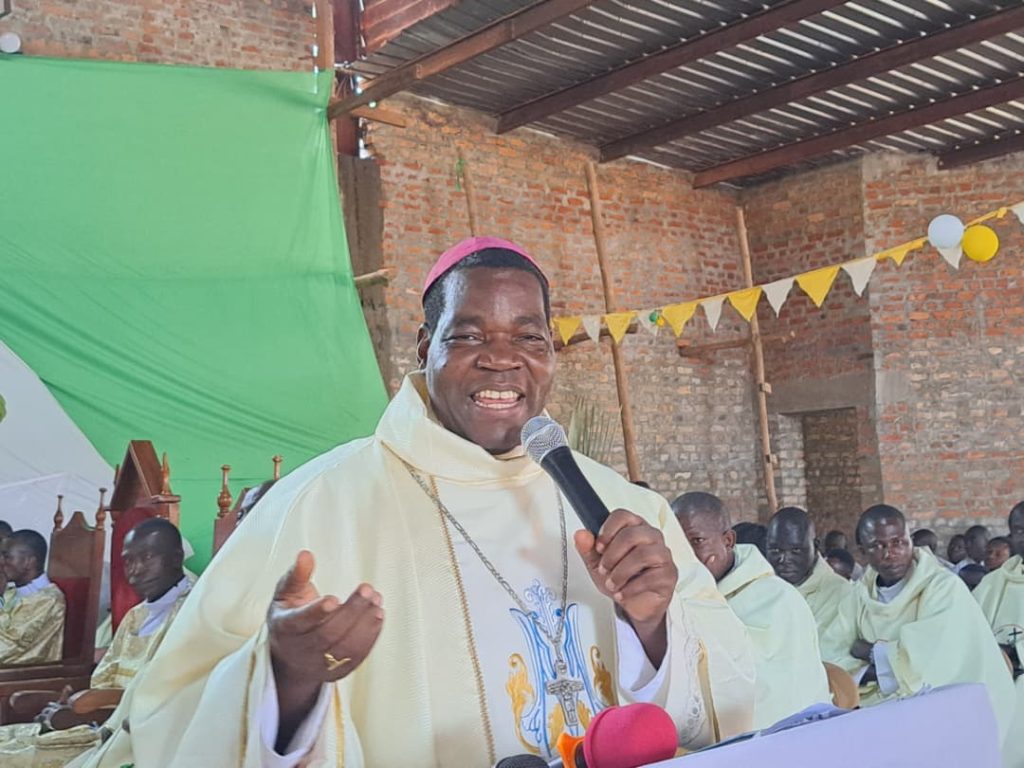
Citing Pope John Paul II’s teaching that the priest is a man for others, the Bishop said priests are anointed to serve the poor, heal the wounded, free those imprisoned by fear and sin, and open eyes darkened by suffering. He reminded clergy that they are anointed for the very people Christ came to love and urged them not to distance themselves from those in need.
The Priest Becomes the Offering
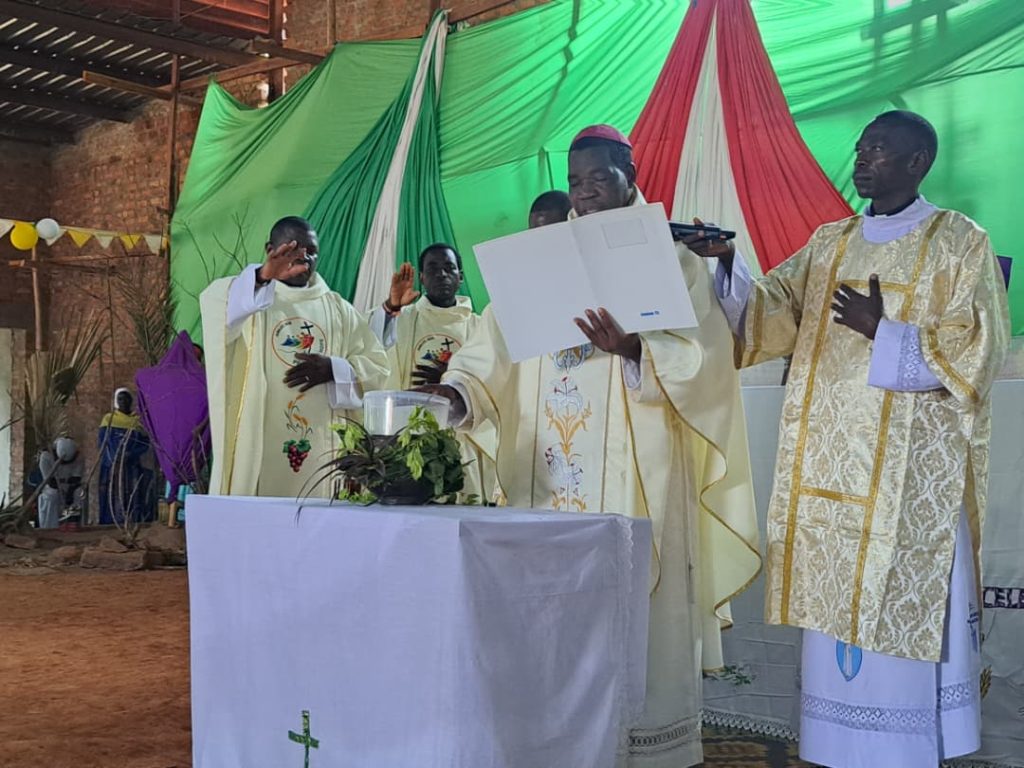
Reflecting on the awesome responsibility of standing at the altar, Bishop Hiiboro spoke of the sacred moment when the priest pronounces the words “This is my Body” and “This is my Blood.” He said that in that moment, it is Christ who speaks through the priest, but these words must also become the priest’s life given and love poured out.
Quoting Saint John Vianney’s teaching that the priesthood is the love of the Heart of Jesus, the Bishop challenged priests to understand that when they say “This is my Body,” they must mean their time, their strength, and their life, and when they say “This is my Blood,” they must mean their sacrifice, their suffering, and their total gift.
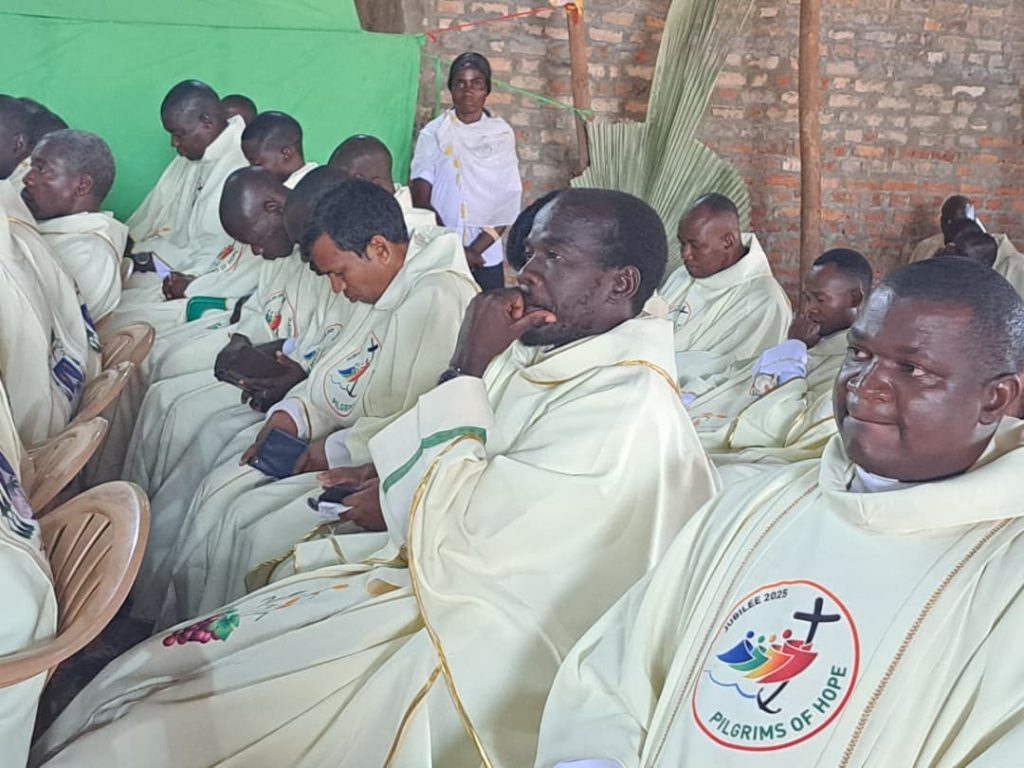
Bishop Hiiboro emphasized that priests do not only consecrate but are themselves consecrated, do not only offer but are themselves offered, becoming living sacrifices united with Christ for the salvation of souls.
Ministry in a Wounded Land
Addressing the specific context of South Sudan and Western Equatoria State, Bishop Hiiboro acknowledged the deep wounds afflicting the people: wounds of violence, poverty, broken families, and despair. Quoting Mother Teresa’s teaching that we are called to do small things with great love, he urged priests to go where the pain is, stand where hope is fading, and speak where fear has silenced voices.
Discipline of Heart and Tongue
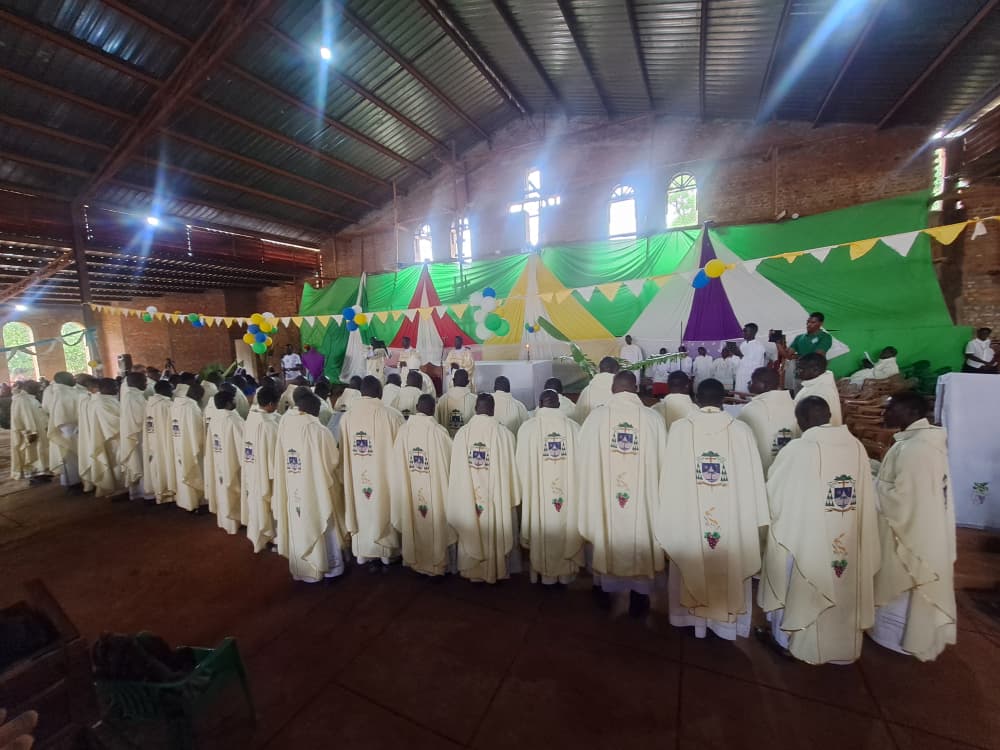
In a particularly pastoral section, the Bishop addressed the power of priestly words. He urged clergy to be careful how they speak, warning that words spoken in anger can wound deeply. Citing Saint Francis of Assisi’s admonition to preach always and when necessary use words, Bishop Hiiboro called for gentle speech, voices that carry blessing, and presence that brings peace.
Call to Depth and Formation
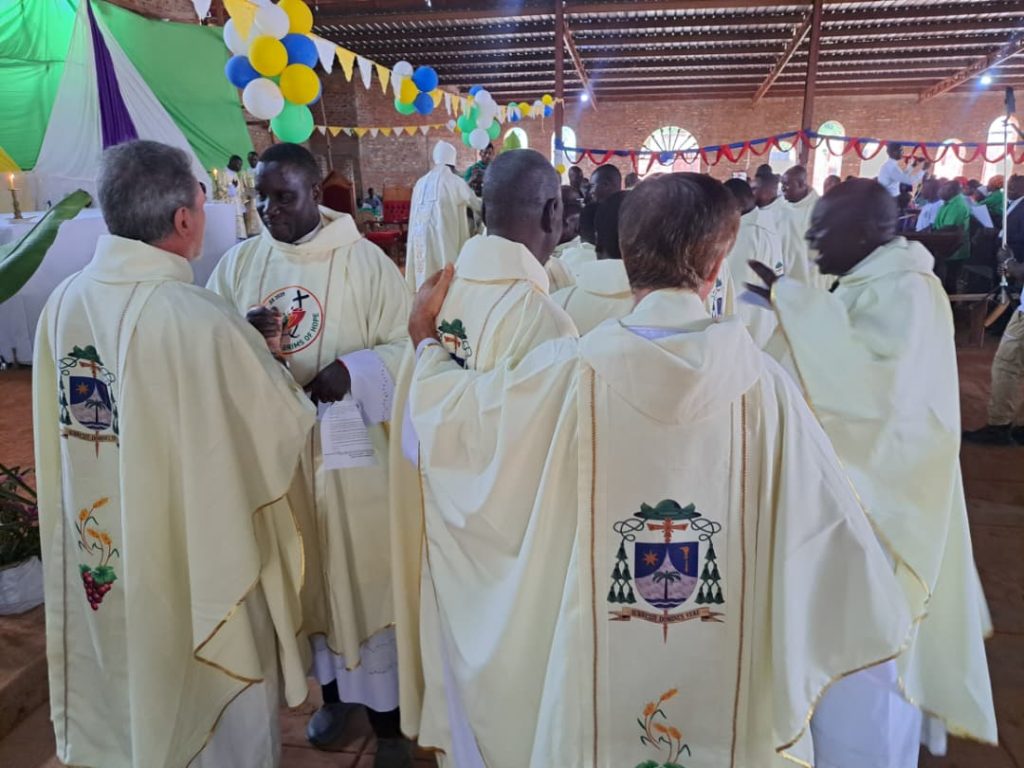
Bishop Hiiboro called priests to return in their hearts to the seminary, where they were formed in prayer, study of the saints, church history with all its complexities, and sacrifice. He stressed that a priest must be deep, warning that without prayer he becomes empty and without study he becomes shallow.
Quoting Saint Augustine’s famous words that our hearts are restless until they rest in God, the Bishop urged priests to return to prayer, return to study, and return to reverence in the liturgy, maintaining the spiritual and intellectual depth necessary for effective ministry.
Renewal of Promises
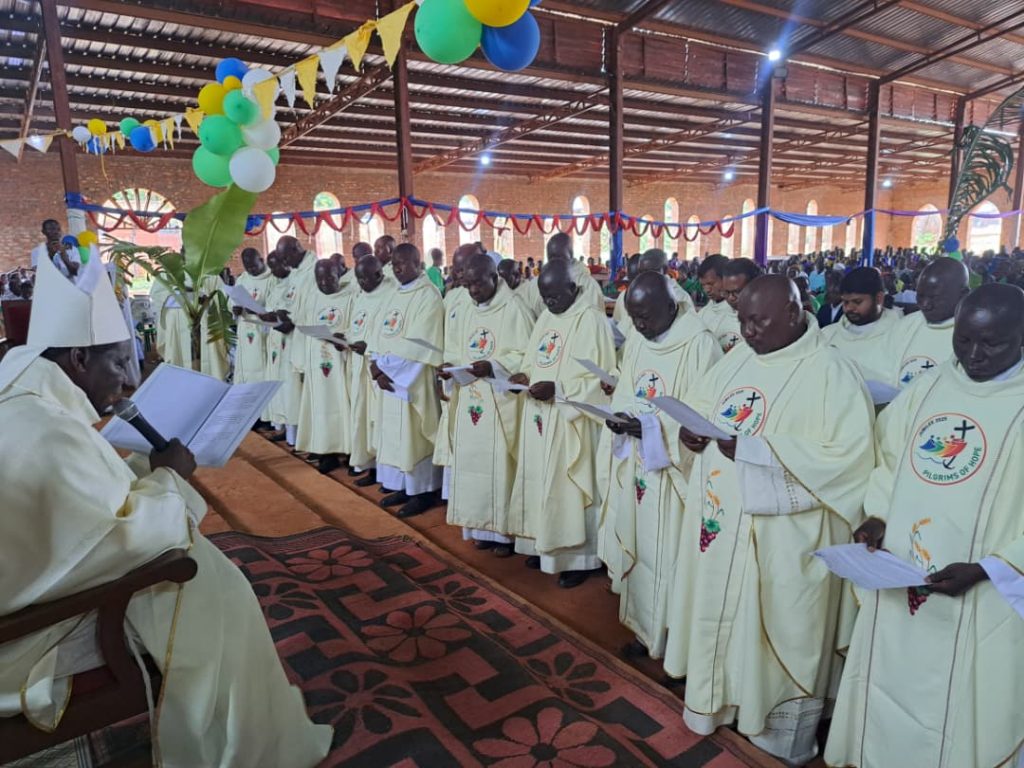
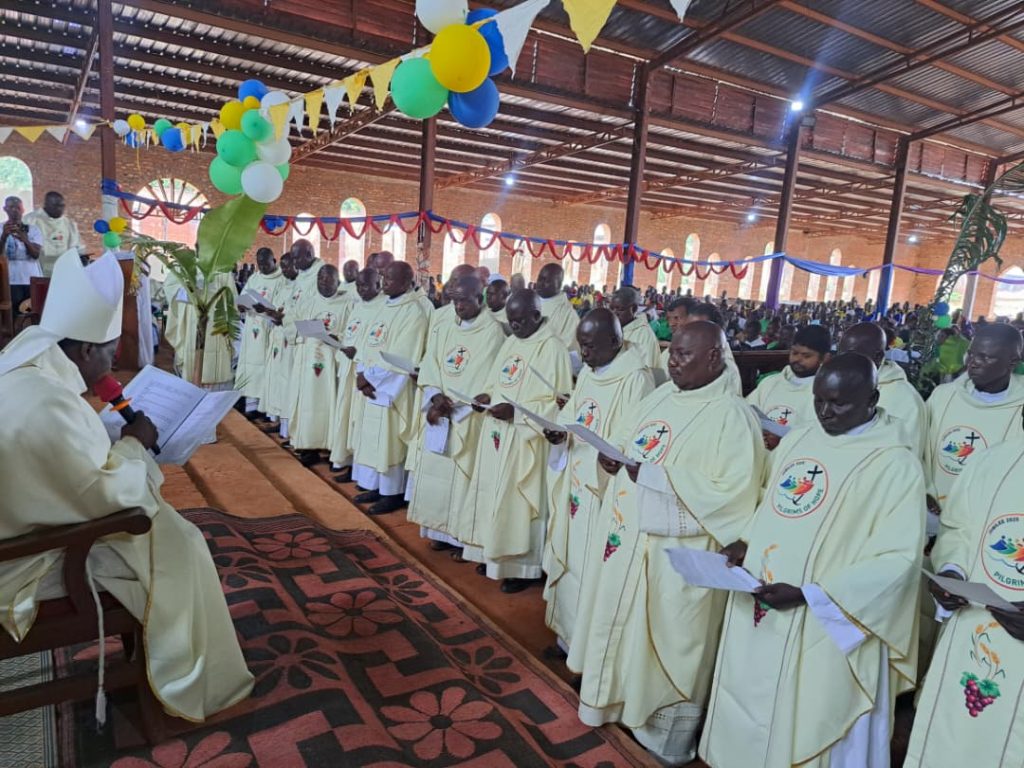
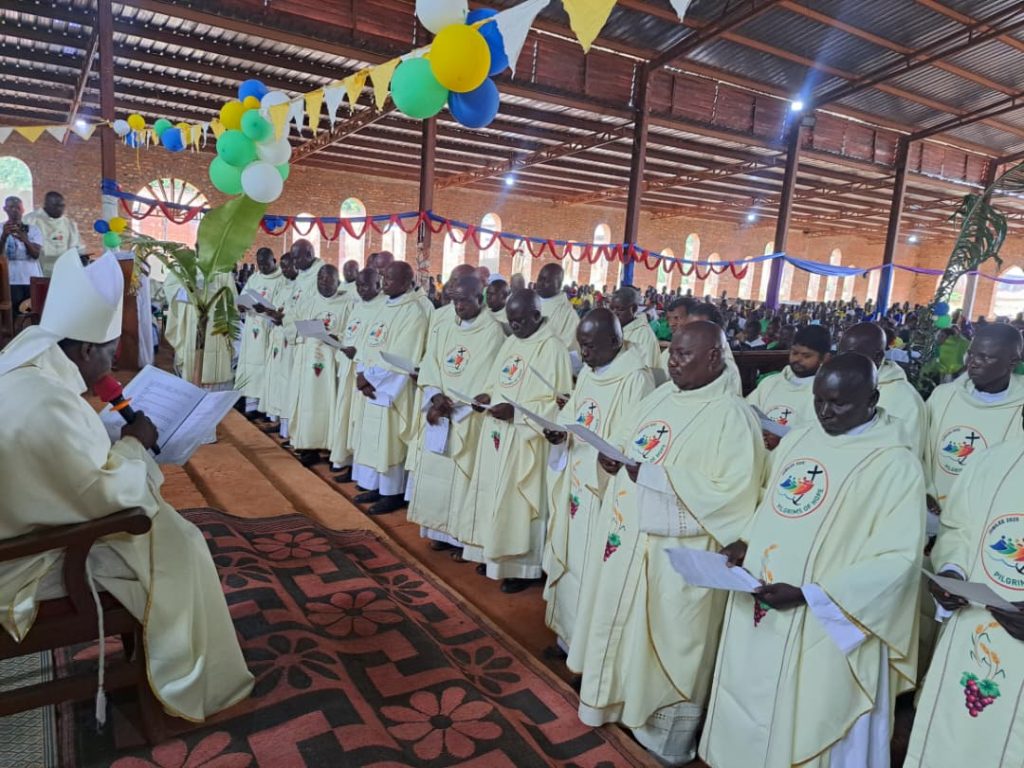
In a moment of directness, Bishop Hiiboro challenged priests renewing their promises to consider the seriousness of what they were doing. He asked whether, despite problems including lack of money, they were truly ready to renew their promises to remain priests in the Catholic Diocese of Tombura-Yambio.
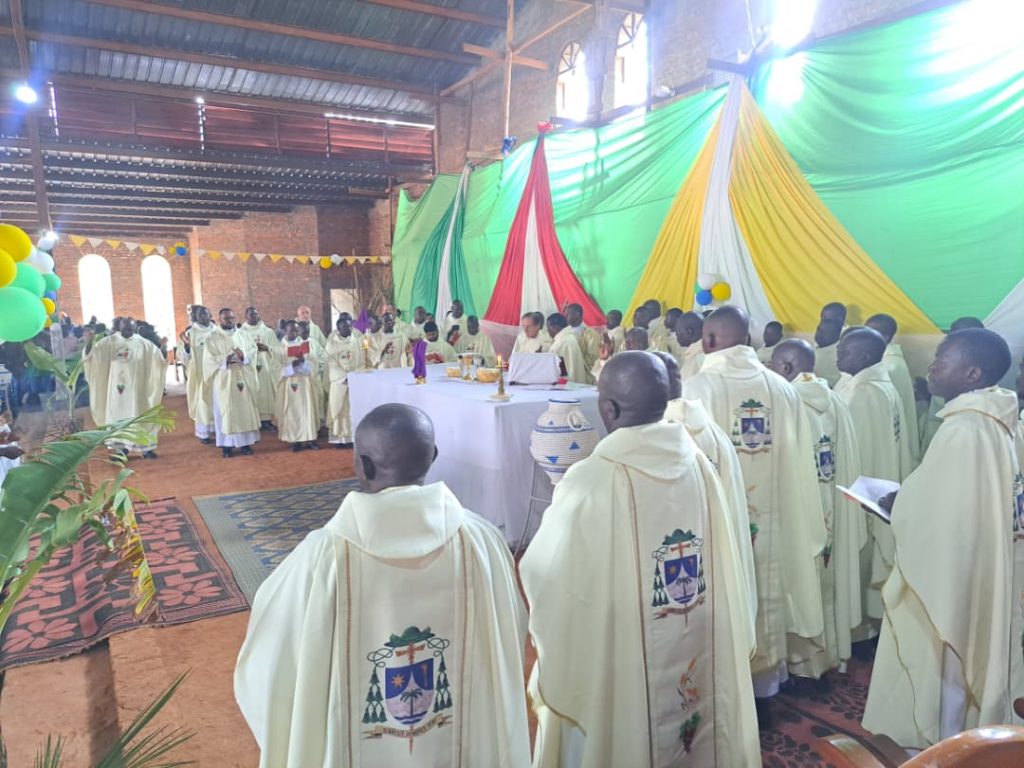
He called on them to say again: I choose Christ, I choose His Church, I choose His people, I choose the Cross. The Bishop emphasized that this yes must be real, must have volume, must burn within them as a living commitment renewed daily.
Gratitude and Remembrance
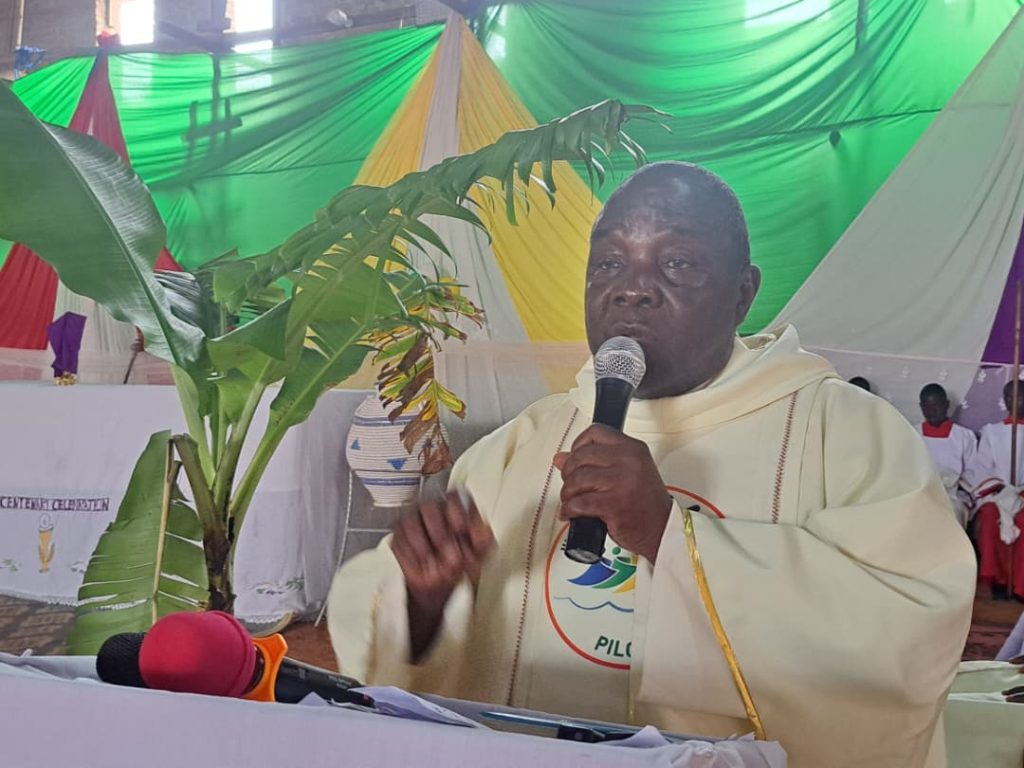
With deep gratitude, Bishop Hiiboro thanked all priests and specifically recognized the witness of Father Michael Dr. Katawa as a life of perseverance and fidelity, reminding all that the priesthood is not comfort but a total gift.
The Bishop also remembered with love priests who have died, offering special mention of the late Reverend Father Luke Yugue, who was taken by violence. He affirmed that the blood of a priest is never wasted but becomes a seed, quoting Scripture that unless a grain of wheat falls into the earth and dies, it cannot bear much fruit.
Urgent Mission
Bishop Hiiboro reminded priests that their people are waiting, facing hunger, sickness, thirst, and poverty. He called on every parish to become a home of faith, a center of charity, and a wellspring of hope, urging priests not only to preach the Gospel but to make it visible through concrete action and compassionate service.
Appeal to the Faithful
The Bishop also addressed the lay faithful directly, calling on them to love their priests, pray for them, and support them. He reminded the community that priests are their sons, their brothers, and their gift to the Church, deserving of prayer, encouragement, and practical assistance.
The Anointing Made Life
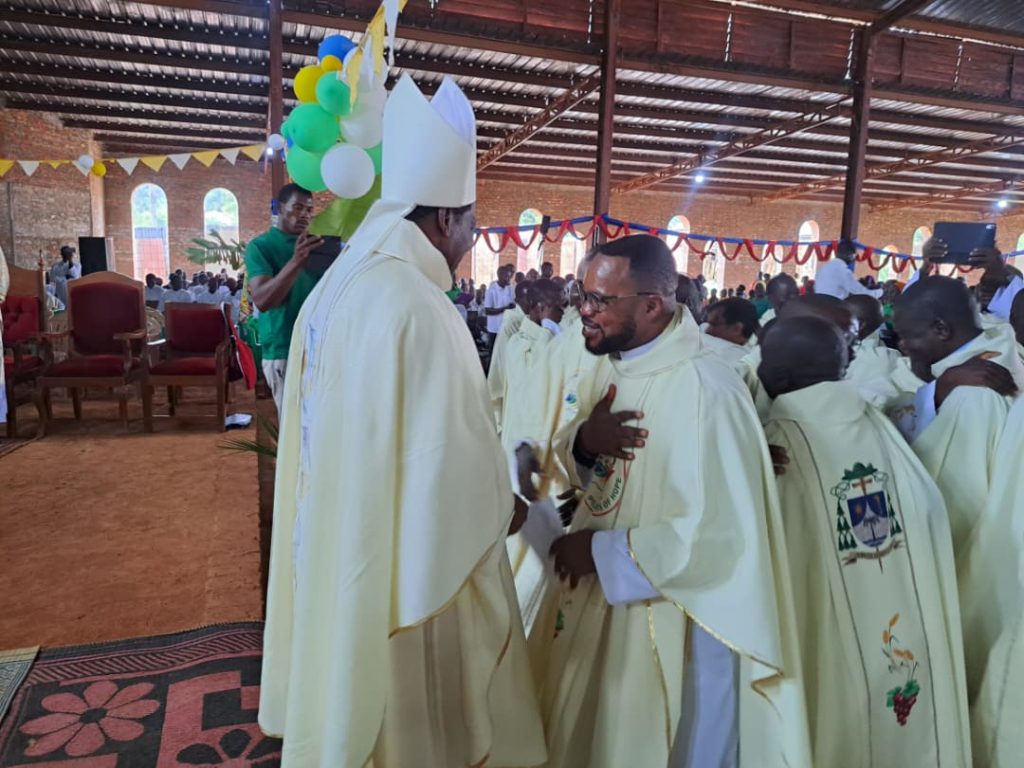
In his conclusion, Bishop Hiiboro emphasized that the oil blessed during the Chrism Mass must become life—a life given, a heart offered, and a love lived fully. He called priests to be men of prayer, men of the Eucharist, and men of the people, so that when they pronounce the words of consecration at the altar, it will be true in their love, true in their sacrifice, and true in their lives.
The Bishop concluded with prayers for God’s blessing on priests, on the people, and for peace in the land, his words resonating as both challenge and encouragement as the diocese enters the most sacred days of Holy Week.
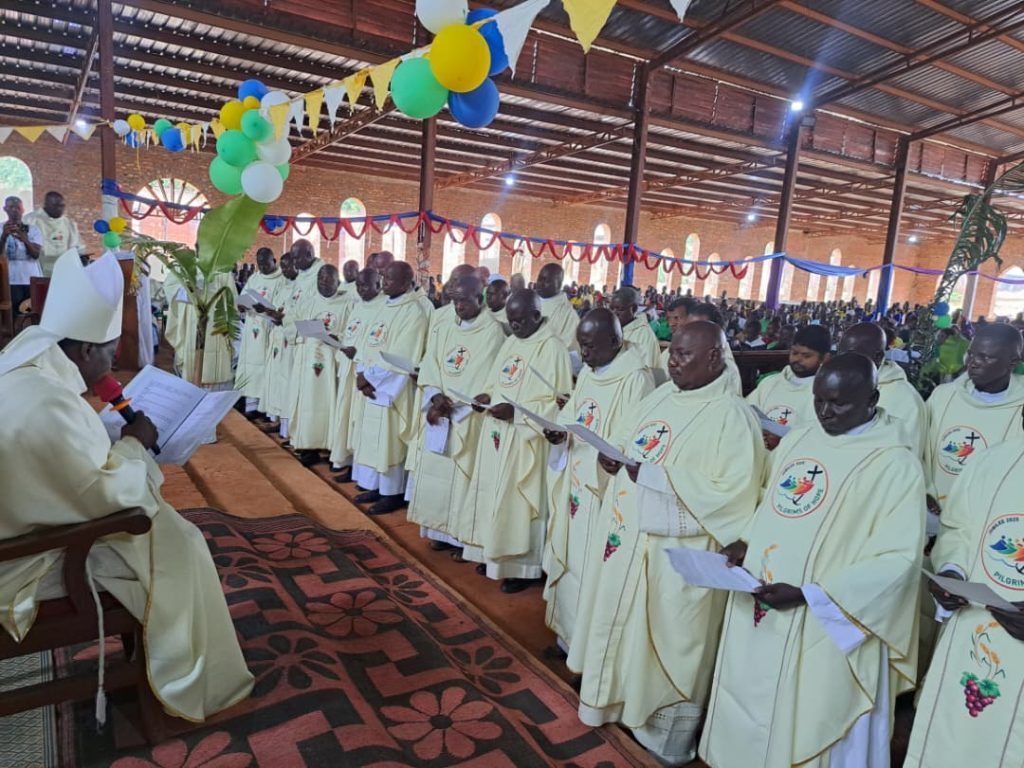
The Chrism Mass, during which the bishop blesses the sacred oils used throughout the year for sacraments, is one of the central liturgies of Holy Week and the occasion when priests publicly renew their commitment to priestly ministry. Bishop Hiiboro’s homily, rich with scriptural references and quotations from saints and popes, offered a profound meditation on the nature of priesthood as total self-gift in service of God’s people, particularly those who suffer most.