By Sr. Laurencila, FSSA
Drone strikes on the night of Sunday, 1 March 2026, and again on Monday, 2 March 2026, have severely damaged the diocesan compound of the Diocese of El Obeid in Sudan, destroying the Blessed Sacrament Chapel, the bishop’s bedroom, office, and dining rooms, according to a communication issued by Rt. Rev. Yunan Tombe Trille, Bishop of El Obeid.
The Diocese of El Obeid sits at the heart of one of Sudan’s most volatile regions. The diocese encompasses the Nuba Mountains and Abyei — territories that have endured decades of armed conflict rooted in ethnic marginalisation, competition over land and oil resources, and the long shadow of Sudan’s north-south divisions. Since April 2023, the wider country has been engulfed in a devastating war between the Sudanese Armed Forces (SAF) and the paramilitary Rapid Support Forces (RSF), a power struggle between two military elites — General Abdel Fattah al-Burhan and RSF commander General Mohamed Hamdan Dagalo, known as Hemedti — that has triggered one of the world’s worst humanitarian crises. The Nuba Mountains, home to communities long caught between competing armed actors, have once again become a frontline. It is against this backdrop of relentless conflict and civilian suffering that the recent drone strikes on the diocesan compound of Bishop Yunan Tombe Trille have drawn urgent attention from the wider Church.
The first strike, on the night of Sunday, struck the southern side of the compound, hitting the Blessed Sacrament Chapel, the bishop’s bedroom and his office. A second strike the following night targeted the eastern side of the same building, destroying the office and dining rooms. Bishop Trille confirmed that the damage has left the entire building “unusable.”
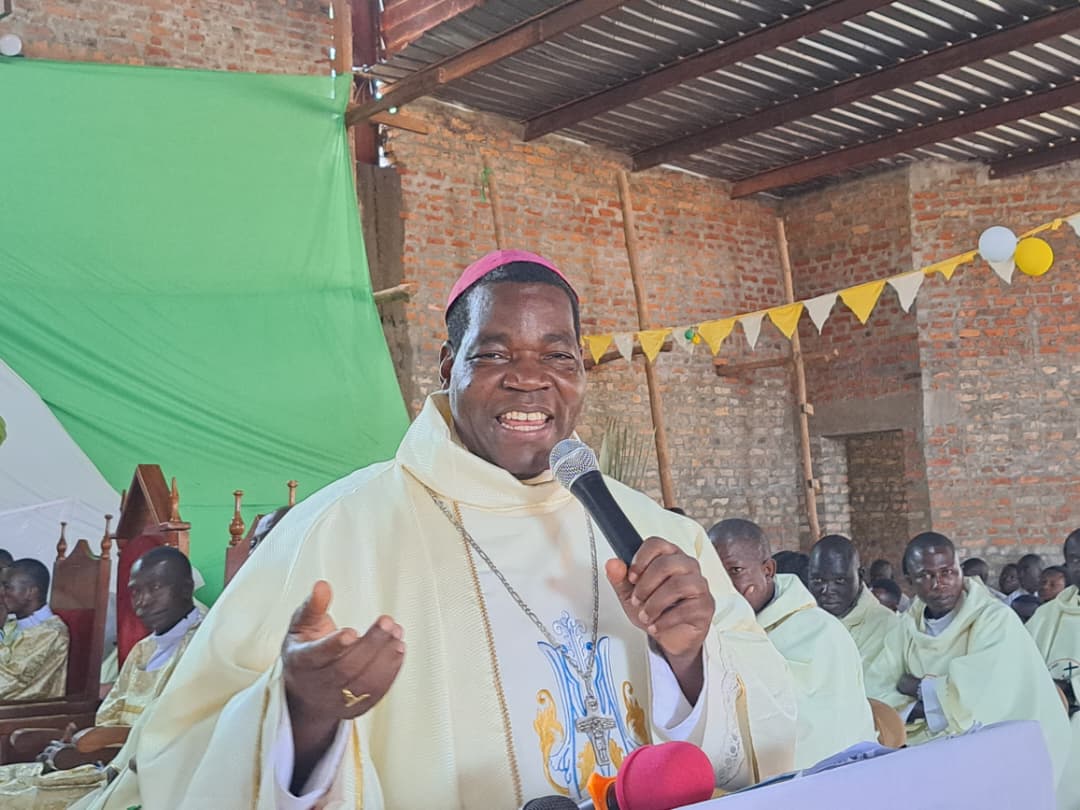
Bishop Trille attributed his survival to a providential circumstance: he was not in his bedroom at the time of the first attack. Writing to his fellow bishops, he expressed gratitude to God and requested continued prayers for peace and safety in Sudan.
At the time of the attacks, the bishop was in Juba, where he had travelled after concluding an annual spiritual retreat with pastoral agents and evangelization workers in the Nuba Mountains and Abyei Pastoral Region. The retreat was followed by the ordination of four diocesan priests and two deacons, one of whom is affiliated with the Society of Franciscans.
Bishop Trille was also preparing to attend a training programme on Digital Evangelization and Artificial Intelligence Literacy, arranged by the AMECEA (Association of Member Episcopal Conferences in Eastern Africa) Secretariat in Nairobi, Kenya, when news of the strikes reached him.
The Diocese of El Obeid, located in central Sudan, encompasses the Nuba Mountains and Abyei regions, areas that have been affected by years of armed conflict. The diocese has continued its pastoral mission despite the ongoing instability in the region.
In his communication, which was addressed as a letter to fellow bishops with “cordial Lenten Greetings,” Bishop Trille acknowledged the prayers offered by the wider episcopal community and pledged mutual intercession: “Thanks for prayers, and we continue to pray for one another.”