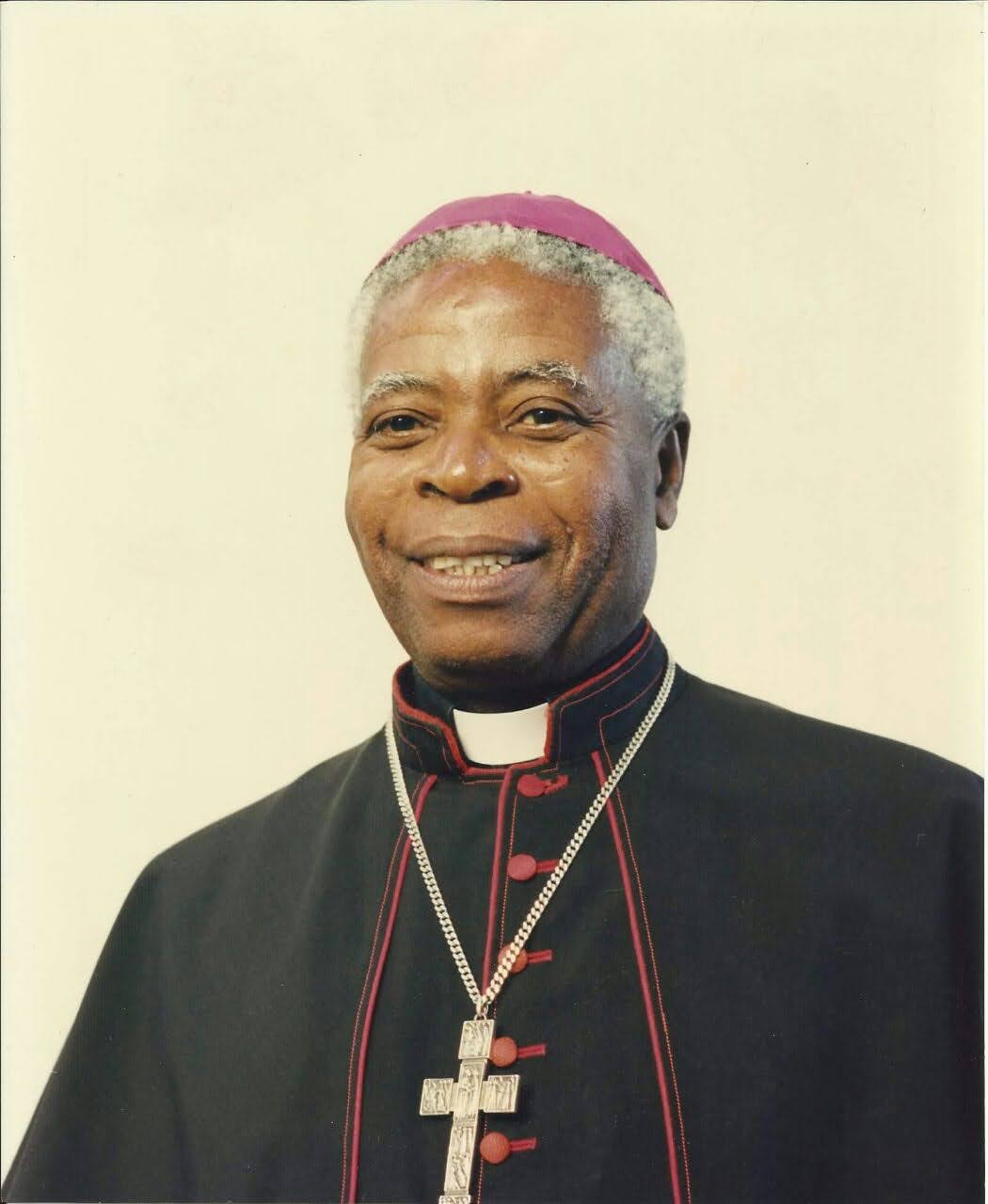
By Sr. Laurencila Akinyi, FSSA.
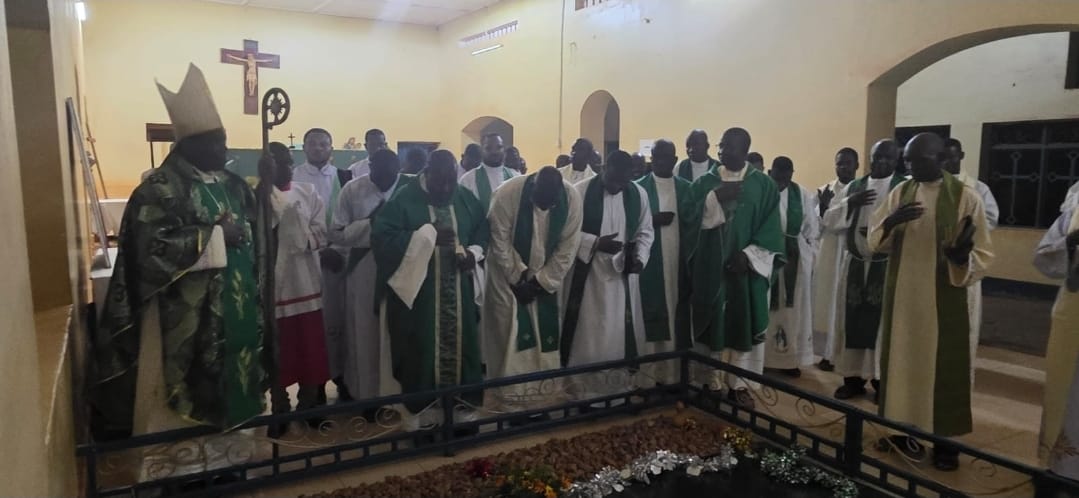
The Apostolic Nuncio to South Sudan, Archbishop Séamus Horgan, has sent a message to the Catholic Diocese of Tombura-Yambio commemorating the 12th anniversary of Bishop Joseph Abangite Gasi’s death, emphasizing the late bishop’s enduring legacy of peace advocacy and commitment to education while calling present church leadership to deeper discipleship and Christ-centered pastoral ministry.
In his message dated September 12, 2026, Archbishop Horgan, representing Pope Leo XIV, greeted the faithful gathered in Yambio and conveyed the pontiff’s spiritual closeness to the Diocese of Tombura-Yambio and South Sudan’s people. The message reflects on Bishop Gasi’s significant contributions to the young local church while offering papal guidance for contemporary church leadership.
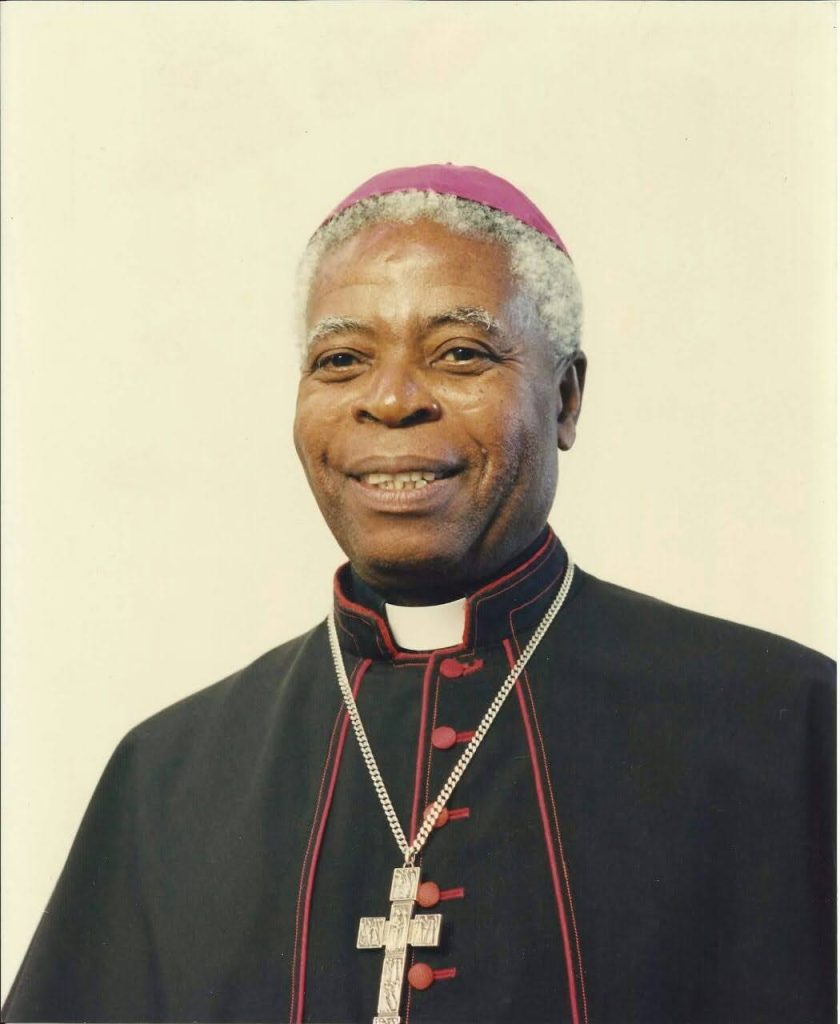
Bishop Joseph Abangite Gasi served as the first bishop of Tombura Diocese (1974-1988) and subsequently as Bishop of Tombura-Yambio until 2008, providing leadership during some of the most difficult periods in South Sudan’s history. Despite facing profound national challenges, Archbishop Horgan noted, Bishop Gasi remained “a voice that always promoted peace” while working for the development of his people.
“Bishop Joseph Abangite Gasi, a son of Western Equatoria, who served as first Bishop of Tombura, and subsequently of Tombura-Yambio, from 1974 to 2008, left an indelible memory and mark on this young local Church,” the Apostolic Nuncio wrote, underscoring the lasting impact of Bishop Gasi’s three decades of episcopal ministry.
The nuncio particularly highlighted Bishop Gasi’s commitment to two areas that remain vital to the Diocese today: education and peace-building. “His commitment to education and to peace-building must be carried forward also today, perhaps now more than ever,” Archbishop Horgan stated, suggesting that contemporary challenges require renewed dedication to these priorities.
Archbishop Horgan incorporated recent papal guidance offered by Pope Leo XIV to newly appointed bishops gathered in Rome on September 10, 2026. The Pope’s message outlined essential orientations for episcopal ministry that extend beyond bishops to all church leadership.
“First of all,” the Pope told the bishops, “remain with Jesus. Among the many things you will be called to do as Bishops, this is the most important. We are Bishops, but we are first and foremost disciples. To speak of Him, we need to be with Him; to lead His people, we must allow ourselves to be guided by Him every day.”
This emphasis on Christ-centered discipleship reflects the Pope’s conviction that authentic episcopal ministry begins not with institutional leadership or administrative tasks but with profound personal relationship with Jesus Christ. The Pope’s message suggests that bishops’ effectiveness in leading God’s people depends fundamentally on their willingness to be disciples themselves, guided daily by Christ.
The Pope added a second essential dimension to episcopal ministry: “Have the heart of Jesus the Good Shepherd, a heart completely devoted to the Father and, precisely for this reason, totally given to your brethren.” This articulation of pastoral charity as central to episcopal identity emphasizes that shepherd-leadership requires hearts devoted entirely to serving the flock entrusted to their care.
Archbishop Horgan noted that the Pope’s guidance applies not solely to bishops but to all who bear responsibility in the Church. “The Pope’s recipe is not for Bishops alone, but for all who have responsibility in the Church: for priests, missionaries, religious, catechists, for parents who form domestic churches, this message gives a powerful orientation.”
This universal application expands the papal message beyond hierarchical leadership to encompass the entire community of faith. Priests, missionaries, and religious communities are called to similar Christ-centered discipleship and pastoral charity. Catechists responsible for faith formation and parents forming “domestic churches” within families all receive the same fundamental call: remain with Jesus and develop hearts of shepherd-love for those entrusted to their care.
The message suggests that effective church ministry at every level requires similar spiritual foundations—deep discipleship, continuous guidance by Christ, and hearts devoted entirely to serving God’s people.
The Apostolic Nuncio encouraged the gathered faithful to use their time together in Yambio to “focus first and foremost on Christ, who remains at the center of all we do and are. Our gaze must remain fixed on Him, as he dwells among us through his Church.”
This emphasis on Christ as center reflects the conviction that all ecclesiastical activity—administrative, pastoral, educational, social—must flow from and return to relationship with Christ. By fixing their gaze on Christ and remaining in contact with his presence through the Church, believers “begin to have the heart of Jesus, which is the dynamo of all pastoral and missionary action in the Church.”
The metaphor of the heart of Jesus as “dynamo”—driving force—emphasizes that authentic pastoral and missionary action finds its power not in organizational efficiency, intellectual sophistication, or material resources, but in spiritual conformity to Christ’s heart of compassionate love.
Archbishop Horgan connected Christ-centered discipleship to urgent contemporary challenges facing South Sudan. “How important it is for us to be witnesses for Christ in the context of our country today! How vital it is that we speak a word of peace and that we act as agents of Christ’s peace in Western Equatoria, in South Sudan and indeed throughout the region.”
This call to peacemaking and witness acknowledges that the Church operates within a nation still affected by conflict’s legacies and facing electoral challenges ahead of December 2026 elections. By cultivating deep discipleship to Christ and developing pastoral hearts of shepherd-love, church leaders position themselves to speak prophetic words of peace and to model peacefully-oriented leadership.
The nuncio’s message suggests that in contexts marked by conflict, fear, and political tension, the Church’s distinctive contribution lies in offering leadership grounded in Christ, motivated by pastoral charity, and committed to peace. This represents the legacy Bishop Gasi embodied throughout his episcopal ministry.
The message concludes by positioning the Diocese’s contemporary gathering as opportunity to both honor Bishop Gasi’s legacy and embrace the Church’s ongoing mission. “In this way, we can carry on the legacy of Bishop Joseph Gasi, who, over many decades, dedicated himself to Christ’s Church and to Christ’s people in Tombura-Yambio.”
The 12th anniversary commemoration thus serves dual purpose: remembering and honoring the foundational work of the Diocese’s pioneering bishop, while challenging contemporary church leadership to deepen its commitment to Christ-centered discipleship, pastoral charity, peace advocacy, and educational ministry.
Archbishop Horgan’s final words extended prayers and best wishes “for the fruitful outcome of your gathering,” affirming papal support for the Diocese’s continued mission during these significant national moments.
The Apostolic Nuncio’s message arrives at critical juncture for South Sudan. The nation prepares for December 2026 elections—its first competitive national elections since independence in 2011. The Catholic Church, through its bishops and leadership, plays important role in advocating for peaceful democratic processes and reconciliation.
Bishop Hiiboro Kussala, current Bishop of Tombura-Yambio, continues the legacy Bishop Gasi established. By receiving this message from the Apostolic Nuncio and engaging with papal guidance, the Diocese reaffirms its commitment to Christ-centered ministry, peace advocacy, and service to South Sudan’s people during both celebratory and challenging moments.
The commemoration of Bishop Gasi’s passing and the accompanying papal message serve as spiritual renewal for the Diocese and as witness to the broader South Sudanese society that the Church remains committed to Christ, to peace, and to the integral human development of all people.